After years of decline, endangered right whale population could be levelling off
Advertisement
Read this article for free:
or
Already have an account? Log in here »
To continue reading, please subscribe:

Digital Subscription
One year of digital access for only $205*
- Enjoy unlimited reading on winnipegfreepress.com
- Read the E-Edition, our digital replica newspaper
- Access News Break, our award-winning app
- Play interactive puzzles
*First annual payment billed as $205.00 + GST for one year. This annual subscription will automatically renew at $233.00 + GST every 52 weeks (10% off the regular annual price of $259.35). Offer available to new and qualified returning subscribers only. Cancel any time.
To continue reading, please subscribe:
Add Free Press access to your Brandon Sun subscription for only an additional
$1 for the first 4 weeks*
- Enjoy unlimited reading on winnipegfreepress.com
- Read the E-Edition, our digital replica newspaper
- Access News Break, our award-winning app
- Play interactive puzzles
*Your next Brandon Sun subscription payment will increase by $1.00 and you will be charged $17.95 plus GST for four weeks. After four weeks, your payment will increase to $24.95 plus GST every four weeks.
Read unlimited articles for free today:
or
Already have an account? Log in here »
Hey there, time traveller!
This article was published 23/10/2023 (1058 days ago), so information in it may no longer be current.
HALIFAX – The population of critically endangered North Atlantic right whales appears to be stabilizing after years of discouraging declines, according to new data released Monday by an international team of marine scientists.
While that news is encouraging, a senior scientist with the North Atlantic Right Whale Consortium says the latest data also show the number of human-caused injuries to whales continues to rise.
“There’s a delay in those injuries being accounted for,” Philip Hamilton, senior scientist at the New England Aquarium in Boston, said in a weekend interview. “People get very focused on counting the (whales). People want to have a success. But we don’t have success yet, even though things are levelling off. We’re still in pretty dire shape.”
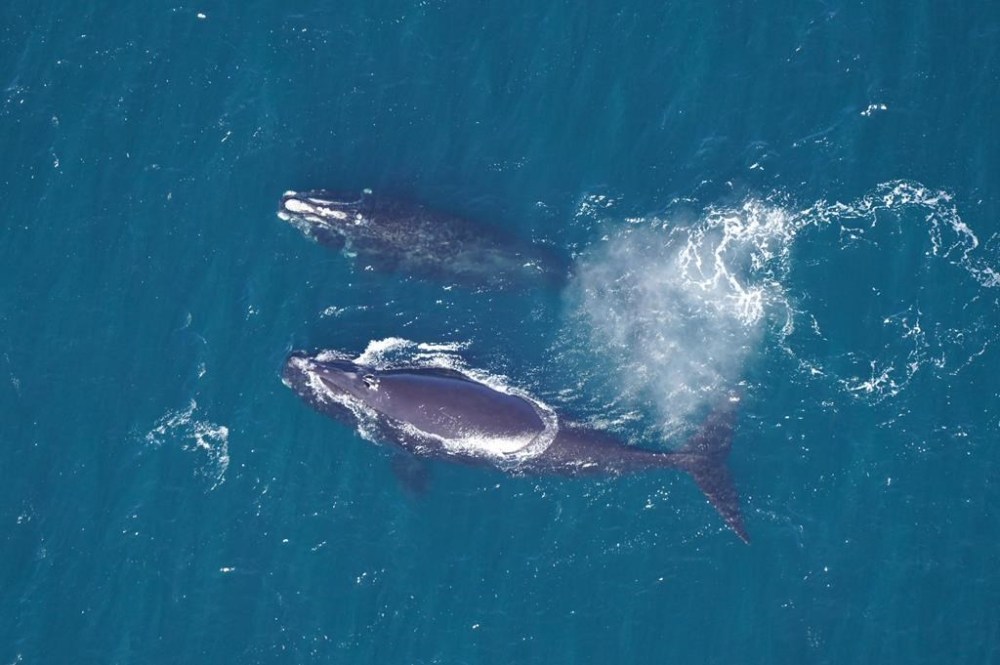
Put another way, the recent flattening of the population trend indicates that human activities are now killing as many whales as are being born each year. That represents an “untenable burden on the species,” Heather Pettis, a research scientist at the New England Aquarium, said in a statement released Monday.
The latest estimates are based on new data that prompted a recalculation of the population figures produced since 1990.
The recalculated 2021 estimate now stands at a total of 364 North Atlantic right whales, a significant increase from the 2021 estimate released last year, which was 340. In all, 18 calves were born that year, but many of them were only recently added to the consortium’s database.
For 2022, the newly released estimate is 356 animals, which suggests “the downward trajectory for the species could be slowing,” the consortium said.
“There’s always a delay in adding calves to the population because we have to be certain about their identity,” said Hamilton, who is also curator for the consortium’s identification database. “Sometimes that takes several years.”
Meanwhile, researchers in Canada and the United States have recorded only two deaths so far this year — a 20-year-old male struck and killed by a vessel and an orphaned newborn calf.
Again, that low number is good news for the species, but it is tempered by the fact that there continue to be elevated numbers of human-caused injuries. So far in 2023, researchers have detected 30 fishing gear entanglements and two vessel strikes.
Hamilton said many of these injuries will likely lead to deaths, while other injured or sick whales may not be able to reproduce because of their poor health.
“We know that we are still having a very strong impact (in terms of injuries),” he said. “We’re talking about very few whales. And we have many females who are old enough to give birth and they haven’t.”
Calving numbers continue to lag behind what scientists saw a decade ago. This past season, just 11 calves were born. That’s fewer than the previous two years: 18 in 2021 and 15 in 2022.
As a result, the North Atlantic right whale remains one of the most endangered large whale species in the world.
“We continue to injure and kill these whales at alarming rates, such that they cannot carry out basic biological functions like growth and reproduction,” consortium chair Dr. Scott Kraus said in a statement. “While the absolute population numbers are important, other indicators are discouraging.”
Hamilton will be among almost 500 delegates gathering in Halifax this week for the consortium’s annual meeting, which will bring together in-person and virtual attendees from around the world. Efforts to protect the whales will be high on the agenda for researchers, fishing industry representatives and conservationists.
Among other things, there will be plenty of discussion about speed restrictions for vessels and persuading the fishing industry to switch to ropeless or “on-demand” gear.
While traditional lobster and crab traps are dropped to the ocean floor and later retrieved by hauling up long ropes that hang from buoys, ropeless gear doesn’t use so-called running lines or buoys. The traps are found using an electronic homing device — a kind of virtual buoy — and they’re retrieved using remotely inflated spools of rope or lift bags.
Elimination of floating gear could drastically reduce the risk of entanglements, which accounted for 82 per cent of documented right whale deaths as of last year, according to the Woods Hole Oceanographic Institute in Falmouth, Mass.
“I put a lot of hope in that,” Hamilton said. “It does seem like a solution, even though the transition will be very challenging.” The fishing industry requires financial and technological support, and legislative changes are needed to move things along, he said.
“Canada is doing a lot and I applaud that. But even with all those efforts, there’s quite a few whales getting entangled in Canadian waters.”

Kim Elmslie, campaign director at Oceana in Canada, issued a statement Monday saying that switching to ropeless gear is the best way to reduce the risk of entanglements.
“The (whales) are coping with a changing climate and the ever-present threats of entanglement in fishing gear and vessel strikes,” Elmslie said. “Our governments can still save this fragile population from extinction, particularly if it invests in long-term funding for science, monitoring and enforcing protection measures.”
Last week, Oceana released a report that showed most vessels in the United States are speeding through slow zones designed to protect the whales.
Between November 2020 and July 2022, 82 per cent of vessels sped through voluntary slow zones established along the U.S. east coast by the National Oceanic and Atmospheric Administration, the non-profit group said.
This report by The Canadian Press was first published Oct. 23, 2023.