Fire, other ravages jeopardize California’s prized forests
Advertisement
Read this article for free:
or
Already have an account? Log in here »
To continue reading, please subscribe:

Digital Subscription
One year of digital access for only $205*
- Enjoy unlimited reading on winnipegfreepress.com
- Read the E-Edition, our digital replica newspaper
- Access News Break, our award-winning app
- Play interactive puzzles
*First annual payment billed as $205.00 + GST for one year. This annual subscription will automatically renew at $233.00 + GST every 52 weeks (10% off the regular annual price of $259.35). Offer available to new and qualified returning subscribers only. Cancel any time.
To continue reading, please subscribe:
Add Free Press access to your Brandon Sun subscription for only an additional
$1 for the first 4 weeks*
- Enjoy unlimited reading on winnipegfreepress.com
- Read the E-Edition, our digital replica newspaper
- Access News Break, our award-winning app
- Play interactive puzzles
*Your next Brandon Sun subscription payment will increase by $1.00 and you will be charged $17.95 plus GST for four weeks. After four weeks, your payment will increase to $24.95 plus GST every four weeks.
Read unlimited articles for free today:
or
Already have an account? Log in here »
Hey there, time traveller!
This article was published 26/10/2023 (1032 days ago), so information in it may no longer be current.
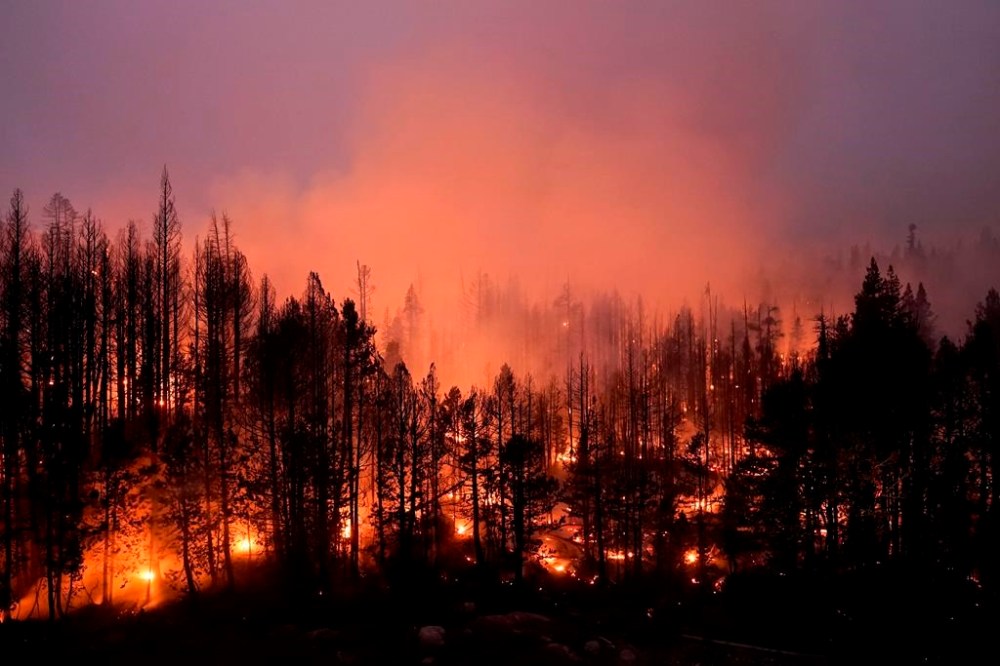
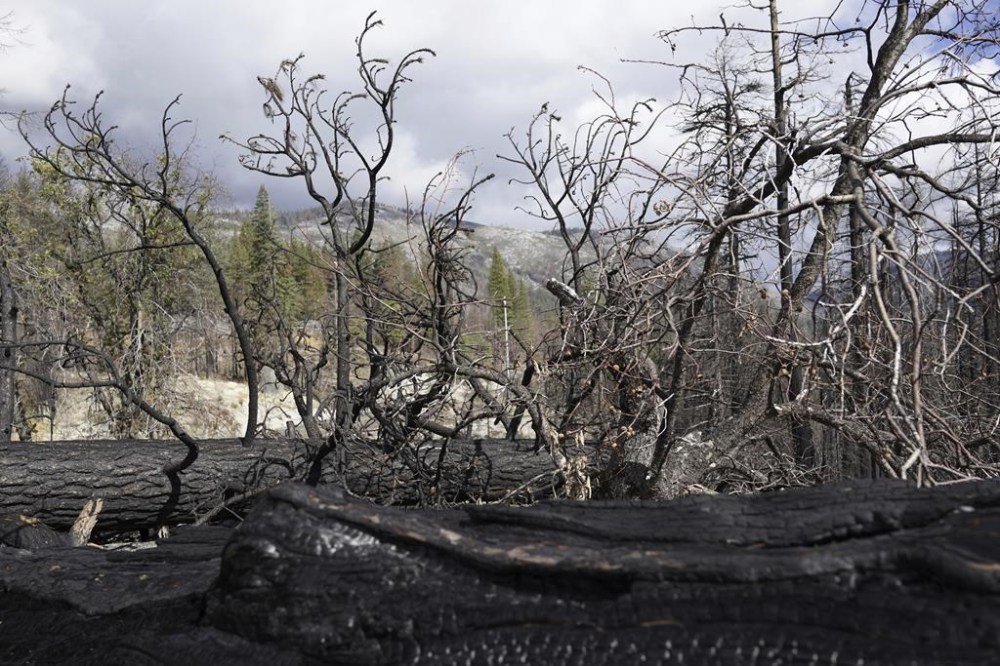
KYBURZ, Calif. (AP) — On a mountainside where walls of flames torched the forest on their way toward Lake Tahoe in 2021, blackened trees stand against a gray sky.
“If you can find a live tree, point to it,” Hugh Safford, an environmental science and policy researcher at the University of California, Davis, said touring damage from the Caldor Fire, one of the past decade’s many massive blazes.
Dead conifers stretch as far as the eye can see. Fire burned so hot that soil was still barren. Granite boulders were charred. Indentations marked fallen logs that vanished in smoke.
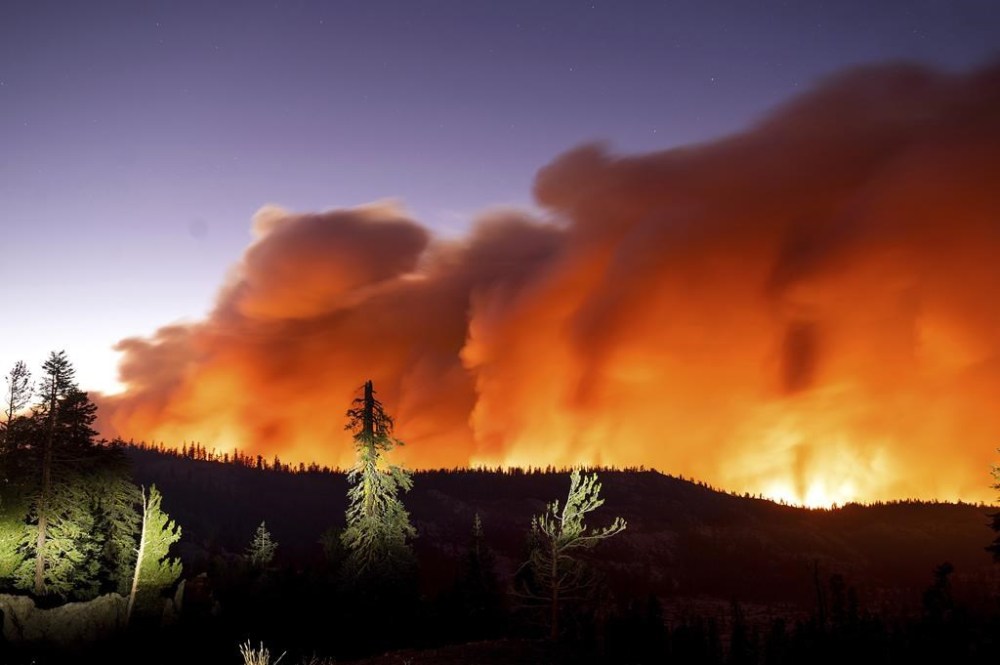
Damage in this area of Eldorado National Forest could be permanent — part of a troubling pattern that threatens a defining characteristic of the Sierra Nevada range John Muir once called a “waving sea of evergreens.”
Forest like this is disappearing as increasingly intense fires alter landscapes worldwide threatening wildlife, jeopardizing efforts to capture climate-warming carbon and harming water supplies, studies say.
In the U.S. West, a century of fire suppression, logging of large fire-resistant trees, and other practices allowed undergrowth to choke forests. Drought has killed millions of conifers or made them susceptible to disease and pests. And a changing climate has brought more intense fires.
“What’s it’s coming down to is jungles of fuels in forest lands,” Safford said. “You get a big head of steam going behind the fire there, it can burn forever and ever and ever.”
Despite mild wildfire seasons last year and this year, California saw 12 of its largest 20 wildfires in the previous five years. Record rain and snowfall this year that mostly ended a three-year drought could lead to explosive growth of fire fuels.
California has lost more than 1,760 square miles (4,560 square kilometers) — nearly 7% — of its tree cover since 1985, a recent study found.
A study of the southern Sierra Nevada — home to Yosemite, Sequoia and Kings Canyon national parks — found nearly a third of conifer forest had transitioned to other vegetation because of fire, drought or bark beetles in the past decade.
“We’re losing them at a rate … we can’t sustain,” said Brandon Collins, co-author of that report and adjunct forestry professor at the University of California, Berkeley.
Not everyone believes forest is disappearing. Some environmentalists, like Chad Hanson of the John Muir Project sponsored by the nonprofit Earth Island Institute, believe there’s a “myth of catastrophic wildfire” to support logging efforts.
Seedlings are rising from ashes in high-severity patches of fire and dead wood provides wildlife habitat, Hanson said. “If everything people are hearing was true, there would be a lot more reason for concern.”
Others are concerned failure to properly manage forests can result in intense fire that could harm habitat, the ability to store climate-warming carbon in trees and the quality of snowmelt for farms and cities.
“Areas where mixed conifer burned at high severity, those are all areas that are vulnerable to total forest loss,” said Christy Brigham, chief of resources management and science at Sequoia & Kings Canyon National Parks.
After wildfires in 2020 and 2021 wiped out up to about a fifth of all giant sequoias — once considered almost fireproof — the National Park Service last week embarked on a controversial project to help the mighty trees recover with its largest planting of seedlings in a single grove.
Before the mid-1800s, fires from lightning or set by Indigenous people kept undergrowth in check. But after settlers drove out Native Americans and logged forests, fighting fires became the mission to protect the valuable trees and homes.
That has allowed forests to become four to seven times more dense than they once were, Safford said.
“John Muir would not recognize any of this,” he said, gesturing at tightly packed dead trees.
The Caldor Fire, which destroyed 1,000 structures, torched forest for the first time in a century, Safford said. Years of drought had made it a tinderbox.
Swaths of Eldorado National Forest burned at such intensity that mature pines went up in flames, their seeds killed. Manzanita and mountain whitethorn — chaparral typical at lower elevations — took root.
A March study of 334 Western wildfires found increasing fire severity made conifer species less likely to regenerate — a problem apt to worsen with climate change.
Along U.S. Highway 50, where the Caldor Fire had burned out of control, Safford pointed out a barren slope where forest from a previous fire had been replaced with chaparral and trees were now unlikely to grow.
To reduce wildfire danger, the federal government, which owns nearly 60% of California’s vast forest, agreed with the state in 2020 to reduce fuels on 1,560 square miles (4,040 square kilometers) a year by 2025.
Fire scientists advocate clearing vegetation by setting fires in ideal conditions and allowing lower-severity fires to burn.
But the Forest Service has historically been risk averse, said Safford, the agency’s regional ecologist for two decades before retiring in 2021. Rather than chance that a fire could blow up, officials have generally snuffed lower-intensity flames that could deliver benefits.
With more than $4 billion from the Bipartisan Infrastructure Law and the Inflation Reduction Act, the Forest Service plans to ramp up thinning where communities are most vulnerable to wildfire.
Susan Britting, executive director of Sierra Forest Legacy, acknowledged any cutting triggers skepticism among conservationists because loggers historically took the largest trees.
“In my experience, things like logging, tree removal, even reforestation, those things happen,” Britting said. “The prescribed fire that needs to happen … just gets delayed and punted and not prioritized.”
The chance of a burn escaping its perimeter remains a big challenge to the strategy. And thinning often faces court challenges.
Safford — now chief scientist at Vibrant Planet, an environmental public benefits corporation — acknowledged larger trees have been logged in the past but said that’s not now envisioned in thinning projects.
Two-thirds of the rugged Sierra is inaccessible or off-limits to logging, so fire will have to do much of the work, he said. But homeowners are anxious prescribed fires will jump perimeters and destroy houses.
“It’s the classic wicked problem where any solution you derive has huge implications for other sides of society and the way people want things to be,” Safford said.
___
The Associated Press receives support from the Walton Family Foundation for coverage of water and environmental policy. The AP is solely responsible for all content.