China’s Xi urges countries unite in tackling AI challenges but makes no mention of internet controls
Advertisement
Read this article for free:
or
Already have an account? Log in here »
To continue reading, please subscribe:

Digital Subscription
One year of digital access for only $205*
- Enjoy unlimited reading on winnipegfreepress.com
- Read the E-Edition, our digital replica newspaper
- Access News Break, our award-winning app
- Play interactive puzzles
*First annual payment billed as $205.00 + GST for one year. This annual subscription will automatically renew at $233.00 + GST every 52 weeks (10% off the regular annual price of $259.35). Offer available to new and qualified returning subscribers only. Cancel any time.
To continue reading, please subscribe:
Add Free Press access to your Brandon Sun subscription for only an additional
$1 for the first 4 weeks*
- Enjoy unlimited reading on winnipegfreepress.com
- Read the E-Edition, our digital replica newspaper
- Access News Break, our award-winning app
- Play interactive puzzles
*Your next Brandon Sun subscription payment will increase by $1.00 and you will be charged $17.95 plus GST for four weeks. After four weeks, your payment will increase to $24.95 plus GST every four weeks.
Read unlimited articles for free today:
or
Already have an account? Log in here »
Hey there, time traveller!
This article was published 08/11/2023 (1054 days ago), so information in it may no longer be current.
BEIJING (AP) — Chinese President Xi Jinping said Wednesday that potential risks associated with artificial intelligence are challenges that countries should deal with together, remarks that come against the backdrop of China’s rigid control of free speech on the internet.
At the same time, China has also maximized the internet’s economic benefits and social media’s propaganda contributions to the ruling Communist Party’s authoritarian agenda.
Xi’s prerecorded speech was broadcast at the opening of the World Internet Conference Summit in the eastern city of Wuzhen.
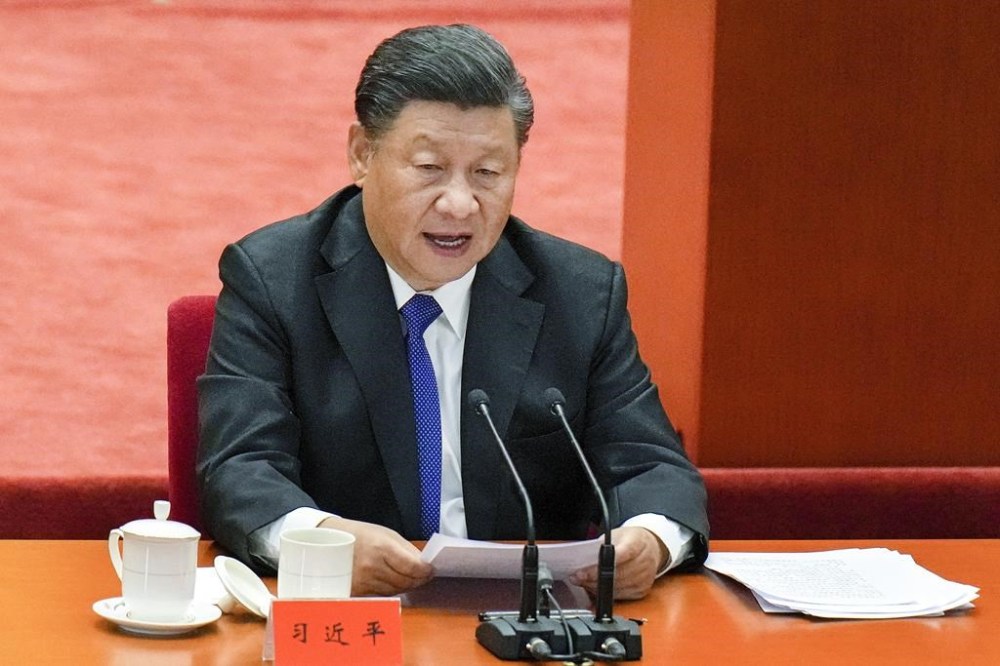
He called for common security in cyberspace instead of confrontation. He said China would work with other countries to address risks brought by the development of AI and expressed his objections to “cyberspace hegemony.”
China is ready to “promote the safe development of AI,” he said, with the implementation of the Global AI Governance Initiative, a proposal launched by the Chinese government last month calling for an open and fair environment for AI development.
Li Shulei, director of the Communist Party’s publicity department, echoed Xi’s remarks at the conference, saying China would work with other countries to “improve the safety, reliability, controllability and fairness of artificial intelligence technology.”

The conference was first launched as an annual event in 2014 by the Chinese government to discuss internet development. China blocks most overseas news and social media sites, but lifts them in the Wuzhen area for the duration of the conference.
As recently as June, Chinese state-backed hackers foiled Microsoft’s cloud-based security in breaching the email accounts of officials at multiple U.S. agencies that deal with China ahead of Secretary of State Antony Blinken’s trip to Beijing.
The surgical, targeted espionage accessed the email of a small number of individuals at an unspecified number of U.S. agencies and was discovered in mid-June by the State Department, U.S. officials said. They said none of the breached systems were classified, nor was any of the stolen data.
The hacked officials included Commerce Secretary Gina Raimondo, whose agency imposed export controls that have stung multiple Chinese companies.
In September 2020, the Justice Department has charged five Chinese citizens with hacks targeting more than 100 companies and institutions in the United States and abroad, including social media and video game companies as well as universities and telecommunications providers