Asteroid will pass in front of bright star Betelgeuse to produce a rare eclipse visible to millions
Advertisement
Read this article for free:
or
Already have an account? Log in here »
To continue reading, please subscribe:

Digital Subscription
One year of digital access for only $205*
- Enjoy unlimited reading on winnipegfreepress.com
- Read the E-Edition, our digital replica newspaper
- Access News Break, our award-winning app
- Play interactive puzzles
*First annual payment billed as $205.00 + GST for one year. This annual subscription will automatically renew at $233.00 + GST every 52 weeks (10% off the regular annual price of $259.35). Offer available to new and qualified returning subscribers only. Cancel any time.
To continue reading, please subscribe:
Add Free Press access to your Brandon Sun subscription for only an additional
$1 for the first 4 weeks*
- Enjoy unlimited reading on winnipegfreepress.com
- Read the E-Edition, our digital replica newspaper
- Access News Break, our award-winning app
- Play interactive puzzles
*Your next Brandon Sun subscription payment will increase by $1.00 and you will be charged $17.95 plus GST for four weeks. After four weeks, your payment will increase to $24.95 plus GST every four weeks.
Read unlimited articles for free today:
or
Already have an account? Log in here »
Hey there, time traveller!
This article was published 08/12/2023 (1023 days ago), so information in it may no longer be current.
CAPE CANAVERAL, Fla. (AP) — One of the biggest and brightest stars in the night sky will momentarily vanish as an asteroid passes in front of it to produce a one-of-a-kind eclipse.
The rare and fleeting spectacle, late Monday into early Tuesday, should be visible to millions of people along a narrow path stretching from central Asia’s Tajikistan and Armenia, across Turkey, Greece, Italy and Spain, to Miami and the Florida Keys and finally, to parts of Mexico.
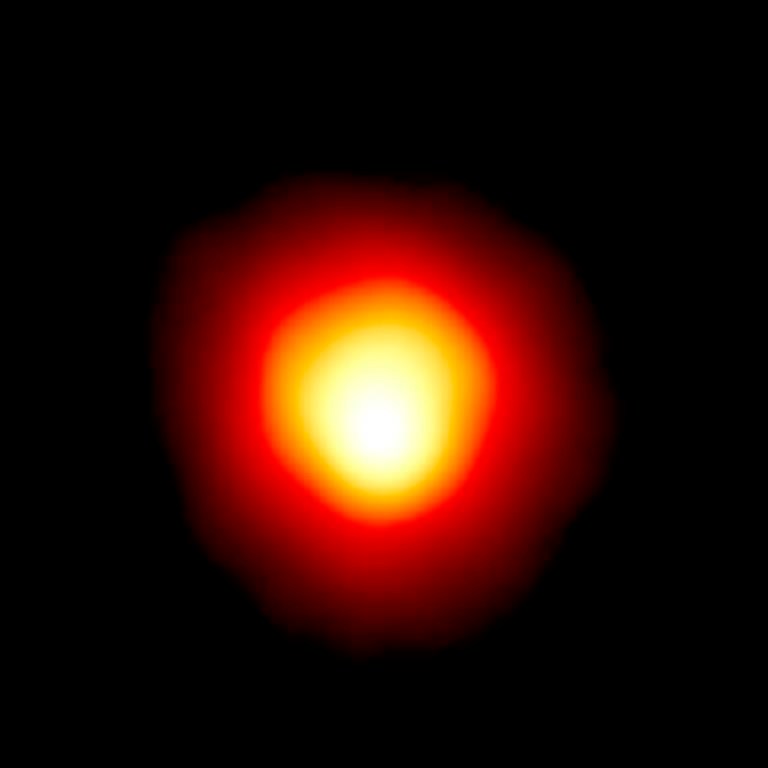
The star is Betelgeuse, a red supergiant in the constellation Orion. The asteroid is Leona, a slowly rotating, oblong space rock in the main asteroid belt between Mars and Jupiter.
Astronomers hope to learn more about Betelgeuse and Leona through the eclipse, which is expected to last no more than 15 seconds. By observing an eclipse of a much dimmer star by Leona in September, a Spanish-led team recently estimated the asteroid to be about 34 miles wide and 50 miles long (55 kilometers wide and 80 kilometers long).
There are lingering uncertainties over those predictions as well as the size of the star and its expansive atmosphere. It’s unclear if the asteroid will obscure the entire star, producing a total eclipse. Rather, the result could be a “ring of fire” eclipse with a miniscule blazing border around the star. If it’s a total eclipse, astronomers aren’t sure how many seconds the star will disappear completely, perhaps up to 10 seconds.
“Which scenario we will see is uncertain, making the event even more intriguing,” said astronomer Gianluca Masa, founder of the Virtual Telescope Project, which will provide a live webcast from Italy.
An estimated 700 light-years away, Betelgeuse is visible with the naked eye. Binoculars and small telescopes will enhance the view. A light-year is 5.8 trillion miles.
Betelgeuse is thousands of times brighter than our sun and some 700 times bigger. It’s so huge that if it replaced our sun, it would stretch beyond Jupiter, according to NASA.

At just 10 million years old, Betelgeuse is considerably younger than the 4.6 billion-year-old sun. Scientists expect Betelgeuse to be short-lived, given its mass and the speed at which it’s burning through its material.
After countless centuries of varying brightness, Betelgeuse dimmed dramatically in 2019 when a huge bunch of surface material was ejected into space. The resulting dust cloud temporarily blocked the starlight, NASA said, and within a half year, Betelgeuse was as bright as before.
Scientists expect Betelgeuse to go supernova in a violent explosion within 100,000 years.
___
The Associated Press Health and Science Department receives support from the Howard Hughes Medical Institute’s Science and Educational Media Group. The AP is solely responsible for all content.