Embattled wolves gain a new frontier in Democratic Colorado. The move is stoking political tensions
Advertisement
Read this article for free:
or
Already have an account? Log in here »
To continue reading, please subscribe:

Digital Subscription
One year of digital access for only $205*
- Enjoy unlimited reading on winnipegfreepress.com
- Read the E-Edition, our digital replica newspaper
- Access News Break, our award-winning app
- Play interactive puzzles
*First annual payment billed as $205.00 + GST for one year. This annual subscription will automatically renew at $233.00 + GST every 52 weeks (10% off the regular annual price of $259.35). Offer available to new and qualified returning subscribers only. Cancel any time.
To continue reading, please subscribe:
Add Free Press access to your Brandon Sun subscription for only an additional
$1 for the first 4 weeks*
- Enjoy unlimited reading on winnipegfreepress.com
- Read the E-Edition, our digital replica newspaper
- Access News Break, our award-winning app
- Play interactive puzzles
*Your next Brandon Sun subscription payment will increase by $1.00 and you will be charged $17.95 plus GST for four weeks. After four weeks, your payment will increase to $24.95 plus GST every four weeks.
Read unlimited articles for free today:
or
Already have an account? Log in here »
Hey there, time traveller!
This article was published 10/12/2023 (1026 days ago), so information in it may no longer be current.
DENVER, Colo. (AP) — Wildlife officials plan to release gray wolves in Colorado in coming weeks, at the behest of urban voters and to the dismay of rural residents who don’t want the predators but have waning influence in the Democratic-led state.
The most ambitious wolf reintroduction effort in the U.S. in almost three decades marks a sharp departure from aggressive efforts by Republican-led states to cull wolf packs. More releases planned for Colorado over the next several years will start to fill in one of the last remaining major gaps in the western U.S. for a species that historically ranged from northern Canada to the desert southwest.
The reintroduction, starting with the release of up to 10 wolves, emerged as a political wedge issue when GOP-dominated Wyoming, Idaho and Montana refused to share their wolves for the effort. Colorado officials ultimately turned to another Democratic state — Oregon — to secure wolves.
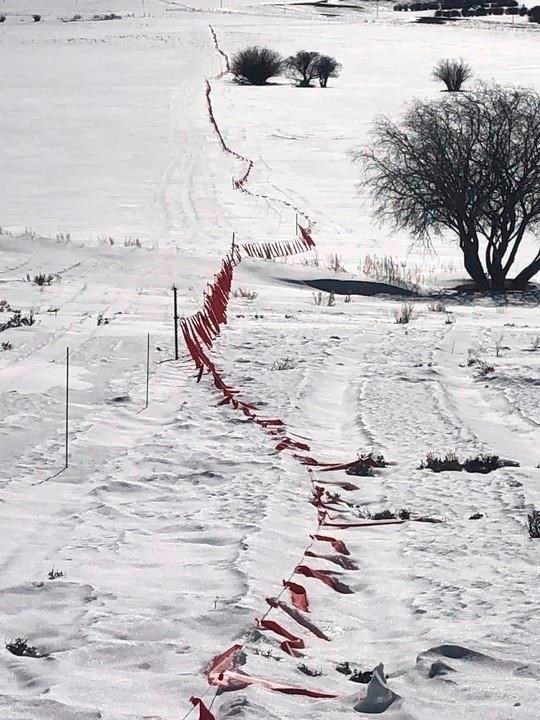
As anticipation grows among wildlife advocates, who’ve already started a wolf-naming contest, ranchers in the Rocky Mountains where the releases will occur are anxious. They’ve already seen glimpses of what the future could hold as a handful of wolves that wandered down from Wyoming over the past two years killed livestock.
The fear is such attacks will worsen, adding to a spate of perceived assaults on western Colorado’s rural communities as the state’s liberal leaders embrace clean energy and tourism, eclipsing economic mainstays such as fossil fuel extraction and agriculture.
Especially grating for rancher Don Gittleson is that his fellow Colorado residents invited the reintroduction through their narrow approval of a 2020 ballot measure. Suburbs and cities along Colorado’s Front Range, which includes Denver, carried the vote despite strong opposition across less-densely populated counties where the wolves will be released — the home district of conservative Republican firebrand Rep. Lauren Boebert.
“It was the cities that voted for it, and most of them can’t tell the difference between a wolf or a coyote or a dog,” said Gittleson, who lost at least six cows and calves to wolves from his Sherman Creek Ranch in northern Colorado over the past couple years — among the first documented wolf attacks in the state in more than 70 years.
In 2022, gray wolves attacked domesticated animals hundreds of times across 10 states in the contiguous U.S. including Colorado, according to an Associated Press review of depredation data from state and federal agencies. Attacks killed or injured at least 425 cattle and calves, 313 sheep and lambs, 40 dogs, 10 chickens, five horses and four goats, according to the data. Other times livestock simply goes missing, such as two calves that Gittleson said disappeared after wolves had passed through.
Such losses can be devastating to individual ranchers or pet owners. However, their industry-wide impact is negligible: The number of cattle killed or injured in the documented cases equals 0.002% of herds in the affected states, according to a comparison of depredation data with state livestock inventories.
“95% of ranchers in Colorado will never have a problem,” said Ed Bangs, a former U.S. Fish and Wildlife Service biologist who led the reintroduction of wolves in the mid-1990s to Yellowstone National Park and central Idaho. “4.5% will have the occasional problem every couple of years maybe, and maybe one or two guys will have a problem like every other year. I don’t think it’s enough to put them out of business.”
“But if it was my cattle and my business, I’d be pissed,” he added.
Opposition to wolves is being used as a political bludgeon by elected officials such as Boebert, who sponsored legislation to lift remaining federal protections for wolves. That may not significantly sway an election but it’s a boon “for candidates like Boebert to rally behind, I think for want of another issue, to gin up cultural resentments.” said Seth Masket, director of the Center on American Politics at the University of Denver.
Colorado wildlife officials anticipate releasing 30 to 50 wolves within the next five years.
To allay livestock industry fears, ranchers who lose livestock or herding and guard animals to wolf attacks will be paid fair market value, up to $15,000 per animal. Meanwhile, Colorado residents who backed the reintroduction are going to have to get used to wildlife agents killing wolves that prey on livestock.
Already some wolves have been killed when they crossed from Colorado into Wyoming, which has a “predatory” zone for wolves covering most of the state where they can be shot on sight.
The roiling political debates over the predator have been divorced from the details on the ground, said Matt Barnes, a range scientist focusing on preventing conflict between carnivores and ranchers. The former rancher argued that there’s a “middle ground” where agriculture and wildlife can inhabit the same landscape.
“People are really arguing not so much about the animals themselves, or even the land, but underlying worldviews about how humans fit into a more than human world,” said Barnes.
Colorado officials have a detailed strategy to deter wolves from livestock, including blinking lights that hang along fence lines and propane cannons that make frightening sonic blasts. Another method is tying fabric streamers to fences to make wolves wary of crossing onto ranches. The predators eventually get used to such deterrents, so they are used for relatively short periods of time.
Gray wolves were exterminated across most of the U.S. by the 1930s under government-sponsored poisoning and trapping campaigns. They received endangered species protections in 1975, when there were about 1,000 left, in northern Minnesota.
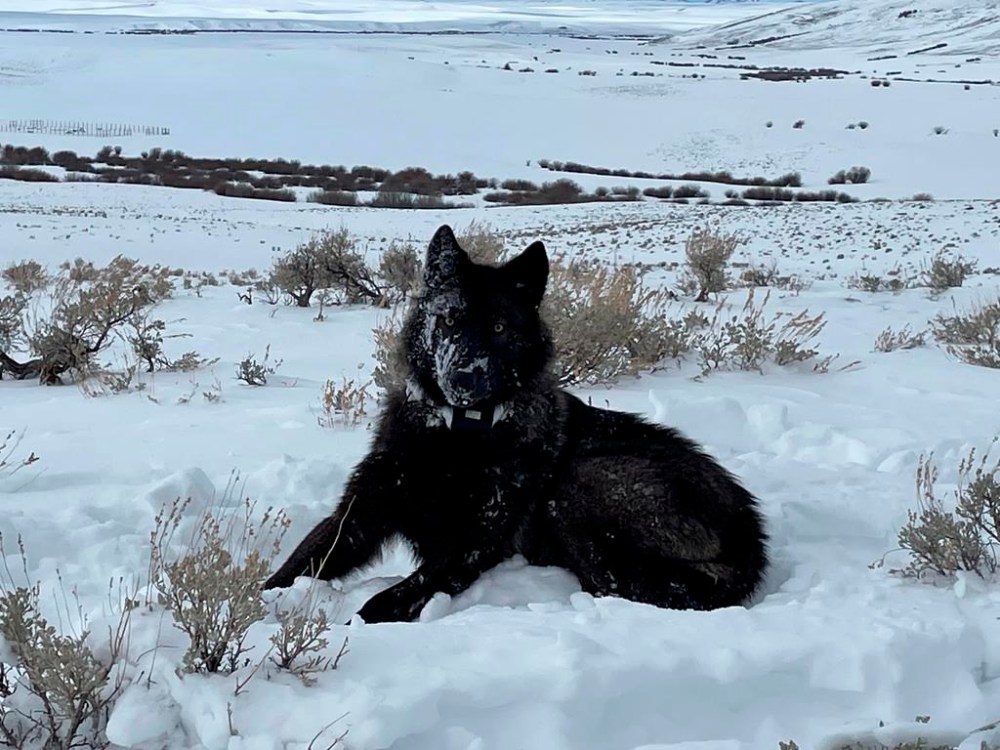
There’s been no turning back for other states where gray wolves have become reestablished. An estimated 7,500 wolves in about 1,400 packs now roam parts of the contiguous U.S. Populations are expanding most rapidly in Oregon and Washington — Democratic states that wolves are naturally recolonizing after being reintroduced to neighboring states.
In Idaho, Montana and Wyoming, where wolf hunting is legal, Republican-dominated legislatures have sought to drive down wolf numbers by loosening rules for killing the predators and increasing the number that can be taken by individual hunters. That led to more Yellowstone wolves being shot but had a minor impact on overall wolf numbers. State officials say it’s helped reduce attacks on livestock as wolves become more wary of humans.
The stepped up killing also drew attention from President Joseph Biden’s administration, which is considering restoring federal wolf protections in the states in response to laws that made it much easier to kill the predators. It’s the only region of the U.S. where wolves are not currently federally protected.
Interior officials have sought for a decade — beginning under former President Barack Obama — to remove protections for wolves across the remainder of the contiguous U.S. That finally happened under former President Donald Trump, until a federal court struck down the action.
A new proposal is due by early February. If wolves lose their protected status, it would open the door to future hunts for the predators in Colorado and elsewhere, with each state to decide.
Near Gittleson’s Sherman Creek Ranch, Brian Anderson found three of his lambs dead last month on his family’s ranch. One was partially eaten, the other two seemingly untouched save for blood stains in their wool.
Anderson will be reimbursed, likely for the market rate of about $300 per animal, he said, but “the monetary value isn’t what’s important to me. … I have three customers now this year that aren’t going to get a lamb.”
Still, he’s less concerned about the long-term impacts on ranching assuming people get paid when livestock get killed.

“Is it going to affect people over the next four years? You betcha. Is agriculture and ranching still going to happen? Oh yeah,” he said.
___
Brown reported from Billings, Mont. Associated Press writers Thomas Peipert in Denver and Mead Gruver in Cheyenne, Wyo. contributed to this story.
___
Follow Brown on X, formerly Twitter: @MatthewBrownAP