Geminids meteor shower peaks this week under dark skies
Advertisement
Read this article for free:
or
Already have an account? Log in here »
To continue reading, please subscribe:

Digital Subscription
One year of digital access for only $205*
- Enjoy unlimited reading on winnipegfreepress.com
- Read the E-Edition, our digital replica newspaper
- Access News Break, our award-winning app
- Play interactive puzzles
*First annual payment billed as $205.00 + GST for one year. This annual subscription will automatically renew at $233.00 + GST every 52 weeks (10% off the regular annual price of $259.35). Offer available to new and qualified returning subscribers only. Cancel any time.
To continue reading, please subscribe:
Add Free Press access to your Brandon Sun subscription for only an additional
$1 for the first 4 weeks*
- Enjoy unlimited reading on winnipegfreepress.com
- Read the E-Edition, our digital replica newspaper
- Access News Break, our award-winning app
- Play interactive puzzles
*Your next Brandon Sun subscription payment will increase by $1.00 and you will be charged $17.95 plus GST for four weeks. After four weeks, your payment will increase to $24.95 plus GST every four weeks.
Read unlimited articles for free today:
or
Already have an account? Log in here »
Hey there, time traveller!
This article was published 13/12/2023 (983 days ago), so information in it may no longer be current.
CAPE CANAVERAL, Fla. (AP) — The year’s best meteor shower, the Geminids, peaks this week. Skygazers may see as many as one or even two a minute streaking across dark skies.
The meteors will reach their frenzy Thursday. But Wednesday night should provide a cosmic spectacle as well.
The moon is waning so that will make for prime viewing anywhere in the world where skies are clear and in spots without light pollution.
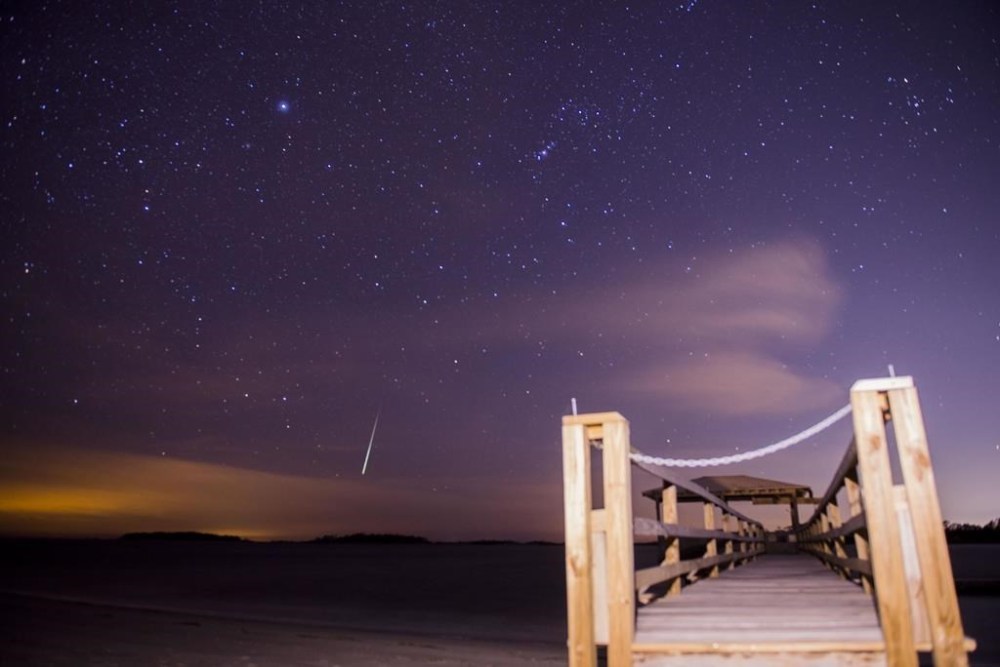
NASA urged observers to look everywhere in the sky since meteors don’t come from any particular direction. Between 60 and 120 meteors are expected every hour at peak time, weather permitting.
NASA meteoroid expert Bill Cooke said he loves that the Geminids have a greenish hue as they speed across the sky and burn up. Most meteors appear to be colorless or white depending on their chemical makeup. Green usually comes from oxygen, magnesium and nickel.
Most meteor showers originate from comets. But the Geminids come from the sun-orbiting asteroid 3200 Phaethon. Either way, when Earth passes through these leftover bits of comets or asteroids, the fragments encounter Earth’s atmosphere and put on quite the show.

___
The Associated Press Health and Science Department receives support from the Howard Hughes Medical Institute’s Science and Educational Media Group. The AP is solely responsible for all content.