Powerful earthquakes in Japan leave at least 62 dead. Fears grow about saving people still trapped
Advertisement
Read this article for free:
or
Already have an account? Log in here »
To continue reading, please subscribe:

Digital Subscription
One year of digital access for only $205*
- Enjoy unlimited reading on winnipegfreepress.com
- Read the E-Edition, our digital replica newspaper
- Access News Break, our award-winning app
- Play interactive puzzles
*First annual payment billed as $205.00 + GST for one year. This annual subscription will automatically renew at $233.00 + GST every 52 weeks (10% off the regular annual price of $259.35). Offer available to new and qualified returning subscribers only. Cancel any time.
To continue reading, please subscribe:
Add Free Press access to your Brandon Sun subscription for only an additional
$1 for the first 4 weeks*
- Enjoy unlimited reading on winnipegfreepress.com
- Read the E-Edition, our digital replica newspaper
- Access News Break, our award-winning app
- Play interactive puzzles
*Your next Brandon Sun subscription payment will increase by $1.00 and you will be charged $17.95 plus GST for four weeks. After four weeks, your payment will increase to $24.95 plus GST every four weeks.
Read unlimited articles for free today:
or
Already have an account? Log in here »
Hey there, time traveller!
This article was published 01/01/2024 (1000 days ago), so information in it may no longer be current.
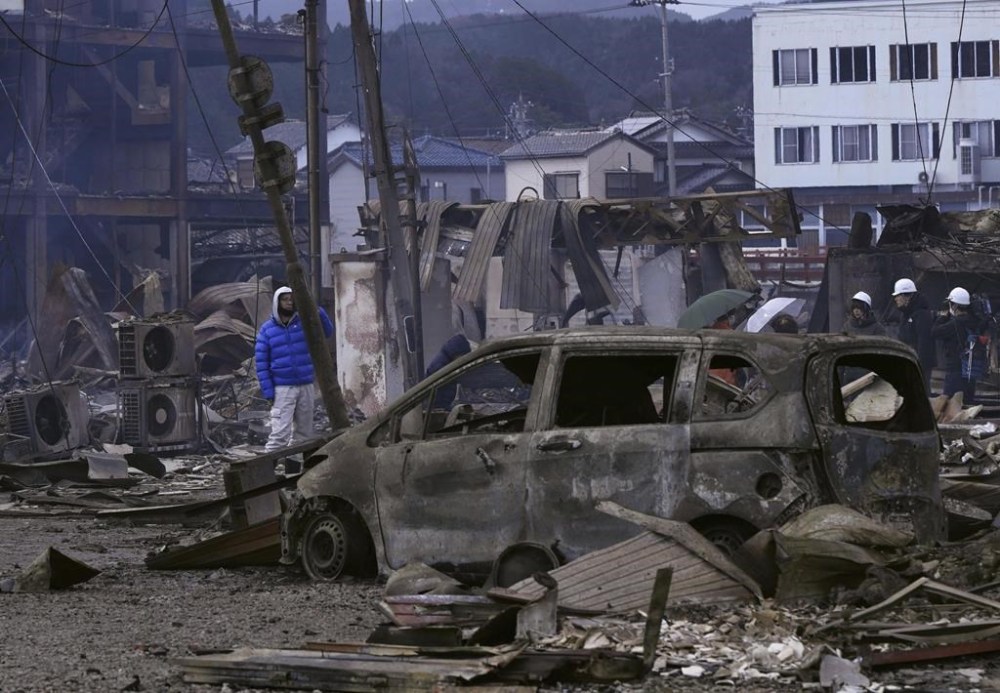
SUZU, Japan (AP) — A series of powerful earthquakes that hit western Japan left at least 62 people dead as rescue workers fought Wednesday to save those feared trapped under the rubble of collapsed buildings.
Aftershocks continued to shake Ishikawa prefecture and nearby areas two days after a magnitude 7.6 temblor slammed the area. The first 72 hours are considered crucial to save lives after disasters.
Water, power and cell phone service were still down in some areas. Residents expressed sorrow about their uncertain futures.
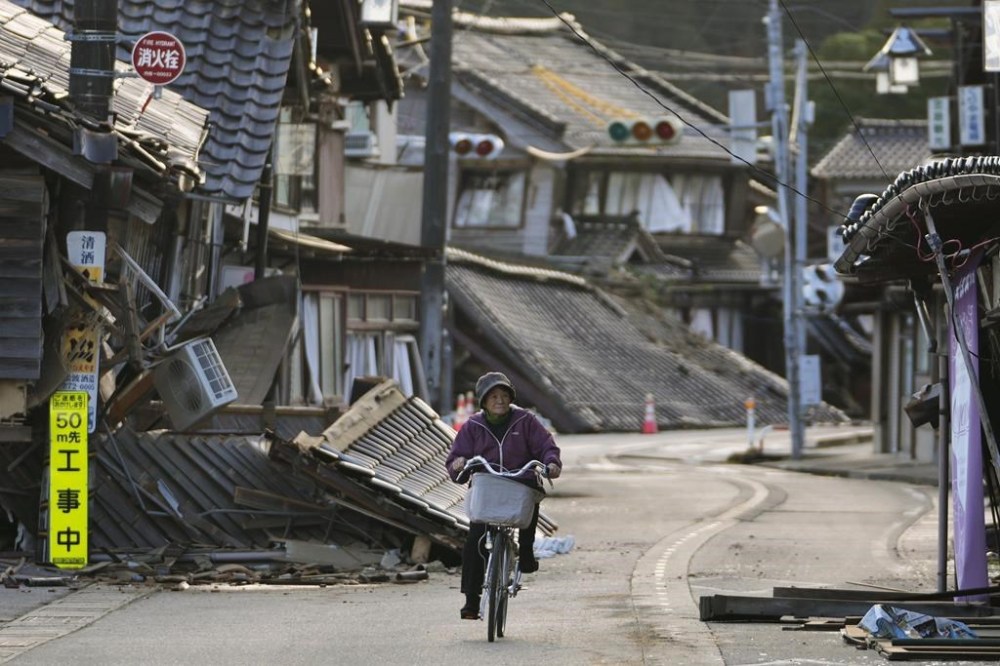
“It’s not just that it’s a mess. The wall has collapsed, and you can see through to the next room. I don’t think we can live here anymore,” Miki Kobayashi, an Ishikawa resident, said as she swept around her house.
The house was also damaged in a 2007 quake, she said.
Of the deaths, 29 were counted in Wajima city, while 22 people died in Suzu, according to Ishikawa Prefectural authorities. Dozens of people have been seriously injured, including in nearby prefectures.
Although casualty numbers continued to climb gradually, the prompt public warnings, relayed on broadcasts and phones, and the quick response from the general public and officials appeared to have limited some of the damage.
Toshitaka Katada, a University of Tokyo professor specializing in disasters, said people were prepared because the area had been hit by quakes in recent years. They had evacuation plans and emergency supplies in stock.
“There are probably no people on Earth who are as disaster-ready as the Japanese,” he told The Associated Press.
Japan is frequently hit by earthquakes because of its location along the “Ring of Fire,” an arc of volcanoes and fault lines in the Pacific Basin.
Katada warned the situation remains precarious and unpredictable. The March 2011 quake and tsunami in northeastern Japan had been preceded by other quakes.
“This is far from over,” Katada said.
Predictions by scientists have repeatedly been proven wrong, such as with the 2016 quake in southwestern Kumamoto, an area previously seen as relatively quake-free.
“Having too much confidence in the power of science is very dangerous. We are dealing with nature,” Katada said.
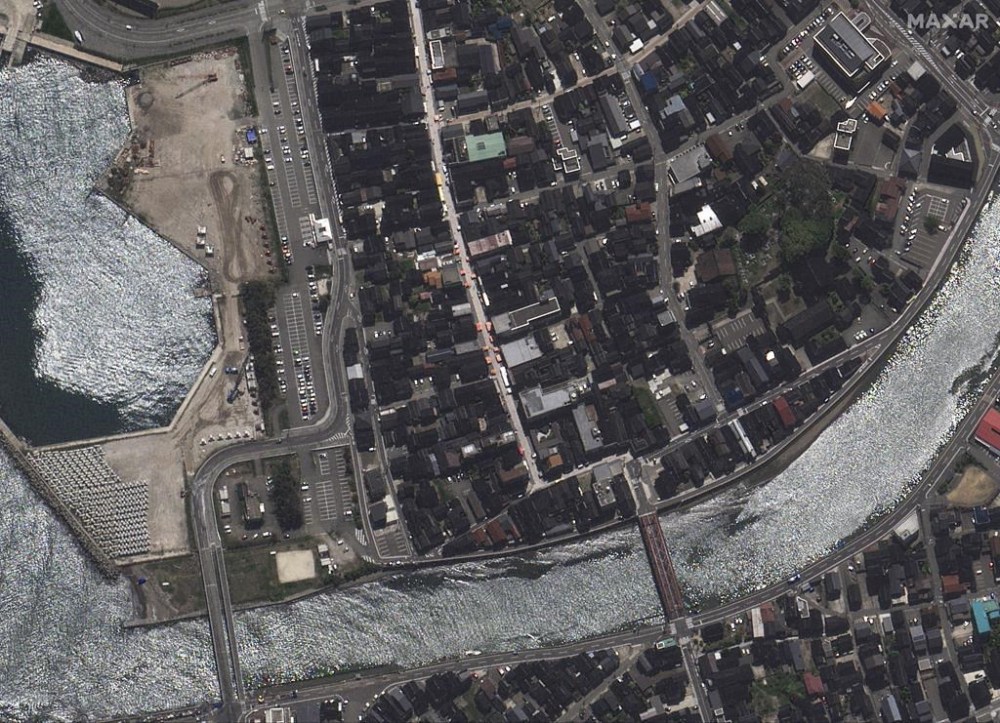
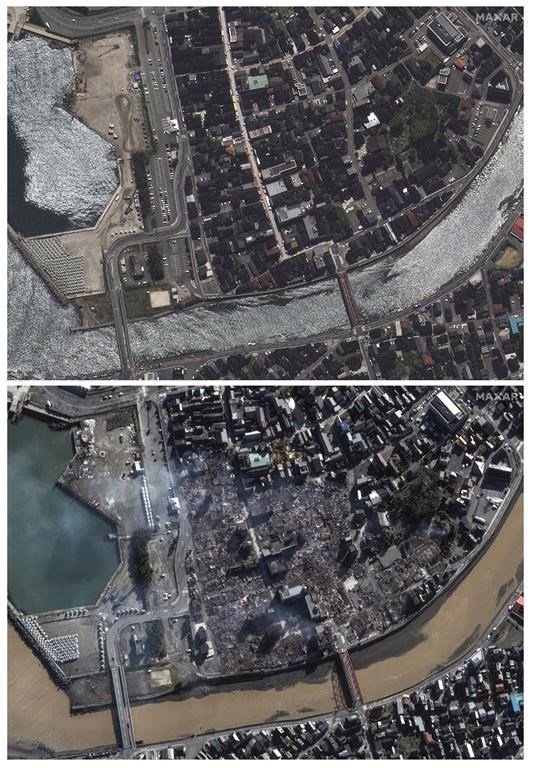
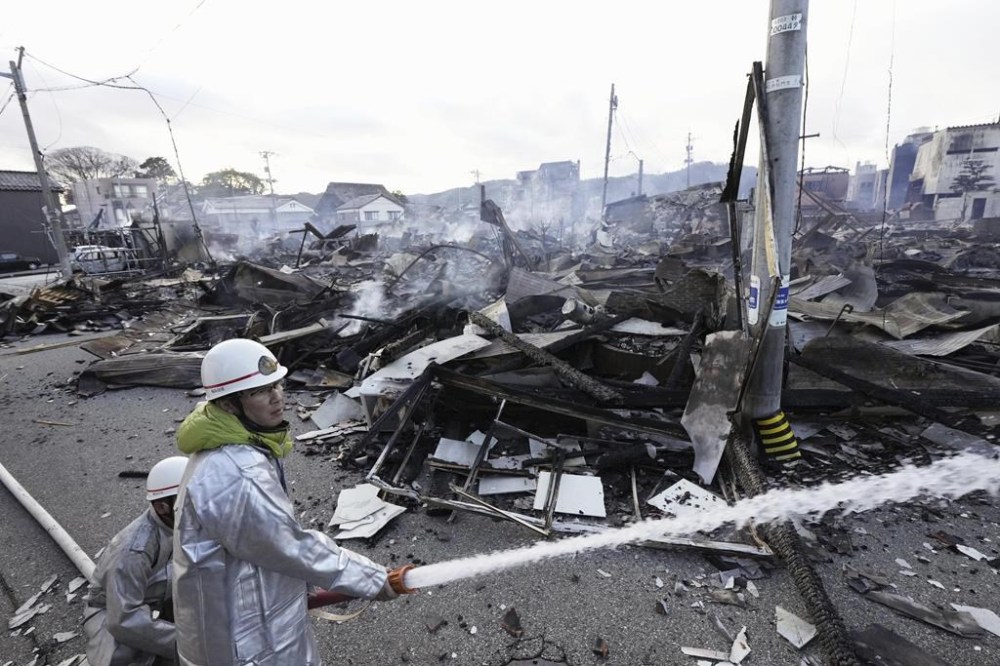
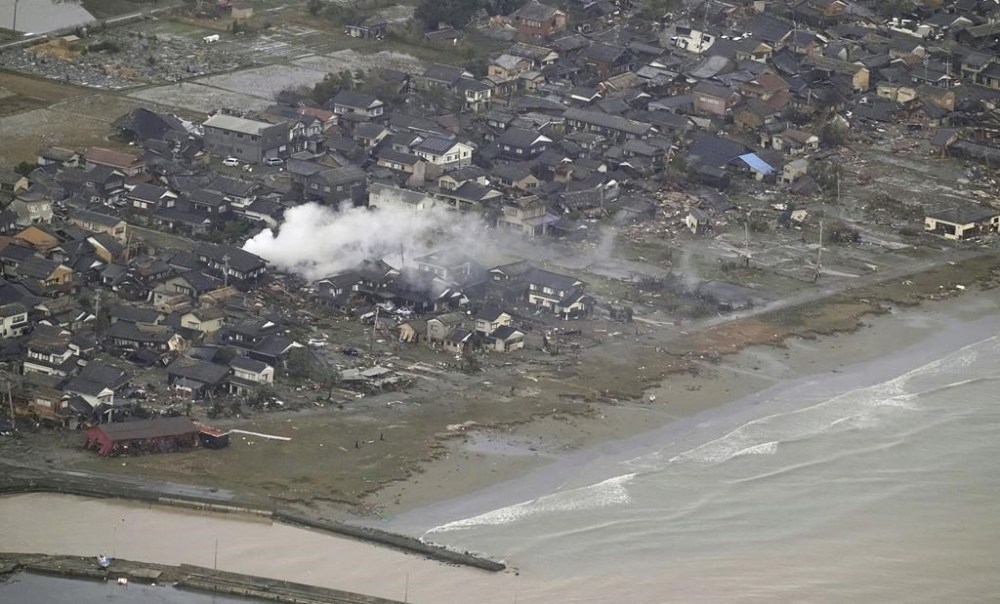
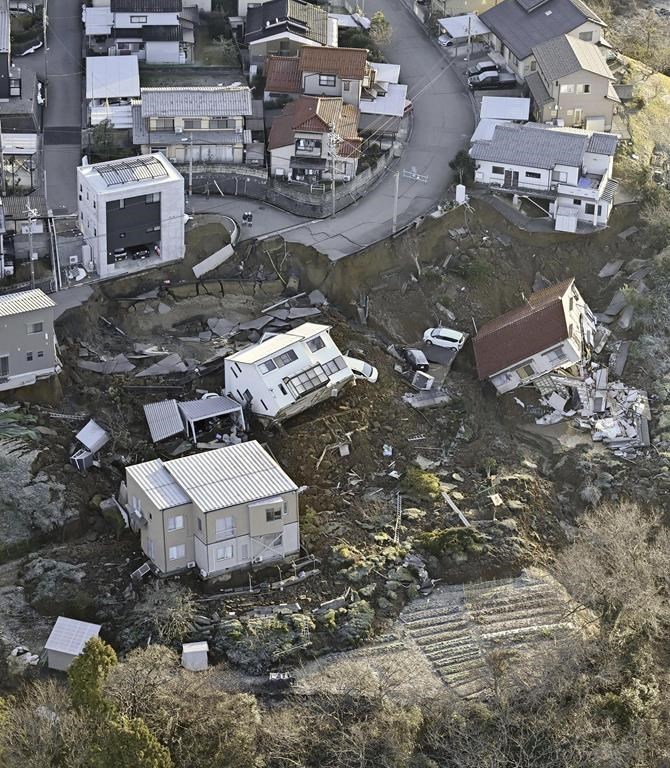
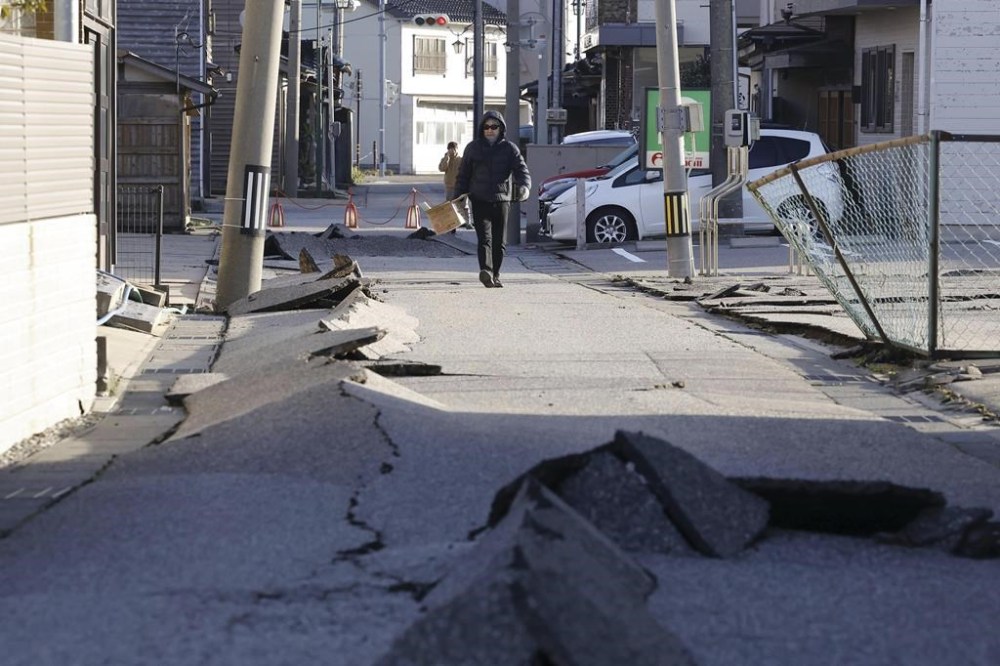
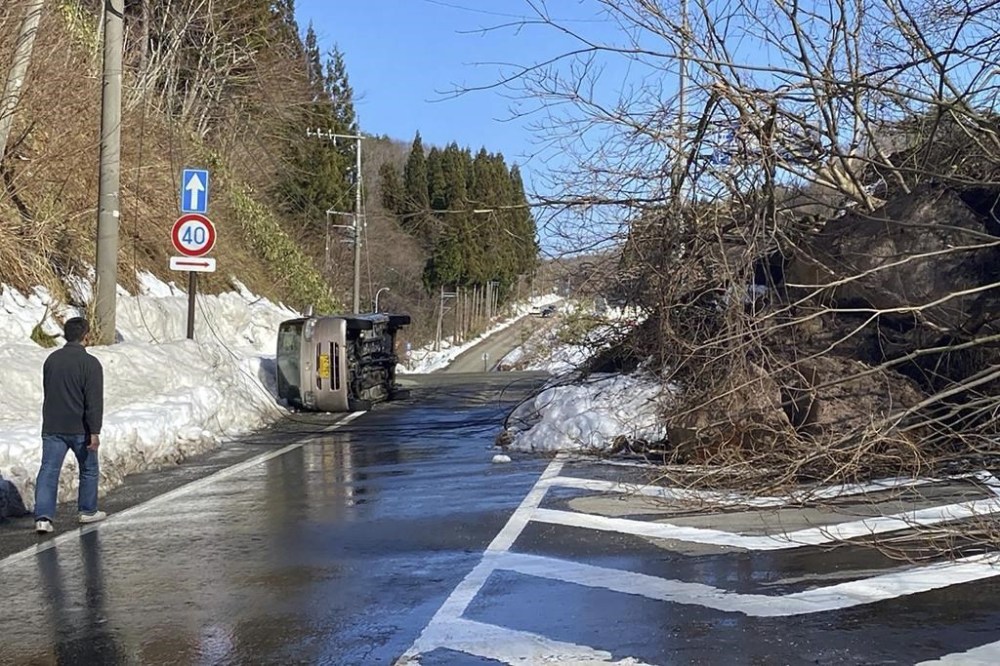
Japanese media’s aerial footage showed widespread damage in the hardest-hit spots, with landslides burying roads, boats tossed in the waters and a fire that had turned an entire section of Wajima city to ashes.
Japan’s military has dispatched 1,000 soldiers to the disaster zones to join rescue efforts. It was uncertain how many more victims might still be in the rubble.
Nuclear regulators said several nuclear plants in the region were operating normally. A major quake and tsunami in 2011 caused three reactors to melt and release large amounts of radiation at a nuclear plant in northeastern Japan.
On Monday, the Japan Meteorological Agency issued a major tsunami warning for Ishikawa and lower-level tsunami warnings or advisories for the rest of the western coast of Japan’s main island of Honshu, as well as for the northern island of Hokkaido.
The warning was downgraded several hours later, and all tsunami warnings were lifted as of early Tuesday. Waves measuring more than one meter (3 feet) hit some places.
Still, half-sunken ships floated in bays where tsunami waves had rolled in, leaving a muddied coastline.
People who were evacuated from their houses huddled in auditoriums, schools and community centers. Bullet trains in the region were halted, but service was mostly restored. Sections of highways were closed.
Weather forecasters predicted rain, setting off worries about crumbling buildings and infrastructure.
The region includes tourist spots famous for lacquerware and other traditional crafts, along with designated cultural heritage sites.
Australian Prime Minister Anthony Albanese joined President Joe Biden and other world leaders in expressing support for the Japanese.
“Our hearts go out to our friends in Japan,” he said. “We will provide, and have offered, whatever support is requested by our friends in Japan.”
___
Kageyama reported from Tokyo. Videographer Richard Columbo contributed from Suzu, reporter Rod McGuirk contributed from Sydney.
___
Yuri Kageyama is on X https://twitter.com/yurikageyama