How climate change contributes to wildfires like Chile’s

Advertisement

Advertise with us

At least 123 people have been killed by wildfires in central Chile, leading its president to declare two days of national mourning. The devastation comes soon after Colombia declared a disaster over wildfires. Scientists say climate change makes the heat waves and drought now hitting South America more likely — and both contribute to wildfires by drying out the plants that feed the blazes.

Read this article for free:


By clicking the button above, an account will be created and you will begin to receive some of our recommended newsletters. You may opt out of any newsletter by visiting your Email and Communication Preferences page or by clicking "unsubscribe" at the bottom of any email.

or

Already have an account? Log in here »

To continue reading, please subscribe:

Digital Subscription

One year of digital access for only $1.44 a week*

  • Enjoy unlimited reading on winnipegfreepress.com
  • Read the E-Edition, our digital replica newspaper
  • Access News Break, our award-winning app
  • Play interactive puzzles

*Billed as $5.77 plus GST every four weeks. After 52 weeks, price increases to the regular rate of $19.95 plus GST every four weeks. Offer available to new and qualified returning subscribers only. Cancel any time.

To continue reading, please subscribe:

Add Free Press access to your Brandon Sun subscription for only an additional

$1 for the first 4 weeks*

  • Enjoy unlimited reading on winnipegfreepress.com
  • Read the E-Edition, our digital replica newspaper
  • Access News Break, our award-winning app
  • Play interactive puzzles
Start now

*Your next Brandon Sun subscription payment will increase by $1.00 and you will be charged $17.95 plus GST for four weeks. After four weeks, your payment will increase to $24.95 plus GST every four weeks.

Hey there, time traveller!
This article was published 05/02/2024 (992 days ago), so information in it may no longer be current.

At least 123 people have been killed by wildfires in central Chile, leading its president to declare two days of national mourning. The devastation comes soon after Colombia declared a disaster over wildfires. Scientists say climate change makes the heat waves and drought now hitting South America more likely — and both contribute to wildfires by drying out the plants that feed the blazes.

WHAT’S HAPPENING IN CHILE?

The fires in Chile came amid a heat wave that pushed temperatures in the capital city of Santiago to about 37 degrees Celsius (nearly 100 degrees Fahrenheit). Extreme heat bakes moisture from wood, turning it into ideal fuel. Fires take hold more rapidly, and also burn with more intensity. Just a few extra degrees can be a tipping point that makes the difference between a mild fire season and a severe one.
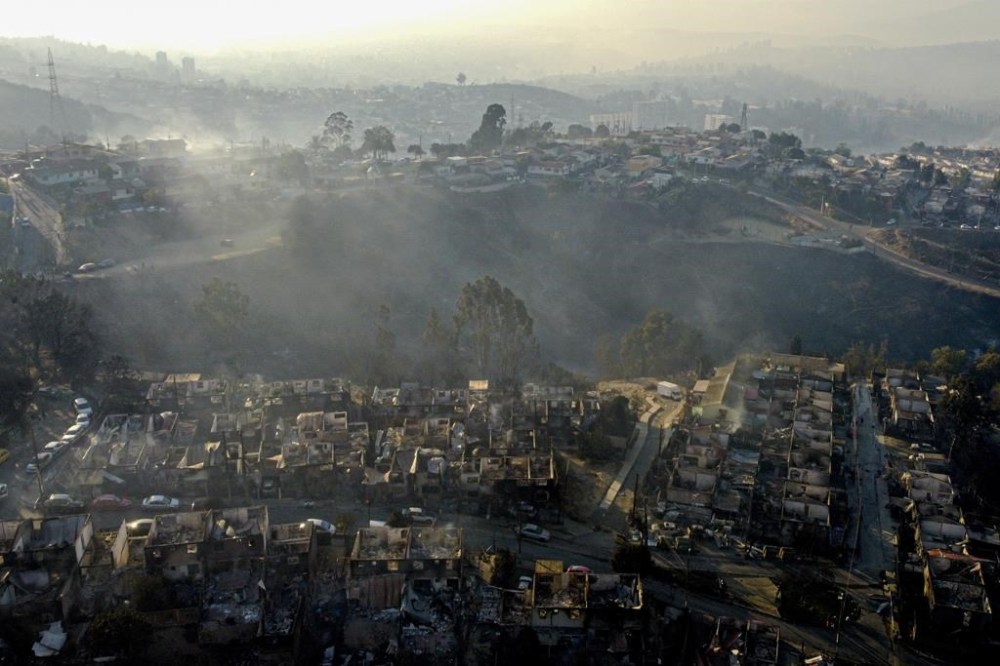
FILE - Smoke raises from burnt-out houses after a wildfire reached Villa Independencia neighborhood in Vina del Mar, Chile, Feb. 3, 2024. Scientists say climate change creates conditions that make the drought and wildfires now hitting South America more likely. (AP Photo/Esteban Felix, File)

Edward Mitchard, a forests expert at the University of Edinburgh School of Geosciences in Scotland, said climate change “makes the world hotter, which means that plants evaporate more water through them and soils get drier.”

It only takes a few days of very dry, hot weather for leaves to feel crisp and dry, he said. “That’s fuel that burns very well,” he said, adding: “Drier soil means fires are hotter and last longer.”

A Nature study showed that fire seasons are an average of 18.7% longer in length due to climate change. That means an increased window for disastrous fires to start.

WHAT ROLE DO GLOBAL WEATHER CYCLES PLAY?

The increased number of droughts as global rain cycles are interrupted means whole regions can be left unusually parched and more vulnerable to ignition.

“Climate change has made droughts more common,” said Mitchard. “And that’s especially happened in South America this year.

“We’ve had the most extreme drought ever recorded in the Amazon basin, and if you have droughts in the Amazon basin, you also get less rainfall in the south of South America.”

In Chile’s case, some unusually heavy rains last year are thought to have increased the growth of brush that makes perfect kindling for fires.

On top of this has come the El Niño weather pattern, the natural and periodic warming of surface waters in the Pacific that affects weather around the globe. In South America, it’s meant increased temperatures and drought this year.

Climate change makes stronger El Niños more likely, said Mitchard, and droughts caused by it are likelier to be more intense. Last month, Colombia’s government declared a disaster over dozens of wildfires associated with the weather phenomenon.

FILE - A wildfire burns on the slopes of the mountains surrounding Nemocon, north of Bogota, Colombia, Jan. 23, 2024. Scientists say climate change creates conditions that make the drought and wildfires now hitting South America more likely. (AP Photo/Ivan Valencia, File)

And the huge amount of carbon released by forest fires itself increases global warming.

ARE FOREST FIRES GETTING WORSE?

The World Resources Institute used satellite data to calculate that wildfires now destroy about 11,500 square miles of forest annually (30,000 square kilometers), an area about the size of Belgium and about twice as much as 20 years ago.

And the Intergovernmental Panel on Climate Change has found that globally, extreme heat waves happen five times more often because of human-caused global warming. Fire seasons are thus drier with higher temperatures. These are ideal conditions for forest fires to take hold.

————————————-

The Associated Press’ climate and environmental coverage receives financial support from multiple private foundations. AP is solely responsible for all content. Find AP’s standards for working with philanthropies, a list of supporters and funded coverage areas at AP.org.
Report Error Submit a Tip

More Stories

Hutterite colonies embrace the manufacturing business – while staying faithful to their way of life

Gabrielle Piché 13 minute read Preview

Hutterite colonies embrace the manufacturing business – while staying faithful to their way of life

Gabrielle Piché 13 minute read Yesterday at 5:02 PM CDT

Tucked away at Oak Bluff Hutterite Colony, past rows of communal housing and farm buildings, Aaron Maendel tinkers in a laboratory.

Black-and-white sheets smeared with grey-test formulas cover a counter. A Thermotron — a refrigerator-looking machine — is powered off but standing by to simulate any desired temperature.

Maendel moves to a worktop littered with partly full mixing cups. He pulls out a small, rectangular sample — a sheet showing the drying time of his new fixation, floor coatings.

“Very simple, actually. Very simple machine. Drags a stick through the mud,” Maendel says.

Read
Yesterday at 5:02 PM CDT

First Crumbl cookie shop opens in Winnipeg

Gabrielle Piché 3 minute read Preview

First Crumbl cookie shop opens in Winnipeg

Gabrielle Piché 3 minute read Updated: 12:50 PM CDT

The early birds got their cookies.

Klaudia and Jayson Ballantyne were the first in line for the grand opening of Winnipeg’s first Crumbl location at 1570 Regent Ave. West, arriving at 2 a.m. Friday — six hours before the cookie chain was set to open.

The brother and sister brought their lawn chairs and blankets and hunkered down.

Roughly 90 minutes later, by their count, the next customers arrived.

Read
Updated: 12:50 PM CDT

Colman radiant in well-woven romance

Alison Gillmor 4 minute read Preview

Colman radiant in well-woven romance

Alison Gillmor 4 minute read 5:34 PM CDT

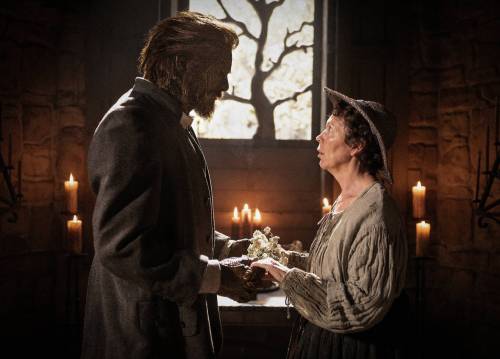
There have been wicker-related films before. The Wicker Man from 1973 is a classic of folk horror. This bawdy, rowdy outing is more of a folk sex-comedy.

Adapted from a story by Ursula Wills by filmmakers Eleanor Wilson and Alex Huston Fischer, Wicker is sometimes overly obvious in its satirical messaging. But like the wicker creation at its centre, Wilson and Fischer’s unexpected world is nicely crafted, the wonderful Olivia Colman weaving it all together with radiant, raunchy directness and real vulnerability.

In this feminist fable, set in some vague, peasanty time and place, Colman plays the ostracized, isolated Fisherwoman. Fisherwoman is either ignored or bullied by her fellow villagers, and in a community where the women are known as “Innkeeper’s Wife” or “Doctor’s Daughter,” perhaps the worst insult hurled at her is “Spinster.”

After a magical omen is dropped by her feet at a village wedding, Fisherwoman goes to the Basketmaker (Peter Dinklage), who has his own reasons for living alone at the edge of town, and orders up a husband.

Read
5:34 PM CDT

Reynolds exerts ‘maximum effort’ to boost Winnipeg after quick meet with mayor

Gabrielle Piché 3 minute read Preview

Reynolds exerts ‘maximum effort’ to boost Winnipeg after quick meet with mayor

Gabrielle Piché 3 minute read Updated: Yesterday at 8:13 PM CDT

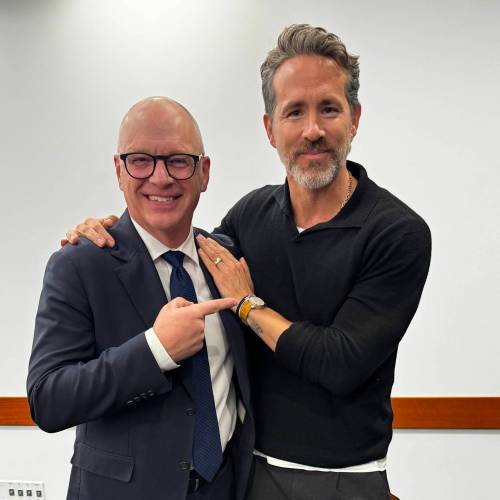
Ryan Reynolds wasn’t wearing his Deadpool suit, but that didn’t stop Mayor Scott Gillingham from wanting to talk about films with the Vancouver-born Hollywood movie star.

Reynolds, who appeared at IG Wealth Management's 100th anniversary celebration Wednesday at the RBC Convention Centre, took to social media afterward, sharing a photo of himself with Gillingham and trumpeting the province’s tax incentives.

“An incredible place to shoot,” the Instagram post read.

On Thursday, Gillingham said the actor, best known for portraying an irreverent, erratic anti-hero on the big screen, is a “really nice gentleman.”

Read
Updated: Yesterday at 8:13 PM CDT

Builder beefs up security after string of blazes

Morgan Modjeski 3 minute read Preview

Builder beefs up security after string of blazes

Morgan Modjeski 3 minute read Updated: 9:36 AM CDT

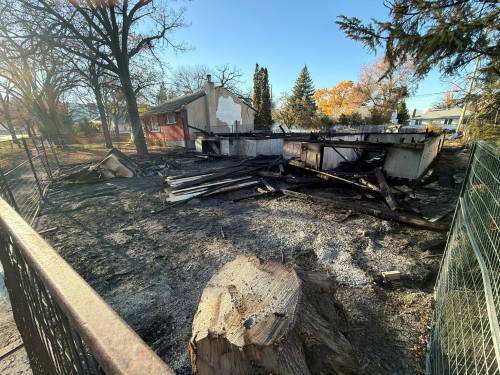
A Winnipeg builder said he’s had to beef up security around his developments after one of his projects sustained significant damage Wednesday in suspected arson cases.

Read
Updated: 9:36 AM CDT

Northern reflections: Churchill expansion debated at U of M forum

Eva Wasney 6 minute read Preview

Northern reflections: Churchill expansion debated at U of M forum

Eva Wasney 6 minute read 6:40 PM CDT

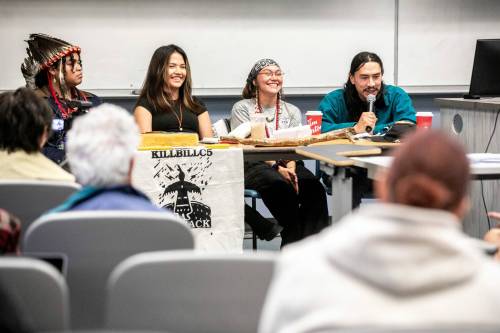
A group of about 50 students, residents and environmental advocates gathered in Winnipeg on Friday to discuss Indigenous sovereignty and the future of northern Manitoba.

The event at the University of Manitoba was the final stop on the Arctic Crossroads Tour, an Indigenous-led public engagement campaign highlighting the potential impacts of proposed major infrastructure projects on northern First Nation communities. The tour also stopped in Churchill, Nisichawayasihk Cree Nation and Brandon this week.

Event host Clayton Thomas-Müller — a climate activist, author and member of Pukatawagan Cree Nation — said concerns raised by attendees run counter to Premier Wab Kinew’s assertion earlier this year that there is no Indigenous opposition to a proposed liquefied natural gas (LNG) pipeline to Churchill.

“There is a ton of Indigenous concern, as well as fear to speak out,” Thomas-Müller, the Arctic and Hudson Bay campaigner for Climate Reality Project Canada, said in an interview.

Read
6:40 PM CDT