A pod of killer whales trapped in drift ice off northern Japan has apparently safely escaped
Advertisement
Read this article for free:
or
Already have an account? Log in here »
To continue reading, please subscribe:

Digital Subscription
One year of digital access for only $205*
- Enjoy unlimited reading on winnipegfreepress.com
- Read the E-Edition, our digital replica newspaper
- Access News Break, our award-winning app
- Play interactive puzzles
*First annual payment billed as $205.00 + GST for one year. This annual subscription will automatically renew at $233.00 + GST every 52 weeks (10% off the regular annual price of $259.35). Offer available to new and qualified returning subscribers only. Cancel any time.
To continue reading, please subscribe:
Add Free Press access to your Brandon Sun subscription for only an additional
$1 for the first 4 weeks*
- Enjoy unlimited reading on winnipegfreepress.com
- Read the E-Edition, our digital replica newspaper
- Access News Break, our award-winning app
- Play interactive puzzles
*Your next Brandon Sun subscription payment will increase by $1.00 and you will be charged $17.95 plus GST for four weeks. After four weeks, your payment will increase to $24.95 plus GST every four weeks.
Read unlimited articles for free today:
or
Already have an account? Log in here »
Hey there, time traveller!
This article was published 07/02/2024 (981 days ago), so information in it may no longer be current.
TOKYO (AP) — A pod of killer whales that was trapped in drift ice off Japan’s northern main island of Hokkaido, prompting concern from environmental groups, has apparently safely escaped, officials said Wednesday.
The killer whales, also known as orcas, were initially spotted by a local fisherman who reported them to officials in the nearby town of Rausu on the northeastern coast of Hokkaido on Tuesday morning.
Town officials traveled to the coast later Tuesday and saw about a dozen whales bobbing up and down in a tiny gap surrounded by drift ice, about 1 kilometer (half a mile) offshore.
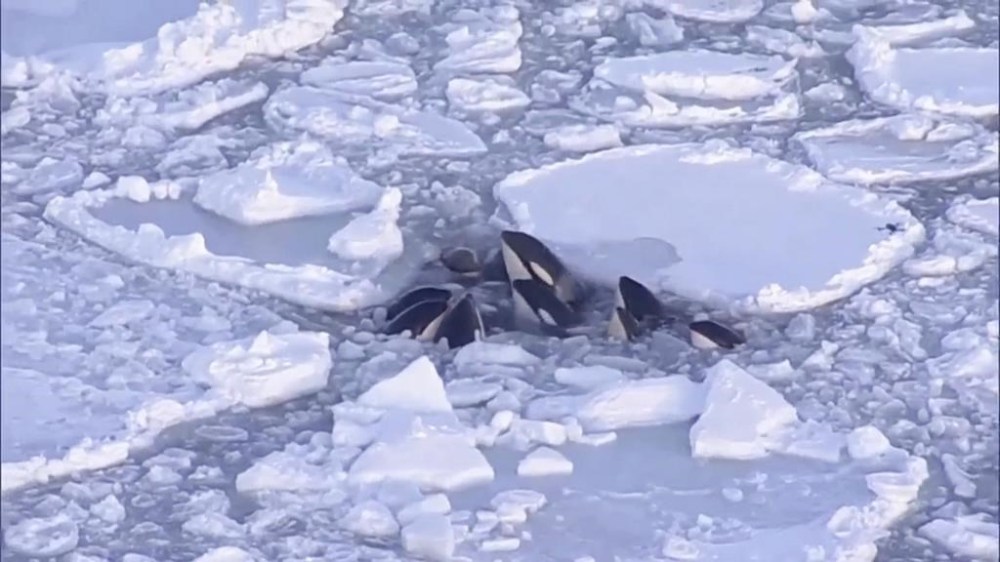
After analyzing drone footage filmed by a conservationist group, officials counted 13 killer whales there.
The officials returned to the coast Tuesday evening and saw the pod had moved to the north, and it was gone when they returned again Wednesday morning, Rausu official Masataka Shirayanagi said.
Officials said they believe the killer whales were able to free themselves from the drift ice as gaps between them grew.
“We believe they were able to escape safely,” Shirayanagi said.
The footage, captured by a drone flown by a conservationist group and shown on NHK national television and on social media, prompted concern in and outside Japan about the whales’ conditions and pleas for the Japanese government to help. One group submitted a request to the Defense Ministry to mobilize an ice breaker to help free them.
Although the trapped whales were in Japanese waters, they were not far from an island that is disputed by Japan and Russia. Japan marked the annual Northern Territory Day on Wednesday to renew its demand for the return of the Russian-held islands.
The dispute over the islands, which the former Soviet Union seized from Japan at the end of World War II, has prevented the two countries from signing a peace treaty formally ending their war hostilities. Moscow announced it was cutting off negotiations with Tokyo over Japanese sanctions following Russia’s invasion of Ukraine.
Chief Cabinet Secretary Yoshimasa Hayashi told reporters on Wednesday that killer whales are not designated as an endangered species in Japan and that officials were monitoring the situation while Japan and Russia communicated over the issue.