A baby boom of African penguin chicks hatches at a San Francisco science museum
Advertisement
Read this article for free:
or
Already have an account? Log in here »
To continue reading, please subscribe:
Digital Subscription
One year of digital access for only $1.44 a week*
- Enjoy unlimited reading on winnipegfreepress.com
- Read the E-Edition, our digital replica newspaper
- Access News Break, our award-winning app
- Play interactive puzzles
*Billed as $5.77 plus GST every four weeks. After 52 weeks, price increases to the regular rate of $19.95 plus GST every four weeks. Offer available to new and qualified returning subscribers only. Cancel any time.
To continue reading, please subscribe:
Add Free Press access to your Brandon Sun subscription for only an additional
$1 for the first 4 weeks*
- Enjoy unlimited reading on winnipegfreepress.com
- Read the E-Edition, our digital replica newspaper
- Access News Break, our award-winning app
- Play interactive puzzles
*Your next Brandon Sun subscription payment will increase by $1.00 and you will be charged $17.95 plus GST for four weeks. After four weeks, your payment will increase to $24.95 plus GST every four weeks.
Read unlimited articles for free today:
or
Already have an account? Log in here »
Hey there, time traveller!
This article was published 08/02/2024 (986 days ago), so information in it may no longer be current.
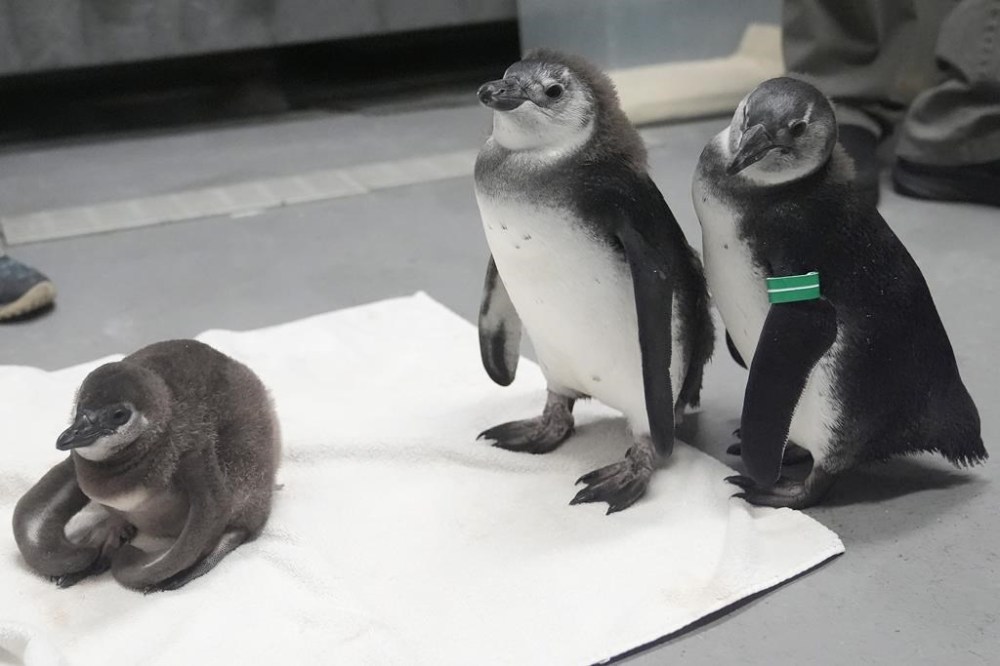
SAN FRANCISCO (AP) — A bounty of 10 African penguin chicks has hatched in just over a year at a San Francisco science museum as part of an effort to conserve the endangered bird.
The penguins began hatching in November 2022, ending a four year period without any new chicks, and continued through January of this year, the California Academy of Sciences announced Wednesday.
African penguins have dwindled to 9,000 breeding pairs in the wild, the academy said in a statement.
Threats such as overfishing, habitat degradation and oil spills have reduced colonies of the charismatic black-and-white birds, said Brenda Melton, director of animal care and well-being at the museum’s Steinhart Aquarium.
“Every chick we welcome strengthens the genetics and overall population of the species in human care,” she said.
Chicks spend their first three weeks with their penguin parents in a nest box. They then attend “fish school,” where they learn to swim on their own and eat fish provided by biologists. Once ready, they are introduced to the colony.
The 21 penguins at the museum in Golden Gate Park have distinct personalities and are identifiable by their arm bands, according to the academy’s website.
Opal is the oldest and, at age 36, has perfected the ability to catch fish in mid-air. Her partner, Pete, is a messy eater and a flirt.
Partners Stanlee and Bernie, who both like to bray, produced four of the 10 chicks, including Fyn, named for a type of vegetation found on the southern tip of Africa. Fyn is the youngest on exhibit and older sister to Nelson and Alice, both hatched in November.
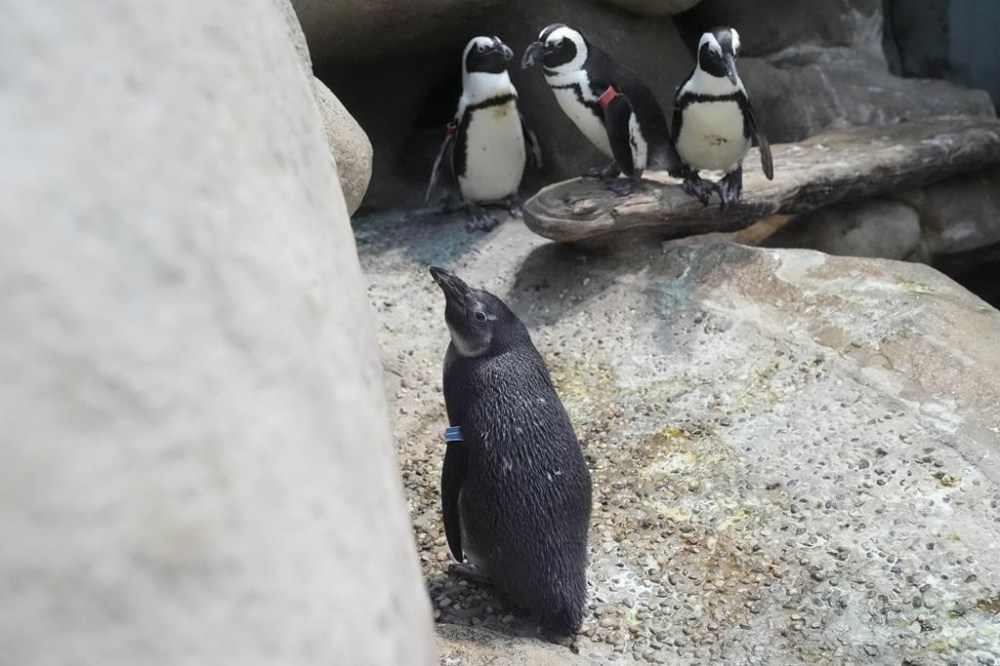
Fyn often runs up to biologists when they enter the habitat and shakes her head at them — typical courtship behavior that chicks and juveniles commonly display toward people who have cared for them since hatching.
The youngest chick hatched Jan. 12, and its sex has not yet been determined.
African penguins can live to be 27 years old in the wild, and longer in captivity.