In water-stressed Singapore, a search for new solutions to keep the taps flowing
Advertisement
Read this article for free:
or
Already have an account? Log in here »
To continue reading, please subscribe:

Digital Subscription
One year of digital access for only $205*
- Enjoy unlimited reading on winnipegfreepress.com
- Read the E-Edition, our digital replica newspaper
- Access News Break, our award-winning app
- Play interactive puzzles
*First annual payment billed as $205.00 + GST for one year. This annual subscription will automatically renew at $233.00 + GST every 52 weeks (10% off the regular annual price of $259.35). Offer available to new and qualified returning subscribers only. Cancel any time.
To continue reading, please subscribe:
Add Free Press access to your Brandon Sun subscription for only an additional
$1 for the first 4 weeks*
- Enjoy unlimited reading on winnipegfreepress.com
- Read the E-Edition, our digital replica newspaper
- Access News Break, our award-winning app
- Play interactive puzzles
*Your next Brandon Sun subscription payment will increase by $1.00 and you will be charged $17.95 plus GST for four weeks. After four weeks, your payment will increase to $24.95 plus GST every four weeks.
Read unlimited articles for free today:
or
Already have an account? Log in here »
Hey there, time traveller!
This article was published 25/02/2024 (937 days ago), so information in it may no longer be current.
SINGAPORE (AP) — A crack of thunder booms as dozens of screens in a locked office flash between live video of cars splashing through wet roads, drains sapping the streets dry, and reservoirs collecting the precious rainwater across the tropical island of Singapore. A team of government employees intently monitors the water, which will be collected and purified for use by the country’s six million residents.
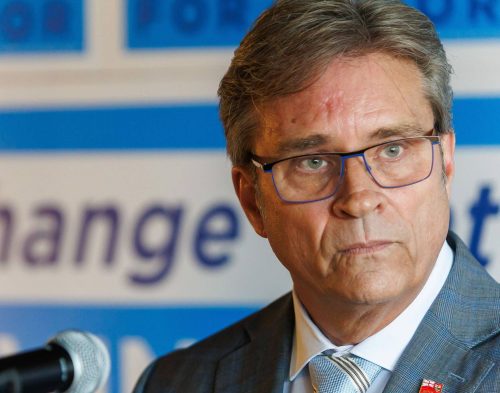
“We make use of real-time data to manage the storm water,” Harry Seah, deputy chief executive of operations at PUB, Singapore’s National Water Agency, says with a smile while standing in front of the screens. “All of this water will go to the marina and reservoirs.”
The room is part of Singapore’s cutting-edge water management system that combines technology, diplomacy and community involvement to help one of the most water-stressed nations in the world secure its water future. The country’s innovations have attracted the attention of other water-scarce nations seeking solutions.
A small city-state island located in Southeast Asia, Singapore is one of the most densely populated countries on the planet. In recent decades the island has also transformed into a modern international business hub, with a rapidly developing economy. The boom has caused the country’s water consumption to increase by over twelve times since the nation’s independence from Malaysia in 1965, and the economy is only expected to keep growing.
With no natural water resources, the country has relied on importing water from neighboring Malaysia via a series of deals allowing inexpensive purchase of water drawn from the country’s Johor River. But the deal is set to expire in 2061, with uncertainty over its renewal.
For years Malaysian politicians have targeted the water deal, sparking political tensions with Singapore. The Malaysian government has claimed the price at which Singapore purchases water — set decades ago — is too low and should be renegotiated, while the Singaporean government argues its treatment and resale of of the water to Malaysia is done at a generous price.
And climate change, which brings increased intense weather, rising seas and a rise in average temperatures, is expected to exacerbate water insecurity, according to research done by the Singaporean government.
“For us, water is not an inexhaustible gift of nature. It is a strategic and scarce resource,” Singapore Prime Minister Lee Hsien Loong said at the opening of a water treatment facility in 2021. “We are always pushing the limits of our water resources. And producing each additional drop of water gets harder and harder, and more and more expensive.”
Seeking solutions to its water stresses, the Singaporean government has spent decades developing a master plan focusing on what they call their four “national taps”: water catchment, recycling, desalination and imports.
Across the island, seventeen reservoirs catch and store rainwater, which is treated through a series of chemical coagulation, rapid gravity filtration and disinfection.
Five desalination plants, which produce drinking water by pushing seawater through membranes to remove dissolved salts and minerals, operate across the island, creating millions of gallons of clean water every day.
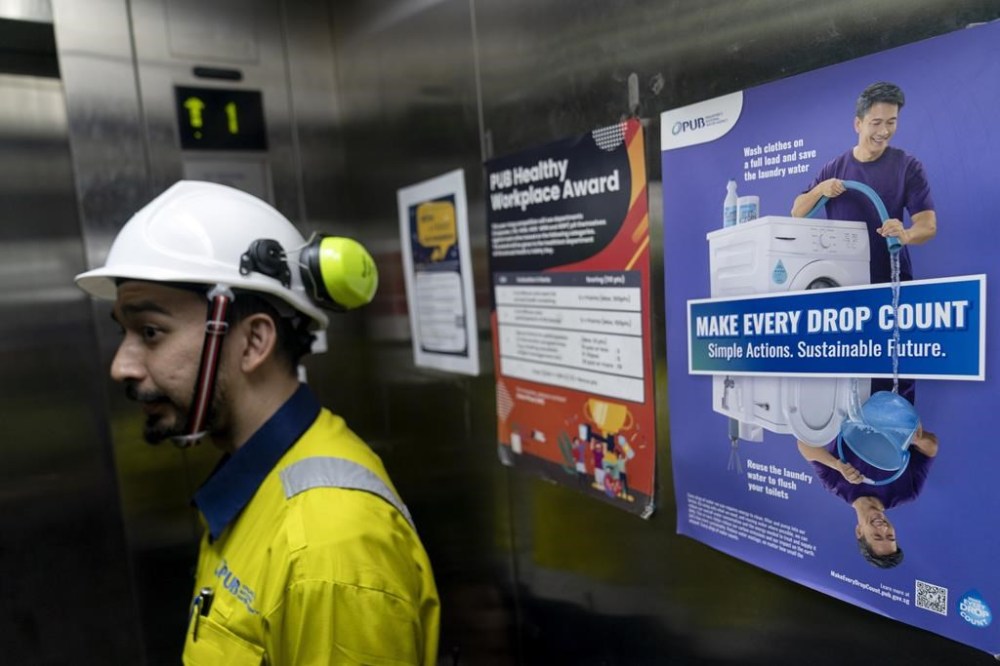
A massive sewage recycling program purifies wastewater through microfiltration, reverse osmosis and ultraviolet irradiation, adding to drinking supply reservoirs. Dubbed “NEWater”, the treated wastewater now provides Singapore 40% of its water, with the government hoping to increase capacity to 55% of demand in years to come. To help build people’s confidence in the safety, Singapore’s national water agency collaborated with a local craft brewery to create a line of beer made from treated sewage.
Innovation has been possible partially because of the involvement of private businesses, Seah said.
“Sometimes private sectors may have a different way of doing things, and you can learn from them. Industry involvement in us is very important,” Seah said.
Getting community participation and buy in has been an effective method to improved awareness and conservation as well, Seah said.
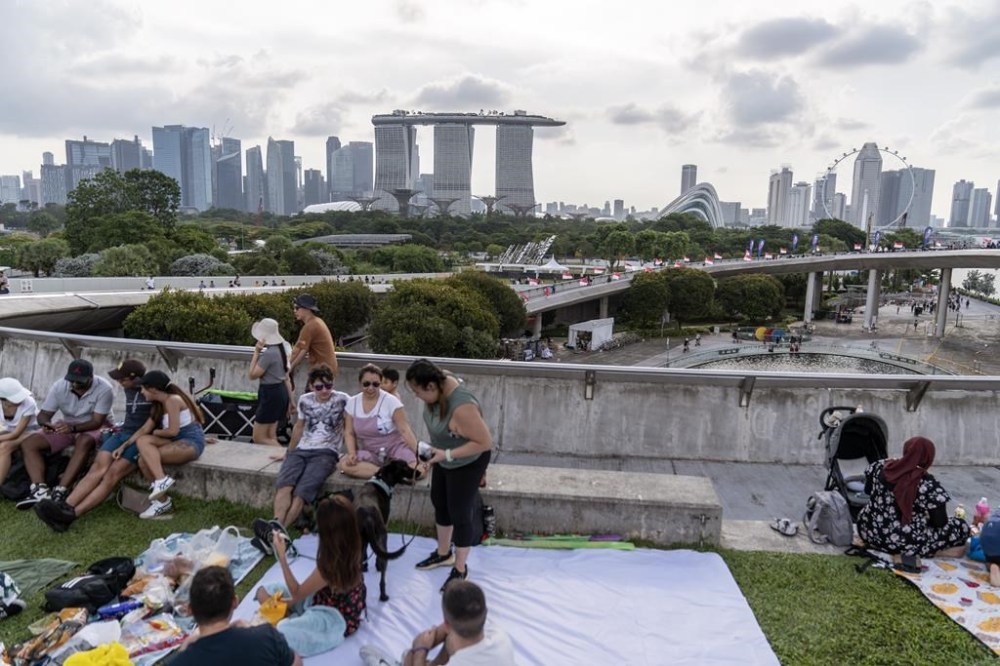
In 2006 the government launched the Active, Beautiful, Clean Waters Program, which transformed the country’s water systems into more public areas. Through the program, residents can kayak, hike and picnic on the reservoirs, giving a greater sense of ownership and value to the country’s water supplies. Several water facilities now have public green spaces on the roofs where the public can picnic amid big lush green lawns.
In schools, children are taught about best practices for water use and conservation. Schools hold mock water rationing exercises where water taps are shut off and students collect water in pails.
The international community has tapped into Singapore’s water innovation as well. The country has become a global hub for water technology, as home to nearly 200 water companies and over 20 research centers and hosts a biennial International Water Week.
Water technology developed and used in Singapore, such as portable water filters, water testing technology and flood management tools, have been exported to over 30 countries, including Indonesia, Malaysia and Nepal.
But not all of the solutions used in Singapore will relevant to other countries, especially those with less-developed infrastructure concedes Seah.
Despite the leaps that Singapore has made in its journey for water security, Seah warns that continued progress is essential for the island.
“After more than two decades we are still constantly analyzing the water,” he said. “We can never be complacent.”