Most teens report feeling happy or peaceful when they go without smartphones, Pew survey finds

Advertisement

Advertise with us

Nearly three-quarters of U.S. teens say they feel happy or peaceful when they don't have their phones with them, according to a new report from the Pew Research Center.

Read this article for free:


By clicking the button above, an account will be created and you will begin to receive some of our recommended newsletters. You may opt out of any newsletter by visiting your Email and Communication Preferences page or by clicking "unsubscribe" at the bottom of any email.

or

Already have an account? Log in here »

To continue reading, please subscribe:

Digital Subscription

One year of digital access for only $1.44 a week*

  • Enjoy unlimited reading on winnipegfreepress.com
  • Read the E-Edition, our digital replica newspaper
  • Access News Break, our award-winning app
  • Play interactive puzzles

*Billed as $5.77 plus GST every four weeks. After 52 weeks, price increases to the regular rate of $19.95 plus GST every four weeks. Offer available to new and qualified returning subscribers only. Cancel any time.

To continue reading, please subscribe:

Add Free Press access to your Brandon Sun subscription for only an additional

$1 for the first 4 weeks*

  • Enjoy unlimited reading on winnipegfreepress.com
  • Read the E-Edition, our digital replica newspaper
  • Access News Break, our award-winning app
  • Play interactive puzzles
Start now

*Your next Brandon Sun subscription payment will increase by $1.00 and you will be charged $17.95 plus GST for four weeks. After four weeks, your payment will increase to $24.95 plus GST every four weeks.

Hey there, time traveller!
This article was published 11/03/2024 (953 days ago), so information in it may no longer be current.

Nearly three-quarters of U.S. teens say they feel happy or peaceful when they don’t have their phones with them, according to a new report from the Pew Research Center.

In a survey published Monday, Pew also found that despite the positive associations with going phone-free, most teens have not limited their phone or social media use.

The survey comes as policymakers and children’s advocates are growing increasingly concerned with teens’ relationships with their phones and social media. Last fall, dozens of states, including California and New York, sued Instagram and Facebook owner Meta Platforms Inc. for harming young people and contributing to the youth mental health crisis by knowingly and deliberately designing features that addict children. In January, the CEOs of Meta, TikTok, X and other social media companies went before the Senate Judiciary Committee to testify about their platforms’ harms to young people.
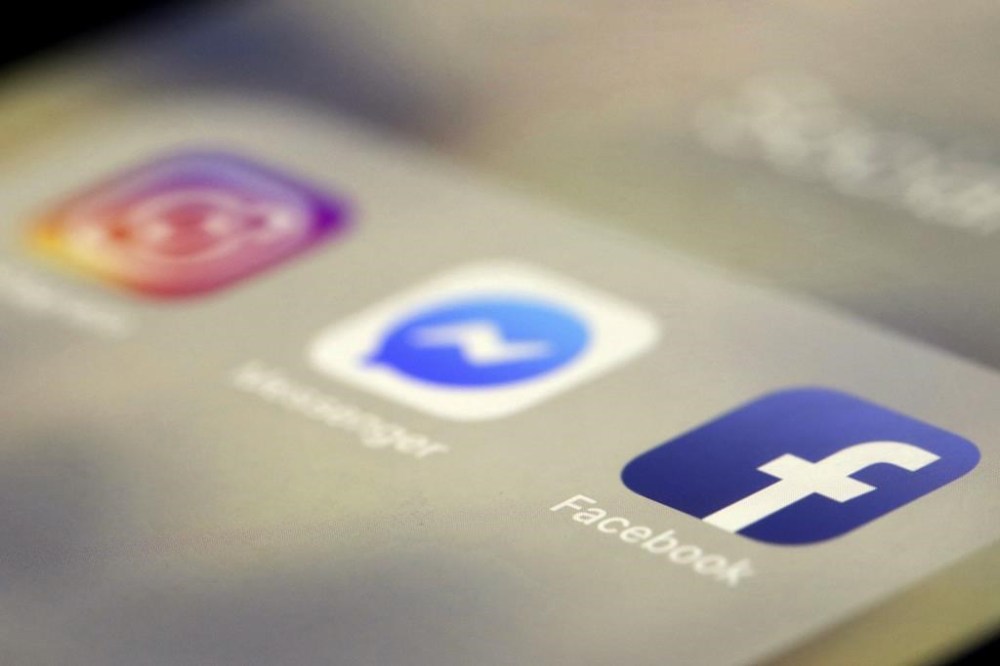
FILE- In this March 13, 2019, file photo Facebook, Messenger and Instagram apps are are displayed on an iPhone in New York. A group of 40 state attorneys general sent a letter to Instagram and Facebook parent company Meta expressing concern over what they say is dramatic uptick of consumer complaints about account takeovers and lockouts. The AGs called on Meta to do a better job preventing account takeovers. (AP Photo/Jenny Kane, File)

Despite the increasing concerns, most teens say smartphones make it easier be creative and pursue hobbies, while 45% said it helps them do well in school. Most teens said the benefits of having a smartphone outweigh the harms for people their age. Nearly all U.S. teens (95%) have access to a smartphone, according to Pew.

Majorities of teens say smartphones make it a little or a lot easier for people their age to pursue hobbies and interests (69%) and be creative (65%). Close to half (45%) say these devices have made it easier for youth to do well in school.

The poll was conducted from Sept. 26-Oct. 23, 2023, among a sample of 1,453 pairs of teens with one parent and has a margin of error of plus or minus 3.2 percentage points.

Here are some of the survey’s other findings:

— About half of parents (47%) say they limit the amount of time their teen can be on their phone, while a similar share (48%) don’t do this.

— Roughly 4 in 10 parents and teens (38% each) say they at least sometimes argue with each other about how much time their teen spends on the phone. Ten percent in each group said this happens often, with Hispanic Americans the most likely to say they often argue about phone use.

— Nearly two-thirds (64%) of parents of 13- to 14-year-olds say they look through their teen’s smartphone, compared with 41% among parents of 15- to 17-year-olds.

— Forty-two percent of teens say smartphones make learning good social skills harder, while 30% said it makes it easier.

— About half of the parents said they spend too much time on their phone. Higher-income parents were more likely to say this than those in lower income buckets, and white parents were more likely to report spending too much time on their phone than Hispanic or Black parents.


Report Error Submit a Tip

More Stories

Salvation Army calls on Winnipeggers to donate merchandise as sales soar

Kelly-Anne Riess 4 minute read Preview

Salvation Army calls on Winnipeggers to donate merchandise as sales soar

Kelly-Anne Riess 4 minute read Yesterday at 2:01 AM CDT

The Salvation Army is taking donated merchandise from other regions to stock its Winnipeg thrift stores as increasing sales outpace local donations.

Retail activity at the charity’s eight Winnipeg locations grew more than 10 per cent year over year during several months, from January through April, and again in June.

Although local donations remain strong, they haven’t kept pace with demand, prompting the organization to supplement inventory with merchandise from elsewhere.

Ted Troughton, managing director of the Salvation Army’s thrift store operations, said rising living costs are bringing in new customers.

Read
Yesterday at 2:01 AM CDT

Four charged in St. James fight

2 minute read Sunday, Oct. 18, 2026

Four people are facing charges after an assault at a St. James apartment building.

A man was struck in the face with a pistol when he answered the door at his apartment suite in the 2200 block of Portage Avenue at about 2:15 a.m. Oct. 18, and a physical fight broke out in the hallway. Bear spray was used during the fight, the Winnipeg Police Service stated in a news release Sunday.

Police learned one of the men involved in the fight had been armed at a nearby restaurant, in the 2100 block of Portage Avenue, where he was refused service. Restaurant staff called police after seeing what appeared to be a gun in the man's hand as he was leaving.

A group of men then went to the apartment building and knocked on a suite door, police said, adding the men involved knew each other. The man who was armed at the restaurant was involved in the altercation, police stated, but no specific details about his role were released.

Province looks to keep nearly $1M from traffic stop

Erik Pindera 4 minute read Preview

Province looks to keep nearly $1M from traffic stop

Erik Pindera 4 minute read Yesterday at 2:01 AM CDT

The RCMP constable could see that Alireza Haghgoo was nervous. The 22-year-old, seated as a passenger in a rental Nissan SUV the Mountie pulled over for speeding outside Brandon in late July, was breathing heavily and tapping his foot constantly.

Read
Yesterday at 2:01 AM CDT

Consumer apprehension grows as US retailers adopt AI-assisted pricing tools

Dee-ann Durbin And Anne D'innocenzio, The Associated Press 7 minute read Preview

Consumer apprehension grows as US retailers adopt AI-assisted pricing tools

Dee-ann Durbin And Anne D'innocenzio, The Associated Press 7 minute read Updated: Yesterday at 6:00 PM CDT

U.S. consumers aren't just frustrated with high prices. They're angry and confused about the increasingly high-tech ways that restaurant chains and major retailers are setting those prices.

Digital price tags are rapidly replacing paper ones in grocery aisles. Artificial intelligence tools help businesses decide what to charge by predicting how customers might respond. Terms like “dynamic pricing” and “surveillance pricing” are stirring anxiety on social media, where users wonder if different people are getting different prices for the same product.

Americans have grown accustomed to changing prices when booking flights, hotel rooms and rides, but the prospect of everyday spending shaped by algorithms they don’t understand and personal data they may not realize they’re sharing has touched a nerve.

“There are major tensions happening right now between who’s really going to have the power with some of these algorithms and usage of bots and AI: the companies or the shopper,” said Katie Thomas, who leads an internal consumer behavior think tank at the management consulting firm Kearney.

Read
Updated: Yesterday at 6:00 PM CDT

De Havilland calls for national water bomber fleet as it scrambles to meet demand

Christopher Reynolds, The Canadian Press 7 minute read Preview

De Havilland calls for national water bomber fleet as it scrambles to meet demand

Christopher Reynolds, The Canadian Press 7 minute read Sunday, Oct. 18, 2026

MONTREAL - On July 13, a pair of Canadair water bombers touched down on the Seine River, skimming along its surface to refill their water tanks as they battled a wildfire south of Paris.

The "super scoopers," with their signature ketchup-red wing tips on a mustard-yellow body, sucked up 6,000-plus litres from France’s most famous waterway in one go as part of a fight against the flames then rampaging across Europe.

The event in north-central France underscored how wildfires are ranging even farther from their traditional grounds and fuelling an urgent need for water bombers to fend off climate disasters.

The iconic Canadair turboprops serve as the only amphibious firefighting aircraft currently in production built from the outset for that purpose, rather than being retrofitted to douse flames.

Read
Sunday, Oct. 18, 2026

Puzzles Palace

1 minute read Friday, Oct. 16, 2026

To solve our puzzles, please subscribe with this special offer: |