US could end legal fight against Titanic expedition
Advertisement
Read this article for free:
or
Already have an account? Log in here »
To continue reading, please subscribe:

Digital Subscription
One year of digital access for only $205*
- Enjoy unlimited reading on winnipegfreepress.com
- Read the E-Edition, our digital replica newspaper
- Access News Break, our award-winning app
- Play interactive puzzles
*First annual payment billed as $205.00 + GST for one year. This annual subscription will automatically renew at $233.00 + GST every 52 weeks (10% off the regular annual price of $259.35). Offer available to new and qualified returning subscribers only. Cancel any time.
To continue reading, please subscribe:
Add Free Press access to your Brandon Sun subscription for only an additional
$1 for the first 4 weeks*
- Enjoy unlimited reading on winnipegfreepress.com
- Read the E-Edition, our digital replica newspaper
- Access News Break, our award-winning app
- Play interactive puzzles
*Your next Brandon Sun subscription payment will increase by $1.00 and you will be charged $17.95 plus GST for four weeks. After four weeks, your payment will increase to $24.95 plus GST every four weeks.
Read unlimited articles for free today:
or
Already have an account? Log in here »
Hey there, time traveller!
This article was published 13/03/2024 (920 days ago), so information in it may no longer be current.
NORFOLK, Va. (AP) — The U.S. government could end its legal fight against a planned expedition to the Titanic, which has sparked concerns that it would violate a law that treats the wreck as a gravesite.
Kent Porter, an assistant U.S. attorney, told a federal judge in Virginia Wednesday that the U.S. is seeking more information on revised plans for the May expedition, which have been significantly scaled back. Porter said the U.S. has not determined whether the new plans would break the law.
RMS Titanic Inc., the Georgia company that owns the salvage rights to the wreck, originally planned to take images inside the ocean liner’s severed hull and to retrieve artifacts from the debris field. RMST also said it would possibly recover free-standing objects inside the Titanic, including the room where the sinking ship had broadcast its distress signals.
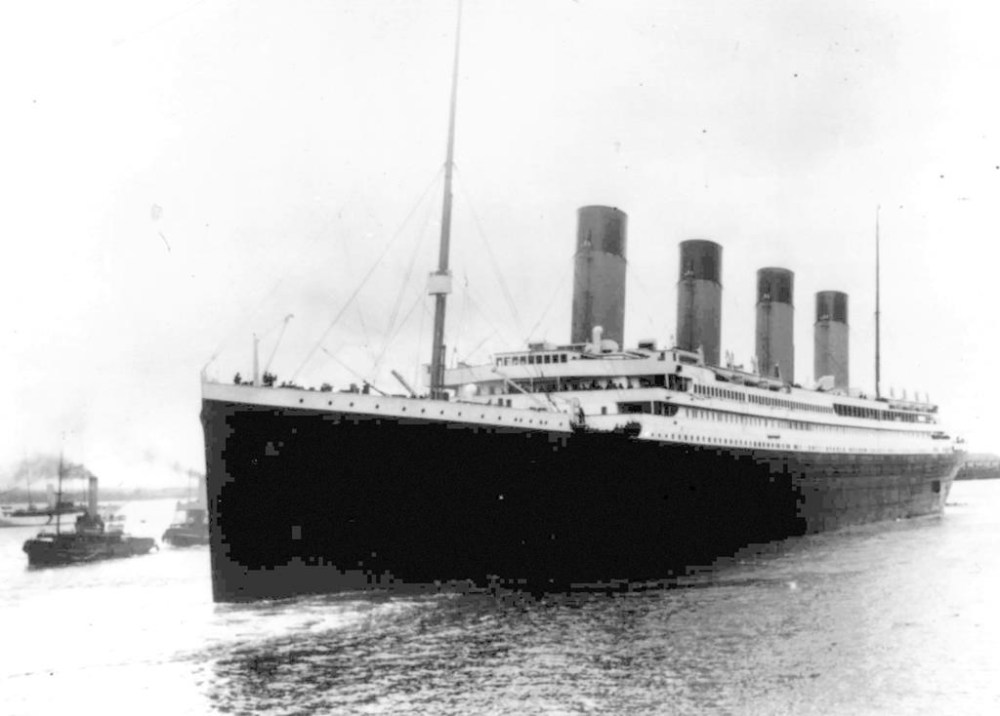
The U.S. filed a legal challenge to the expedition in August, citing a 2017 federal law and a pact with Great Britain to treat the site as a memorial. More than 1,500 people died when the Titanic struck an iceberg and sank in 1912.
The U.S. argued last year that entering the Titanic — or physically altering or disturbing the wreck — is regulated by the law and agreement. Among the government’s concerns is the possible disturbance of artifacts and any human remains that may still exist on the North Atlantic seabed.
In October, RMST said it had significantly pared down its dive plans. That’s because its director of underwater research, Paul-Henri Nargeolet, died in the implosion of the Titan submersible near the Titanic shipwreck in June.
The Titan was operated by a separate company, OceanGate, to which Nargeolet was lending expertise. Nargeolet was supposed to lead this year’s expedition by RMST.
RMST stated in a court filing last month that it now plans to send an uncrewed submersible to the wreck site and will only take external images of the ship.
“The company will not come into contact with the wreck,” RMST stated, adding that it “will not attempt any artifact recovery or penetration imaging.”
RMST has recovered and conserved thousands of Titanic artifacts, which millions of people have seen through its exhibits in the U.S. and overseas. The company was granted the salvage rights to the shipwreck in 1994 by the U.S. District Court in Norfolk, Virginia.
U. S. District Judge Rebecca Beach Smith is the maritime jurist who presides over Titanic salvage matters. She said during Wednesday’s hearing that the U.S. government’s case would raise serious legal questions if it continues, while the consequences could be wide-ranging.
Congress is allowed to modify maritime law, Smith said in reference to the U.S. regulating entry into the sunken Titanic. But the judge questioned whether Congress can strip courts of their own admiralty jurisdiction over a shipwreck, something that has centuries of legal precedent.
In 2020, Smithgave RMST permission to retrieve and exhibit the radio that had broadcast the Titanic’s distress calls. The expedition would have involved entering the Titanic and cutting into it.
The U.S. government filed an official legal challenge against that expedition, citing the law and pact with Britain. But the legal battle never played out. RMST indefinitely delayed those plans because of the coronavirus pandemic.
Smith noted Wednesday that time may be running out for expeditions inside the Titanic. The ship is rapidly deteriorating.