With organic fields next door, conventional farms dial up the pesticide use, study finds
Advertisement
Read this article for free:
or
Already have an account? Log in here »
To continue reading, please subscribe:

Digital Subscription
One year of digital access for only $205*
- Enjoy unlimited reading on winnipegfreepress.com
- Read the E-Edition, our digital replica newspaper
- Access News Break, our award-winning app
- Play interactive puzzles
*First annual payment billed as $205.00 + GST for one year. This annual subscription will automatically renew at $233.00 + GST every 52 weeks (10% off the regular annual price of $259.35). Offer available to new and qualified returning subscribers only. Cancel any time.
To continue reading, please subscribe:
Add Free Press access to your Brandon Sun subscription for only an additional
$1 for the first 4 weeks*
- Enjoy unlimited reading on winnipegfreepress.com
- Read the E-Edition, our digital replica newspaper
- Access News Break, our award-winning app
- Play interactive puzzles
*Your next Brandon Sun subscription payment will increase by $1.00 and you will be charged $17.95 plus GST for four weeks. After four weeks, your payment will increase to $24.95 plus GST every four weeks.
Read unlimited articles for free today:
or
Already have an account? Log in here »
Hey there, time traveller!
This article was published 22/03/2024 (931 days ago), so information in it may no longer be current.
Champions of organic farming have long portrayed it as friendlier to humans and the earth. But a new study in a California county found a surprising effect as their acreage grew: Nearby conventional farms applied more pesticides, likely to stay on top of an increased insect threat to their crops, the researchers said.
Ashley Larsen, lead author of the study in this week’s journal Science, said understanding what’s happening could be important to keeping organic and conventional farmers from hurting each other’s operations.
“We expect an increase in organic in the future. How do we make sure this is not causing unintended harm?” asked Larsen, an associate professor at the University of California, Santa Barbara.
By contrast, the researchers found that when organic farms were surrounded by other organic fields, their pesticide use dropped, which the team thinks may be due to their shared reliance on bugs that are natural enemies of agricultural pests. Organic farms are allowed to use certain approved pesticides, but often turn first to “good bugs” that prey on the pests. “It seems that spatially clustering or concentrating organic fields could provide that benefit or that solution,” Larsen said.
The researchers analyzed 14,000 fields over a seven-year period.
Organic farm acreage has been trending upward since 2000, though it still accounts for less than 1% of all farmland, according to the USDA. As that change occurs, Larsen and her team say keeping organic and conventional farms sufficiently separate could benefit both.
But many farmers, both conventional and organic, balk at the idea of policies that might restrict where different methods can be used. And some outside researchers said more study was needed before contemplating policy recommendations. They noted that the study didn’t measure the kind or number of insects on the different farms, meaning the increased pesticide use may have been just a precaution.
Still, the “impressive data set” makes the study useful in generating worthwhile questions about farming practices and pesticides, said Christian Krupke, who studies insects as a professor of entomology at Purdue University and was not involved in the study. The overall number of insects is going down, a phenomenon some scientists have called the “ insect apocalypse,” but pesticide use is not decreasing, he said.
Krupke said the research shows how conventional farmers treat nearby organic operations “as this focal point of potential outbreaks.”
David Haviland, an entomologist with the University of California also not involved with the study, agreed. He described the fight in Kern County to control the glassy-winged sharpshooter, which infests citrus orchards and can introduce devastating plant diseases into grapes, almonds and some other crops. Haviland said that regional maps clearly showcase organic farms as “these big, incredible hot spots where there’s massive numbers of this pest.” Conventional growers next door have to increase their pesticide use as a result, he said.
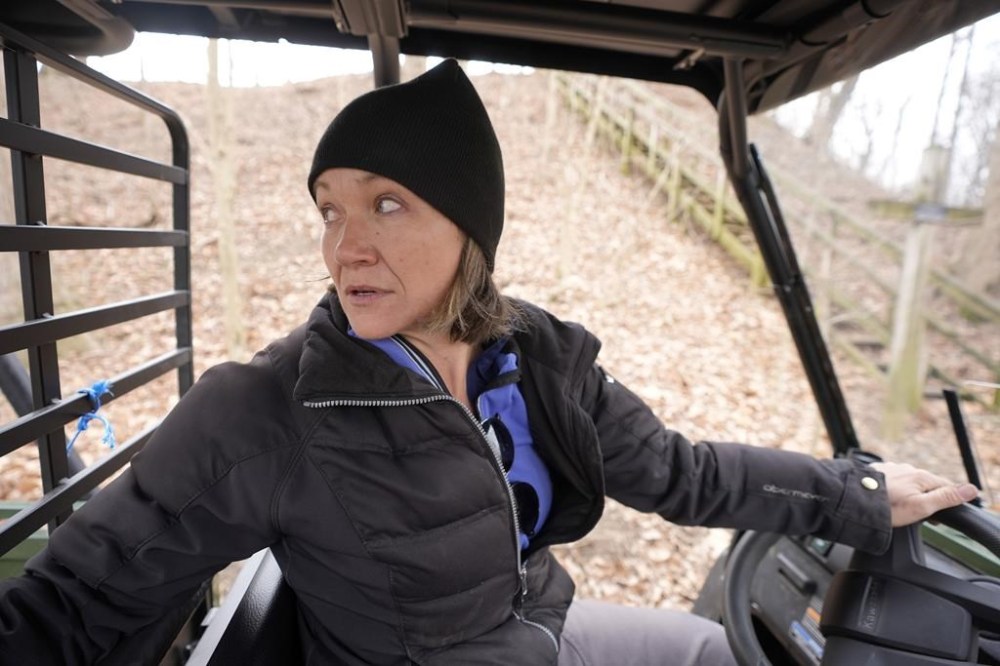
Yichao Rui, an agroecologist at Purdue, said that kind of response by farmers isn’t always due to an actual increase in pests; sometimes, it’s just for “peace of mind.” And Katy Rogers, who manages an organic farm outside Indianapolis, said that in many cases it’s a misconception that organic farmers are harboring massive pest infestations.
“We’re not fostering populations of detrimental insects on most organic farms, on a well-managed farm,” she said. “We are simply battling them with other tools first. Because the bad bugs would still destroy my crop.”
Rui said investigating the environmental consequences of organic farming is a worthy goal, and both organic and conventional farms have room for improvement. But he thinks looking only at at pesticide use doesn’t account for factors like human health, air and water quality and ecosystem diversity that can be affected by different farming methods.
“We need to have a holistic … assessment of the benefits and tradeoffs of all of these agricultural practices,” he said.
Brad Wetli, an Indiana farmer who farms grain conventionally, said that he hasn’t noticed any changes in his pest control situation since his neighbor switched to organic four years ago. He thinks that farmers may be quicker to apply more pesticides to high-value crops like the fruits, vegetables and nuts in California, whereas the row crops he grows like corn and beans aren’t worth as much per acre, so it would take a bigger change in the number of insects he saw on his farm before reaching for more spray.
Wetli was more concerned with soil management. He’s careful to plant cover crops and has worked to reduce tilling, which can cause soil erosion and contaminate waterways, and said organic farming sometimes still involves tilling.
Meanwhile, organic farmers expressed concern that the study addresses the effects of organic farms on conventional ones but not the other way around. For example, they can lose their certification for up to three years if a prohibited material is applied on their fields, even if by accident, according to the USDA.
Walter Goldstein, a corn breeder in Wisconsin who produces both organic and non-organic seed, grew up working on an organic farm amid conventional ones and still remembers pesticide drift.
“There’s just these really weird smells,” he said. “Chemical smells. They smell like factory stuff.”
Jay Shipman, who owns an organic farm in Kern County near another large organic farm, said that he likes farming next to someone with similar practices “not just because it’s economics,” he said, but because “this is how I eat. This is how I want my family eating.” He added, however, that he grew up in conventional agriculture and understands that trying to convince farmers they should do something differently can be “tough to change, tough to swallow.”
Rogers, the Indianapolis organic farm manager, spent much of her life in conventional agriculture and says she was taught that organic farmers were “enemies.” She’s now deeply committed to a small church-run organic and regenerative farm with vegetables, beehives and hay.
Rogers said she can see benefits from clustering organic farms together, but thinks dividing organic and conventional farmers as the researchers suggested could be “even more polarizing.”

“At the deepest level, we’re all stewarding land and we all actually want to contribute,” she said.
___
Follow Melina Walling on X: @MelinaWalling.
___
The Associated Press’ climate and environmental coverage receives financial support from multiple private foundations. AP is solely responsible for all content. Find AP’s standards for working with philanthropies, a list of supporters and funded coverage areas at AP.org.