Wisconsin Supreme Court lets ruling stand that declared Amazon drivers to be employees

Advertisement

Advertise with us

MADISON, Wis. (AP) — The Wisconsin Supreme Court on Tuesday let stand a lower court ruling that declared some delivery drivers for Amazon were employees as the state argued, not independent contractors as the online retail giant contended.

Read this article for free:


or

Already have an account? Log in here »

To continue reading, please subscribe:

Subscribe and receive a limited-edition Free Press branded hat or tote.

Digital Subscription

One year of digital access for only $205*

  • Enjoy unlimited reading on winnipegfreepress.com
  • Read the E-Edition, our digital replica newspaper
  • Access News Break, our award-winning app
  • Play interactive puzzles

*First annual payment billed as $205.00 + GST for one year. This annual subscription will automatically renew at $233.00 + GST every 52 weeks (10% off the regular annual price of $259.35). Offer available to new and qualified returning subscribers only. Cancel any time.

To continue reading, please subscribe:

Add Free Press access to your Brandon Sun subscription for only an additional

$1 for the first 4 weeks*

  • Enjoy unlimited reading on winnipegfreepress.com
  • Read the E-Edition, our digital replica newspaper
  • Access News Break, our award-winning app
  • Play interactive puzzles
Start now

*Your next Brandon Sun subscription payment will increase by $1.00 and you will be charged $17.95 plus GST for four weeks. After four weeks, your payment will increase to $24.95 plus GST every four weeks.

Hey there, time traveller!
This article was published 26/03/2024 (890 days ago), so information in it may no longer be current.

MADISON, Wis. (AP) — The Wisconsin Supreme Court on Tuesday let stand a lower court ruling that declared some delivery drivers for Amazon were employees as the state argued, not independent contractors as the online retail giant contended.

The court, in a unanimous decision, said the appeal was “improvidently granted,” meaning the Supreme Court should not have reviewed the case. That decision dismissing the case, issued after the court heard oral arguments, leaves a 2023 Wisconsin appeals court ruling against Amazon in place.

That ruling found that drivers in the Amazon Flex program are a part of the state’s unemployment insurance system and entitled to jobless pay if they are laid off. The decision means an Amazon subsidiary, Amazon Logistics, will likely be hit with a tax bill of more than $200,000.
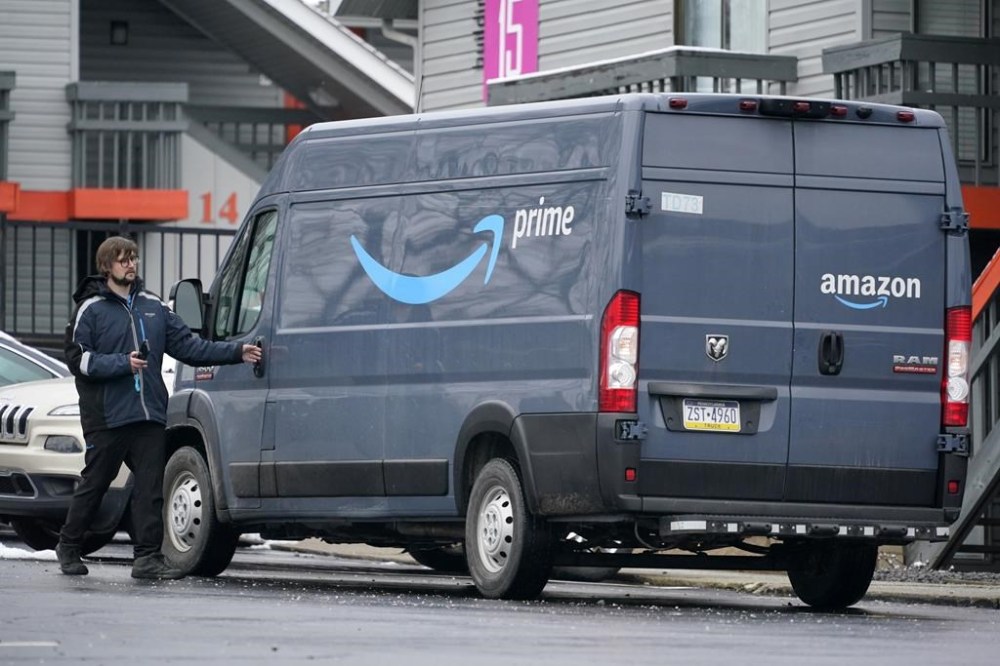
FILE - An Amazon Prime driver makes a delivery in Pittsburgh on Monday, Jan. 23, 2023. The Wisconsin Supreme Court dismissed a lawsuit Tuesday, March 26, 2024, brought by Amazon’s logistics subsidiary, which had sought to overturn a lower court's ruling that it had misclassified delivery drivers as independent contractors instead of employees. (AP Photo/Gene J. Puskar, file)

Justice Ann Walsh Bradley, in a concurring decision, said the reason the court dismissed the case was that further review “would not serve any meaningful purpose” or any “further development of the law.” Justice Rebecca Bradley, in a separate writing, faulted Bradley for trying to explain the court’s decision, saying it “will only sow additional confusion.”

The case was closely watched for what effect a ruling would have on workers in the “gig economy.”

Amazon spokesperson Steve Kelly said the retailer was “disappointed that the Wisconsin Supreme Court declined to weigh in and provide much needed guidance on these matters and are determining our next steps.”

Labor unions, along with the state Department of Workforce Development, pushed for the Wisconsin Supreme Court to recognize the Amazon Flex workers as employees.

Stephanie Bloomingdale, president of the Wisconsin AFL-CIO, hailed the court’s action, calling it a “win for working people.”

“Far too often, especially in the emerging gig economy, big and powerful companies like Amazon use the misclassification of employees as independent contractors to deny working people essential workplace rights like minimum wages, overtime pay, and unemployment insurance,” she said.

Courts across the country have been grappling with similar questions as states struggle with how to treat workers who are hired for a particular job, often at the push of a button through a smartphone app, to deliver food, groceries, packages or perform a variety of tasks.

“The gig economy is clogging up the court with all of this stuff, all the time,” said Samantha Prince, assistant professor of law at Penn State Dickinson College of Law and an expert on worker misclassification and the gig economy. “It’s just nuts. We really need this stuff to be resolved and stay resolved and stop with all the uncertainty for everybody.”

Prince said the Wisconsin case “will likely resonate through the other gig company court cases.”

“The more cases that find that gig company drivers are employees, the more companies are going to have to pay their rightful share,” she said.

Every state has its own laws determining whether workers are employees or independent contractors, Prince said. Those laws set the rules for what wages and overtime the workers must be paid and, in this case, whether they are subject to unemployment benefits that the employer must contribute toward.

Employees who got approved for the Amazon Flex program could download an app for their personal phones showing blocks when they could deliver packages for the company. Workers would scan packages at the Amazon warehouse in Milwaukee and use their personal vehicles to deliver them, using a route suggested by Amazon.

After one Amazon Flex worker was fired, he filed for unemployment insurance. The Department of Workforce Development conducted an audit of more than 1,000 Amazon Logistics drivers between 2016 and 2018 and concluded the vast majority of drivers were employees, not independent contractors, and therefore eligible for unemployment insurance payments. The state told Amazon in 2018 that it owed more than $205,000 in unemployment insurance premiums.

The Wisconsin Labor and Industry Review Commission upheld the state DWD determination that the drivers were employees. Amazon Logistics sued and a Waukesha County circuit court judge ruled the drivers were independent contractors. Last year, the Wisconsin Court of Appeals overturned that ruling, agreeing with the state that the drivers were employees. That set up the appeal to the Wisconsin Supreme Court.

Many other states have looked at the issue.

A Virginia appeals court ruled in 2023 that Amazon Flex drivers were employees, not independent contractors, and ordered Amazon to pay unemployment insurance taxes and penalties.

A California state appeals court last year said app-based ride-hailing and delivery companies like Uber and Lyft can continue to treat their California drivers as independent contractors, allowing them to bypass other state laws requiring worker protections and benefits.

The U.S. Department of Labor enacted a new rule March 11 that aims to prevent the misclassification of workers as “independent contractors,” a step that could bolster both legal protections and compensation for millions in the U.S. workforce. That rule applies to wages and overtime, but not unemployment compensation.


Report Error Submit a Tip

More Stories

Officers, not technology, stop huge drug drop into Stony prison

Chris Kitching 4 minute read Preview

Officers, not technology, stop huge drug drop into Stony prison

Chris Kitching 4 minute read Yesterday at 5:08 PM CDT

Stony Mountain Institution officers intercepted $1.8 million worth of drugs and other banned items Sunday in one of the largest reported seizures in recent years at Manitoba’s only federal prison.

Jake Suelzle, president of the Union of Canadian Correctional Officers’ prairie region, said employees spotted a drone while it delivered packages containing contraband.

“What marks this one a little bit unique is the (Correctional Service of Canada) just invested a significant amount of money into a drone detector, and this drone detector sure showed its worth when it didn’t detect at all,” he said Tuesday. “No alarm was raised when this package was dropped.”

In a news release that offered limited details, the correctional service said the items, including THC concentrate, were found in packages thanks to the “vigilance” of employees.

Read
Yesterday at 5:08 PM CDT

Winnipeg woman saves child, father in ‘courageous’ river rescue

Scott Billeck 2 minute read Preview

Winnipeg woman saves child, father in ‘courageous’ river rescue

Scott Billeck 2 minute read Updated: 11:03 AM CDT

A Winnipeg woman is being hailed as a hero after saving a father and his child from the Red River last month.

Police officers were called to St. John’s Park shortly before 7 p.m. on Aug. 24 after receiving a report a child had fallen into the river, the Winnipeg Police Service said in a news release Wednesday.

When officers arrived, they found the unconscious child on shore receiving first aid from a bystander. Police took over life-saving efforts before the child was rushed to hospital in critical condition. The child was later stabilized and is expected to make a full recovery.

Police said an investigation by the child abuse unit determined a woman witnessed the child fall into the water, followed by the child’s father, who tried to save his child. The woman jumped into the river, first pulling the father to safety before swimming back out for the child.

Read
Updated: 11:03 AM CDT

Naked man dies after jolt from police Taser

Scott Billeck 5 minute read Preview

Naked man dies after jolt from police Taser

Scott Billeck 5 minute read Monday, Aug. 31, 2026

A Transcona man says he was lucky to be awake early Sunday when, shortly after 4 a.m., a stranger smashed through his screen door and kicked in the front door of his home.

“It’s all I can think about, like what if I was sleeping?” said the man, whom the Free Press is not naming to protect his identity. “Being awake gave me just a couple of extra seconds to deal with him before he got his whole body in.”

He was sitting on his couch when he heard the glass shatter and saw someone trying to force his way inside.

“Glass flew in and this guy — he was a big guy — tried to climb through the screen door,” the man said. “I hopped off the couch and just remember screaming for help. Well, of course it’s four in the morning, so nobody’s going to help, right? I wasn’t thinking straight.”

Read
Monday, Aug. 31, 2026

Filtering the worst of our behaviour

Gwynne Dyer 5 minute read 2:00 AM CDT

On Sunday, Aug. 30, a Falcon Heavy rocket delivered the Nancy Grace Roman space telescope onto a direct transfer trajectory to its permanent home at the Lagrange Two Point (L2), 1.5-million km from Earth. In 100 days it will reach its station, power up, and start observing the universe.

Astronomers will use it to try to understand the nature of dark matter, which makes up most of the mass in the universe (but some say may not even exist).

It is expected to find up to 100,000 new exoplanets circling other stars, and may be able to spot ones even smaller than Mars. Current methods can only see much bigger ones.

It will test a new technology called a coronagraph, which may one day be able to detect life on some of those planets by analyzing the light reflected from them. It would be nice to have a better answer to scientist Enrico Fermi’s famous question: “Where is everybody?”

Renewed spirit and life: Indigenous treatment centre expands with $21-M revamp

Scott Billeck 5 minute read Preview

Renewed spirit and life: Indigenous treatment centre expands with $21-M revamp

Scott Billeck 5 minute read Yesterday at 3:44 PM CDT

Don Robinson knows first-hand that many people don’t get sober by themselves.

In late June 1984, Robinson downed his last drink. His recovery began at Pritchard House in Winnipeg’s North End, a 22-bed treatment facility run by the Native Addictions Council of Manitoba.

“I didn’t get sober by myself,” said Robinson, a member of Bunibonibee Cree Nation who now works in grief and trauma counselling and traditional knowledge as an elder at Ka Ni Kanichihk Inc.

More than four decades later, Robinson was back at the council on Monday, crowded into a room at its newly renovated treatment centre at 160 Salter St. — a place he once turned to for help and where he helps others now.

Read
Yesterday at 3:44 PM CDT

Dynacare strike could lead to lab test logjam

Carol Sanders 4 minute read Preview

Dynacare strike could lead to lab test logjam

Carol Sanders 4 minute read Yesterday at 2:00 AM CDT

DOCTORS and health-care advocates are raising concerns about patient care if a Sept. 8 strike goes ahead at the private company that provides nearly all medical lab services in Manitoba.

There is no essential services agreement in place with Dynacare, so if its lab techs are off the job, patients who need blood tests and urinalysis will be directed to hospitals and public clinics for those services.

“There’s only so many of those workers and I’m sure that the public folks are bracing for big crunch of additional patients if the strike really goes ahead,” Noah Schulz of the Manitoba Health Coalition said Monday.

Dynacare serves 1.2 million Manitoba patients a year at 23 community lab locations.

Read
Yesterday at 2:00 AM CDT