This ancient snake in India might have been longer than a school bus and weighed a ton
Advertisement
Read this article for free:
or
Already have an account? Log in here »
To continue reading, please subscribe:

Digital Subscription
One year of digital access for only $205*
- Enjoy unlimited reading on winnipegfreepress.com
- Read the E-Edition, our digital replica newspaper
- Access News Break, our award-winning app
- Play interactive puzzles
*First annual payment billed as $205.00 + GST for one year. This annual subscription will automatically renew at $233.00 + GST every 52 weeks (10% off the regular annual price of $259.35). Offer available to new and qualified returning subscribers only. Cancel any time.
To continue reading, please subscribe:
Add Free Press access to your Brandon Sun subscription for only an additional
$1 for the first 4 weeks*
- Enjoy unlimited reading on winnipegfreepress.com
- Read the E-Edition, our digital replica newspaper
- Access News Break, our award-winning app
- Play interactive puzzles
*Your next Brandon Sun subscription payment will increase by $1.00 and you will be charged $17.95 plus GST for four weeks. After four weeks, your payment will increase to $24.95 plus GST every four weeks.
Read unlimited articles for free today:
or
Already have an account? Log in here »
Hey there, time traveller!
This article was published 18/04/2024 (898 days ago), so information in it may no longer be current.
WASHINGTON (AP) — A ancient giant snake in India might have been longer than a school bus and weighed a ton, researchers reported Thursday.
Fossils found near a coal mine revealed a snake that stretched an estimated 36 feet (11 meters) to 50 feet (15 meters). It’s comparable to the largest known snake at about 42 feet (13 meters) that once lived in what is now Colombia.
The largest living snake today is Asia’s reticulated python at 33 feet (10 meters).
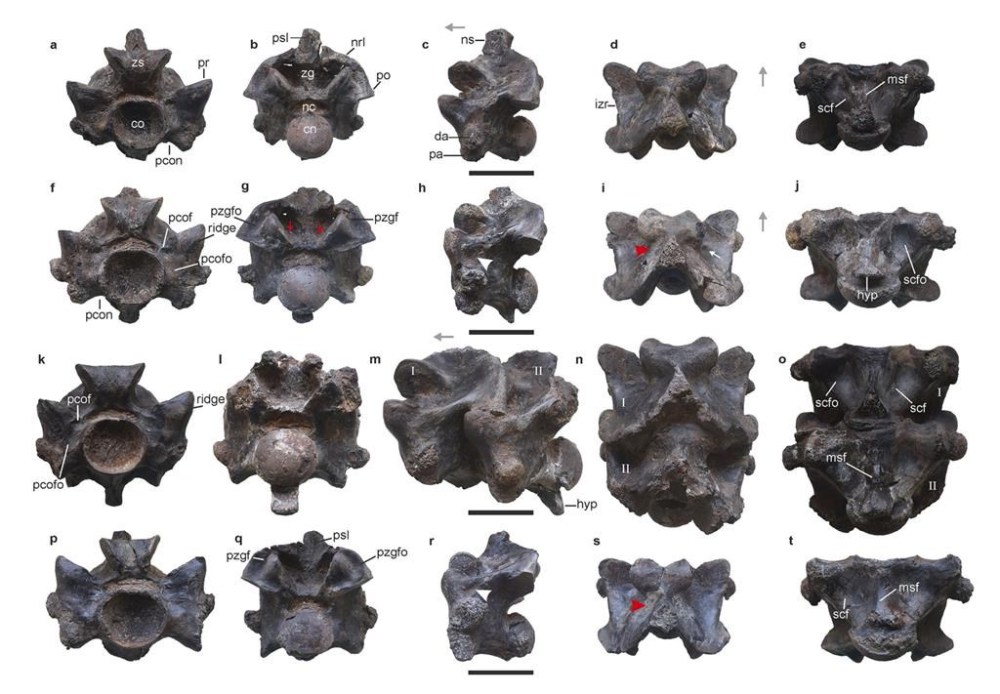
The newly discovered behemoth lived 47 million years ago in western India’s swampy evergreen forests. It could have weighed up to 2,200 pounds (1,000 kilograms), researchers said in the journal Scientific Reports.
They gave it the name Vasuki indicus after “the mythical snake king Vasuki, who wraps around the neck of the Hindu deity Shiva,” said Debajit Datta, a study co-author at the Indian Institute of Technology Roorkee.
This monster snake wasn’t especially swift to strike.
“Considering its large size, Vasuki was a slow-moving ambush predator that would subdue its prey through constriction,” Datta said in an email.
Fragments of the snake’s backbone were discovered in 2005 by co-author Sunil Bajpai, based at the same institute, near Kutch, Gujarat, in western India. The researchers compared more than 20 fossil vertebrae to skeletons of living snakes to estimate size.
While it’s not clear exactly what Vasuki ate, other fossils found nearby reveal that the snake lived in swampy areas alongside catfish, turtles, crocodiles and primitive whales, which may have been its prey, Datta said.
The other extinct giant snake, Titanoboa, was discovered in Colombia and is estimated to have lived around 60 million years ago.
What these two monster snakes have in common is that they lived during periods of exceptionally warm global climates, said Jason Head, a Cambridge University paleontologist who was not involved in the study.

“These snakes are giant cold-blooded animals,” he said. “A snake requires higher temperatures” to grow into large sizes.
So does that mean that global warming will bring back monster-sized snakes?
In theory, it’s possible. But the climate is now warming too quickly for snakes to evolve again to be giants, he said.
___
The Associated Press Health and Science Department receives support from the Howard Hughes Medical Institute’s Science and Educational Media Group and the Robert Wood Johnson Foundation. The AP is solely responsible for all content.