US advances review of Nevada lithium mine amid concerns over endangered wildflower
Advertisement
Read this article for free:
or
Already have an account? Log in here »
To continue reading, please subscribe:

Digital Subscription
One year of digital access for only $205*
- Enjoy unlimited reading on winnipegfreepress.com
- Read the E-Edition, our digital replica newspaper
- Access News Break, our award-winning app
- Play interactive puzzles
*First annual payment billed as $205.00 + GST for one year. This annual subscription will automatically renew at $233.00 + GST every 52 weeks (10% off the regular annual price of $259.35). Offer available to new and qualified returning subscribers only. Cancel any time.
To continue reading, please subscribe:
Add Free Press access to your Brandon Sun subscription for only an additional
$1 for the first 4 weeks*
- Enjoy unlimited reading on winnipegfreepress.com
- Read the E-Edition, our digital replica newspaper
- Access News Break, our award-winning app
- Play interactive puzzles
*Your next Brandon Sun subscription payment will increase by $1.00 and you will be charged $17.95 plus GST for four weeks. After four weeks, your payment will increase to $24.95 plus GST every four weeks.
Read unlimited articles for free today:
or
Already have an account? Log in here »
Hey there, time traveller!
This article was published 22/04/2024 (895 days ago), so information in it may no longer be current.
RENO, Nev. (AP) — The Biden administration has taken a significant step in its expedited environmental review of what could become the third lithium mine in the U.S., amid anticipated legal challenges from conservationists over the threat they say it poses to an endangered Nevada wildflower.
The Bureau of Land Management released more than 2,000 pages of documents in a draft environmental impact statement last week for the Rhyolite Ridge mine. Lithium is a metal key to the manufacture of batteries for electric vehicles — a centerpiece of President Joe Biden’s “green energy” agenda.
Officials for the bureau and its parent Interior Department trumpeted the news, saying the progress in the review of the lithium-boron mine project “represents another step by the Biden-Harris administration to support the responsible, domestic development of critical minerals to power the clean energy economy.”
“Federal agencies cooperating to solve issues efficiently while protecting vulnerable species and other irreplaceable resources is exactly how we will need to move forward if we’re going to produce these critical minerals in the United States,” said Steve Feldgus, deputy assistant Interior secretary for land and minerals management.
Environmentalists vowing to fight the mine say it’s the latest example of the administration running roughshod over U.S. protections for native wildlife and rare species in the name of slowing climate change by reducing reliance on fossil fuels and cutting greenhouse gas emissions.
Patrick Donnelly, Great Basin director at the Center for Biological Diversity, described it as “greenwashing extinction.” The nonprofit conservation group first petitioned in 2019 for federal protection of the rare flower, Tiehm’s buckwheat, which grows near the California line.
“We believe the current protection plan would violate the Endangered Species Act, so if BLM approves it as proposed, we almost certainly would challenge it,” he told The Associated Press last week.
Nevada is home to the only existing lithium mine in the U.S. and another is currently under construction near the Oregon line 220 miles (354 kilometers) north of Reno. By 2030, worldwide demand for lithium is projected to have grown six times compared to 2020.
The bureau said it published the draft review and opened public comment through June 3 for the new mine after Ioneer Ltd., the Australian mining company that’s been planning for years to dig for lithium at this site, adjusted its latest blueprint to reduce destruction of critical habitat for the plant, which exists nowhere else in the world.
Bernard Rowe, Ioneer’s managing director, said lithium production could begin as early as 2027. He said the company has spent six years adjusting their plans so the mine can co-exist with the plant, invested $2.5 million in conservation efforts and committed an additional $1 million annually to ensure the plant and its surrounding habitat are protected.
“Rhyolite Ridge will help accelerate the electric vehicle transition and secure a cleaner future for our children and grandchildren,” Ioneer Executive Chairman James Calaway said.
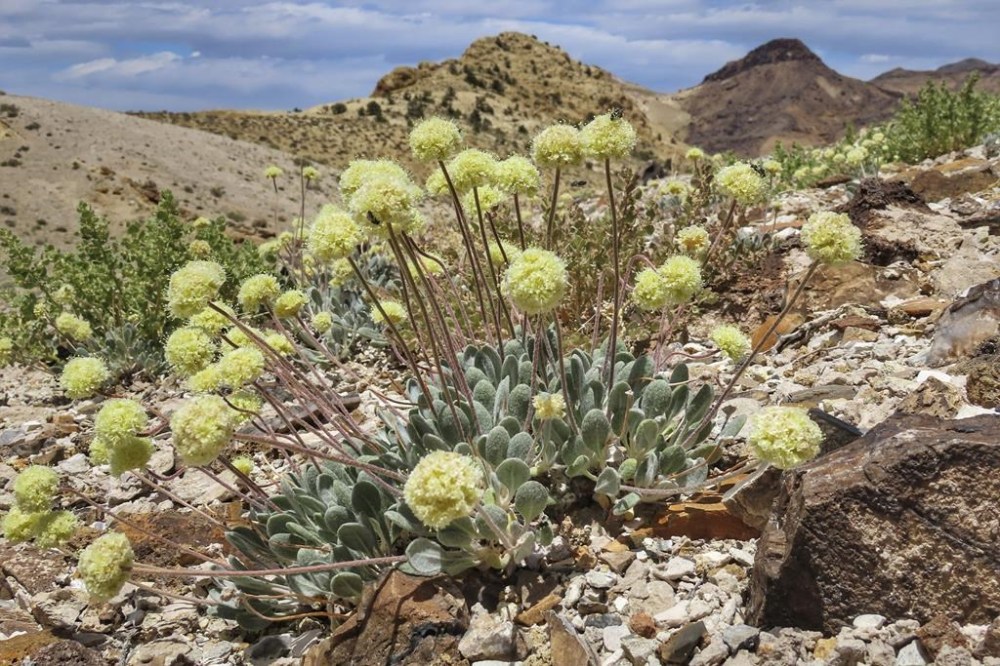
In addition to scaling back encroachment on the 6-inch-tall (15-centimeter-tall) wildflower with yellow and cream-colored blooms, the strategy includes a controversial propagation plan to grow and transplant flowers nearby — something conservationists say won’t work.
The plant grows in eight sub-populations that combined cover approximately 10 acres (4 hectares) — an area equal to the size of about eight football fields. They’re located halfway between Reno and Las Vegas in a high-desert oasis of sorts for the plants and the insects that pollinate them.
The Fish and Wildlife Service added the flower to the list of U.S. endangered species on Dec. 14, 2022, citing mining as the biggest threat to its survival.
Less than a week later, the government published a formal notice of intent to begin work on the draft environmental impact statement. Three weeks after that, the Energy Department announced a $700 million conditional loan to Ioneer for the mining project it said could produce enough lithium to support production of about 370,000 electric vehicles annually for four decades.
The Center for Biological Diversity said a series of internal documents it obtained from the Bureau of Land Management through a request under the Freedom of Information Act show the administration has rushed its review of the mine.
Scott Distell, BLM’s project manager in charge of the review, raised concerns about the expedited schedule in an email to his district boss when it suddenly was accelerated in December 2023.

“This is a very aggressive schedule that deviates from other project schedules on similar projects completed recently,” Distell wrote in the Dec. 22 email.
The draft environmental impact statement lays out three different options for the project, including a “no-action alternative” that would mean no mine would be built. The one the bureau said it prefers anticipates Ioneer’s protection plan would allow for direct destruction of about 22% of the plant’s habitat in the 910 acres (368 hectares) the Fish and Wildlife Service designated as critical habitat when it listed it as endangered. That’s down from an estimated 38% in an earlier version of the plan.
“For an extremely rare species confined to such a small area, no amount of destruction of its critical habitat is acceptable,” said Naomi Fraga, director of conservation at the California Botanic Garden.
Donnelly points to the Endangered Species Act’s requirement that federal agencies consult with the Fish and Wildlife Service whenever a project could affect a threatened or endangered species to ensure it won’t “result in the destruction or adverse modification of designated critical habitat.”
“Reducing the destruction of this rare plant’s habitat from 38% to 22% is like cutting off one leg instead of both,” Donnelly said. “They’re still dealing a fatal blow to this precious, rare wildflower.”