Germany recalls its ambassador in Russia for a week in protest over a hacker attack
Advertisement
Read this article for free:
or
Already have an account? Log in here »
To continue reading, please subscribe:
Digital Subscription
One year of digital access for only $1.44 a week*
- Enjoy unlimited reading on winnipegfreepress.com
- Read the E-Edition, our digital replica newspaper
- Access News Break, our award-winning app
- Play interactive puzzles
*Billed as $5.77 plus GST every four weeks. After 52 weeks, price increases to the regular rate of $19.95 plus GST every four weeks. Offer available to new and qualified returning subscribers only. Cancel any time.
To continue reading, please subscribe:
Add Free Press access to your Brandon Sun subscription for only an additional
$1 for the first 4 weeks*
- Enjoy unlimited reading on winnipegfreepress.com
- Read the E-Edition, our digital replica newspaper
- Access News Break, our award-winning app
- Play interactive puzzles
*Your next Brandon Sun subscription payment will increase by $1.00 and you will be charged $17.95 plus GST for four weeks. After four weeks, your payment will increase to $24.95 plus GST every four weeks.
Read unlimited articles for free today:
or
Already have an account? Log in here »
Hey there, time traveller!
This article was published 06/05/2024 (896 days ago), so information in it may no longer be current.
BERLIN (AP) — Germany said Monday it recalled its ambassador to Russia for a week of consultations in Berlin following an alleged hacker attack on Chancellor Olaf Scholz’s party.
Germany last week accused Russian military agents of hacking into the top echelons of Scholz’s Social Democrats’ party and other sensitive government and industrial targets. Berlin has joined NATO and fellow European countries in warning that Russia’s cyberespionage would have consequences.
The Foreign Office in Berlin said Monday that the government is taking the latest incident “seriously” and that Foreign Minister Annalena Baerbock had decided to call back German Ambassador Alexander Lambsdorff. He would return to Moscow after a week, it said.
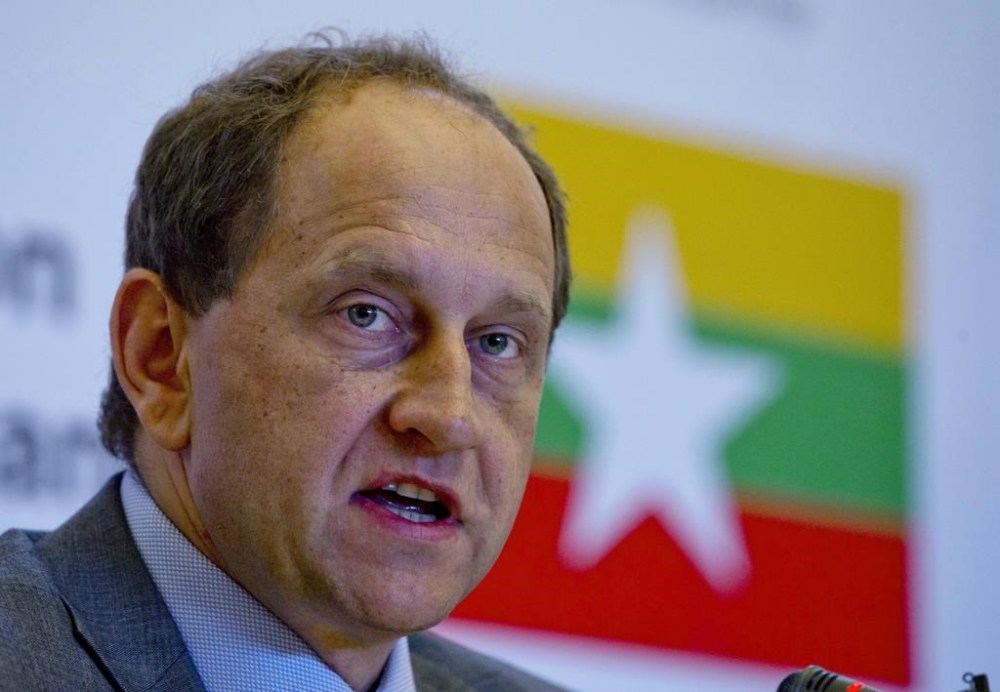
“The German government takes this event very seriously as behavior against our liberal democracy and the institutions that support it,” Foreign Office spokeswoman Kathrin Deschauer said.
Baerbock said last week that Russian military cyber operators were behind the hacking of emails of the Social Democrats, the leading party in the governing coalition. Officials said the hackers had exploited Microsoft Outlook.
The German Interior Ministry said in a statement last week that the hacking campaign began as early as March 2022, a month after Russia’s full-scale invasion of Ukraine, with emails at the Social Democrat party headquarters accessed beginning that December. It said German companies, including in the defense and aerospace sectors, as well as targets related to the war in Ukraine were the focus of the hacking attacks.
Officials said the attacks persisted for months.
Relations between Russia and the West have been tense since Moscow’s attack on Ukraine. Germany has been providing military support to Ukraine in the ongoing war.

In Copenhagen, Finnish Prime Minister Petteri Orpo said that “some Europeans still think that the war is only taking place in Ukraine, but right now we are seeing more and more aggressiveness from Russia.”
“We will probably see hybrid attacks in different areas. It can be critical infrastructure,” he added after a meeting with his Danish counterpart Mette Frederiksen. “What Russia is doing and planning is not acceptable. Russia is ready to use any means possible to harm our societies.”