A robot will soon try to remove melted nuclear fuel from Japan’s destroyed Fukushima reactor
Advertisement
Read this article for free:
or
Already have an account? Log in here »
To continue reading, please subscribe:

Digital Subscription
One year of digital access for only $205*
- Enjoy unlimited reading on winnipegfreepress.com
- Read the E-Edition, our digital replica newspaper
- Access News Break, our award-winning app
- Play interactive puzzles
*First annual payment billed as $205.00 + GST for one year. This annual subscription will automatically renew at $233.00 + GST every 52 weeks (10% off the regular annual price of $259.35). Offer available to new and qualified returning subscribers only. Cancel any time.
To continue reading, please subscribe:
Add Free Press access to your Brandon Sun subscription for only an additional
$1 for the first 4 weeks*
- Enjoy unlimited reading on winnipegfreepress.com
- Read the E-Edition, our digital replica newspaper
- Access News Break, our award-winning app
- Play interactive puzzles
*Your next Brandon Sun subscription payment will increase by $1.00 and you will be charged $17.95 plus GST for four weeks. After four weeks, your payment will increase to $24.95 plus GST every four weeks.
Read unlimited articles for free today:
or
Already have an account? Log in here »
Hey there, time traveller!
This article was published 28/05/2024 (848 days ago), so information in it may no longer be current.
TOKYO (AP) — The operator of Japan’s destroyed Fukushima Daiichi nuclear power plant demonstrated Tuesday how a remote-controlled robot would retrieve tiny bits of melted fuel debris from one of three damaged reactors later this year for the first time since the 2011 meltdown.
Tokyo Electric Power Company Holdings plans to deploy a “telesco-style” extendable pipe robot into Fukushima Daiichi No. 2 reactor to test the removal of debris from its primary containment vessel by October.
That work is more than two years behind schedule. The removal of melted fuel was supposed to begin in late 2021 but has been plagued with delays, underscoring the difficulty of recovering from the magnitude 9.0 quake and tsunami in 2011.
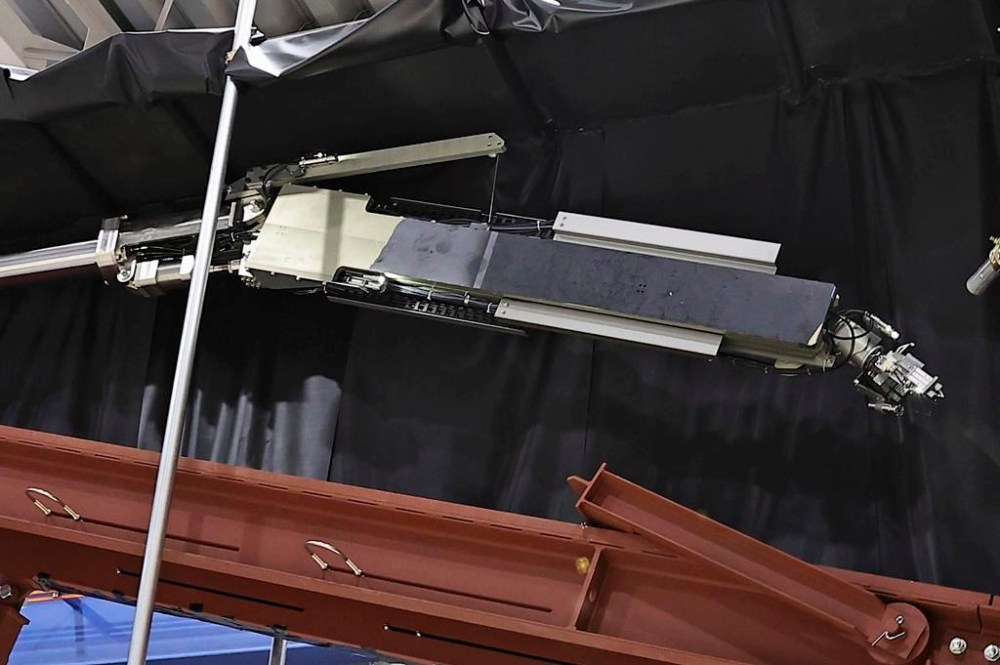
During the demonstration at the Mitsubishi Heavy Industries’ shipyard in Kobe, western Japan, where the robot has been developed, a device equipped with tongs slowly descended from the telescopic pipe to a heap of gravel and picked up a granule.
TEPCO plans to remove less than 3 grams (0.1 ounce) of debris in the test at the Fukushima plant.
“We believe the upcoming test removal of fuel debris from Unit 2 is an extremely important step to steadily carry out future decommissioning work,” said Yusuke Nakagawa, a TEPCO group manager for the fuel debris retrieval program. “It is important to proceed with the test removal safely and steadily.”
About 880 tons of highly radioactive melted nuclear fuel remain inside the three damaged reactors. Critics say the 30- to 40-year cleanup target set by the government and TEPCO for Fukushima Daiichi is overly optimistic. The damage in each reactor is different, and plans must accommodate their conditions.
Better understanding the melted fuel debris from inside the reactors is key to their decommissioning. TEPCO deployed four mini drones into the No. 1 reactor’s primary containment vessel earlier this year to capture images from the areas where robots had not reached.
___
AP video journalist Ayaka McGill contributed to this report.