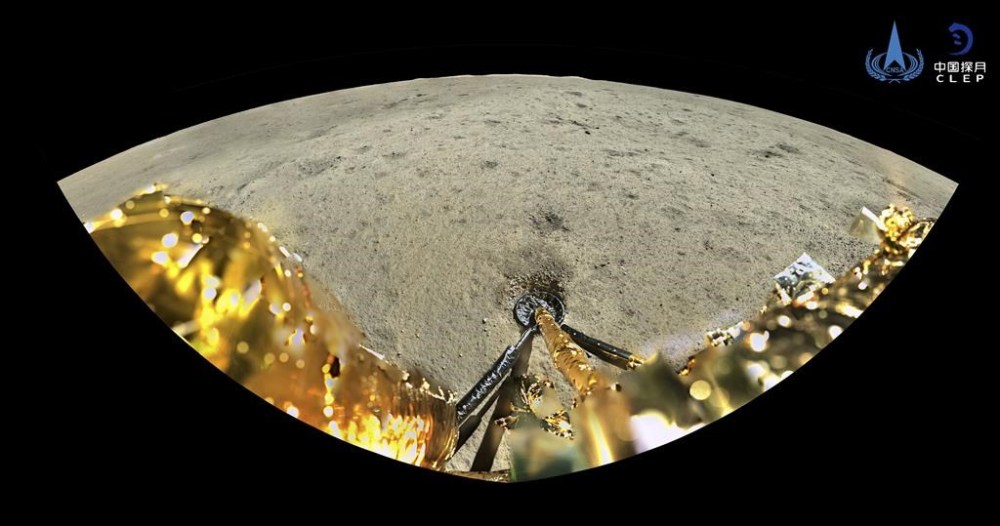
Craft unfurls China’s flag on the far side of the moon and lifts off with lunar rocks to bring home
Advertisement
Read this article for free:
or
Already have an account? Log in here »
To continue reading, please subscribe:

Digital Subscription
One year of digital access for only $205*
- Enjoy unlimited reading on winnipegfreepress.com
- Read the E-Edition, our digital replica newspaper
- Access News Break, our award-winning app
- Play interactive puzzles
*First annual payment billed as $205.00 + GST for one year. This annual subscription will automatically renew at $233.00 + GST every 52 weeks (10% off the regular annual price of $259.35). Offer available to new and qualified returning subscribers only. Cancel any time.
To continue reading, please subscribe:
Add Free Press access to your Brandon Sun subscription for only an additional
$1 for the first 4 weeks*
- Enjoy unlimited reading on winnipegfreepress.com
- Read the E-Edition, our digital replica newspaper
- Access News Break, our award-winning app
- Play interactive puzzles
*Your next Brandon Sun subscription payment will increase by $1.00 and you will be charged $17.95 plus GST for four weeks. After four weeks, your payment will increase to $24.95 plus GST every four weeks.
Read unlimited articles for free today:
or
Already have an account? Log in here »
Hey there, time traveller!
This article was published 03/06/2024 (850 days ago), so information in it may no longer be current.
BEIJING (AP) — China said its lunar spacecraft unfurled the country’s red and gold flag for the first time on the far side of the moon before part of the vehicle blasted off early Tuesday with rock and soil samples to bring back to Earth.
The mission was hailed as a success in China, which has made significant advances in a space program that aims to put a person on the moon before the end of this decade.
The Chang’e-6 probe was launched last month and its lander touched down on the far side of the moon Sunday. Its ascender lifted off Tuesday morning at 7:38 a.m. Beijing time, with its engine burning for about six minutes as it entered a preset orbit around the moon, the China National Space Administration said.
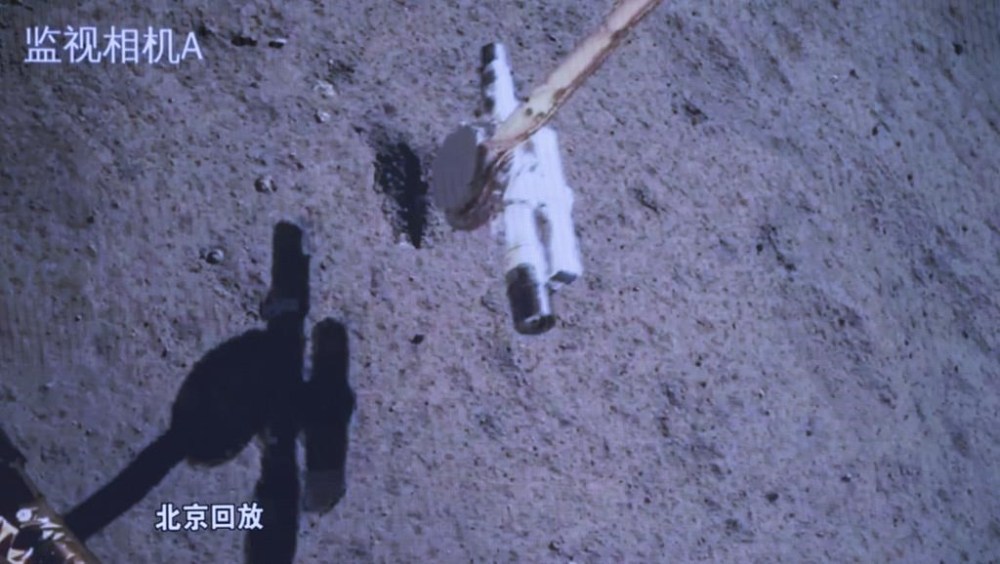
The agency said the spacecraft withstood a high temperature test on the lunar surface, and acquired the samples using both drilling and surface collection before stowing them in a container inside the ascender of the probe as planned.
The container will be transferred to a reentry capsule that is due to return to Earth in the deserts of China’s Inner Mongolia region about June 25.
The small flag, which the agency said was made of special composite materials, emerged on a retractable arm deployed from the side of the lunar lander and was not placed onto the lunar soil, according to an animation of the mission released by the agency.
“Mission accomplished!” Foreign Ministry spokesperson Hua Chunying wrote on X. “An unprecedented feat in human lunar exploration history!”
Missions to the moon’s far side are more difficult because it doesn’t face the Earth, requiring a relay satellite to maintain communications. The terrain is also more rugged, with fewer flat areas to land.


Xinhua said the probe’s landing site was the South Pole-Aitken Basin, an impact crater created more than 4 billion years ago that is 13 kilometers (8 miles) deep and has a diameter of 2,500 kilometers (1,500 miles).
It is the oldest and largest of such craters on the moon, so may provide the earliest information about it, Xinhua said, adding that the huge impact may have ejected materials from deep below the surface.
The mission is the sixth in the Chang’e moon exploration program, which is named after a Chinese moon goddess. It is the second designed to bring back samples, following the Chang’e 5, which did so from the near side in 2020.
The moon program is part of a growing rivalry with the U.S. — still the leader in space exploration — and others, including Japan and India. China has put its own space station in orbit and regularly sends crews there.
China aims to put a person on the moon before 2030, which would make it the second nation after the United States to do so. America is planning to land astronauts on the moon again — for the first time in more than 50 years — though NASA pushed the target date back to 2026 earlier this year.