Wreck of Ernest Shackleton’s last ship, Quest, found in the depths off Labrador
Advertisement
Read this article for free:
or
Already have an account? Log in here »
To continue reading, please subscribe:
Digital Subscription
One year of digital access for only $1.44 a week*
- Enjoy unlimited reading on winnipegfreepress.com
- Read the E-Edition, our digital replica newspaper
- Access News Break, our award-winning app
- Play interactive puzzles
*Billed as $5.77 plus GST every four weeks. After 52 weeks, price increases to the regular rate of $19.95 plus GST every four weeks. Offer available to new and qualified returning subscribers only. Cancel any time.
To continue reading, please subscribe:
Add Free Press access to your Brandon Sun subscription for only an additional
$1 for the first 4 weeks*
- Enjoy unlimited reading on winnipegfreepress.com
- Read the E-Edition, our digital replica newspaper
- Access News Break, our award-winning app
- Play interactive puzzles
*Your next Brandon Sun subscription payment will increase by $1.00 and you will be charged $17.95 plus GST for four weeks. After four weeks, your payment will increase to $24.95 plus GST every four weeks.
Read unlimited articles for free today:
or
Already have an account? Log in here »
Hey there, time traveller!
This article was published 12/06/2024 (861 days ago), so information in it may no longer be current.
ST. JOHN’S, N.L. – The wreck of the last ship belonging to Sir Ernest Shackleton, the famed Irish explorer of Antarctica, has been found off the coast of Labrador by an international team led by the Royal Canadian Geographical Society.
Shackleton died on the ship in 1922, during his fourth expedition to the frozen, southernmost continent, after his initial plans to explore the Canadian Arctic were thwarted, said John Geiger, leader of the expedition to find the missing ship called Quest.
His death on the Quest marked the end of what historians consider the “heroic age” of Antarctic exploration. For Geiger, the Quest represents a tangible link between Canada and the revered explorer. In fact, it was news of an American rival’s plan that pushed him to try to find the ship first.
“I heard that some Americans were interested in finding Quest, and I just had this picture in my mind of a few billionaires on yachts, up in the Labrador Sea,” he told a crowd at the Memorial University’s Marine Institute in St. John’s, N.L., on Wednesday.
“We’ve done it the right way. It’s not about anyone’s ego, it’s about telling great stories and celebrating some of the finest human attributes.”
Shackleton is perhaps best known for his 1914 exploration trip to the Antarctic region aboard the Endurance, which got trapped in the ice and was eventually crushed. He and his crew survived on ice floes and then made their way to Elephant Island, off the east coast of Antarctica. Shackleton and a few of his crew then set out in a whale boat to find help, and over the course of the next four months, he made several trips back to rescue his entire team.
The mission to find the Quest in the Labrador Sea met its own challenges, though they were admittedly less dramatic, and Geiger said he and his team turned to Shackleton’s writing on leadership and perseverance to work through their frustration as they dealt with equipment failures and fears they would come up empty-handed.
The 23-person crew lost the first few days trying to fix the problems, and there was a small window in which conditions were expected to be good.
When they finally got the sonar vehicle in the water Sunday, the search moved slowly.
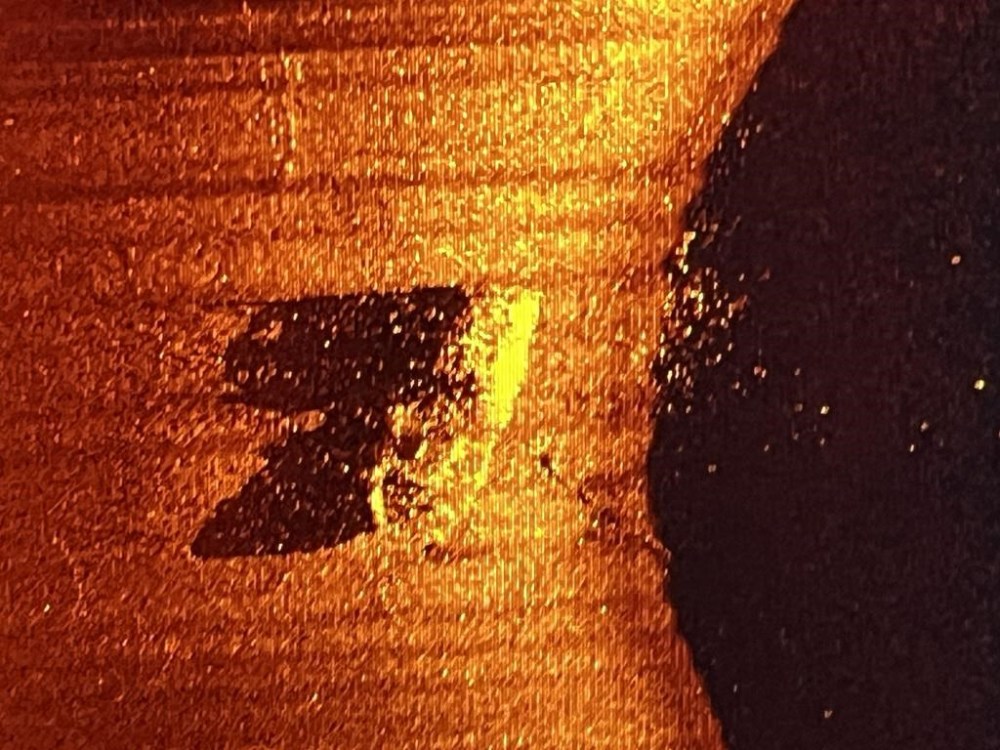
“Sixteen hours went by, there’s nothing, just a very smooth ocean floor,” Geiger said in an interview Tuesday. “Our technician was looking away from the screen, I just happened to be looking at it, and suddenly, unmistakably, a ship appears in the sonar data.”
“Suddenly, it goes from this sense of, ‘Oh God, I’m not sure this is going to work,’ to this sense of exhilaration.”
Renowned shipwreck hunter David Mearns was the expedition’s search director, and it was his responsibility to interpret the sonar images and declare whether the long-sought vessel had truly been found. As a result, he said he had to be far more skeptical of those first signs of a shipwreck on the screen.
“They were all shaking hands and high-fiving, and I refused to shake anybody’s hand until we had the last pass over,” Mearns said. “And then I said, ‘Okay, yeah, that’s the Quest.'”
Mearns has found 29 major shipwrecks in his career, but finding the Quest was particularly special because Alexandra Shackleton, the explorer’s granddaughter, is a close friend and desperately wanted the ship to be found.
“To be part of that, to be able to deliver that, is a huge privilege in my life,” he added during in a telephone interview Tuesday evening, shortly after he and the crew docked in St. John’s, N.L.
The jubilant voices of about 12 of his fellow explorers could be heard in the background, sometimes overtaking his voice.
“They’re all very, very happy,” Mearns said. “I think that feeling is going to spread in certain parts around the world.”
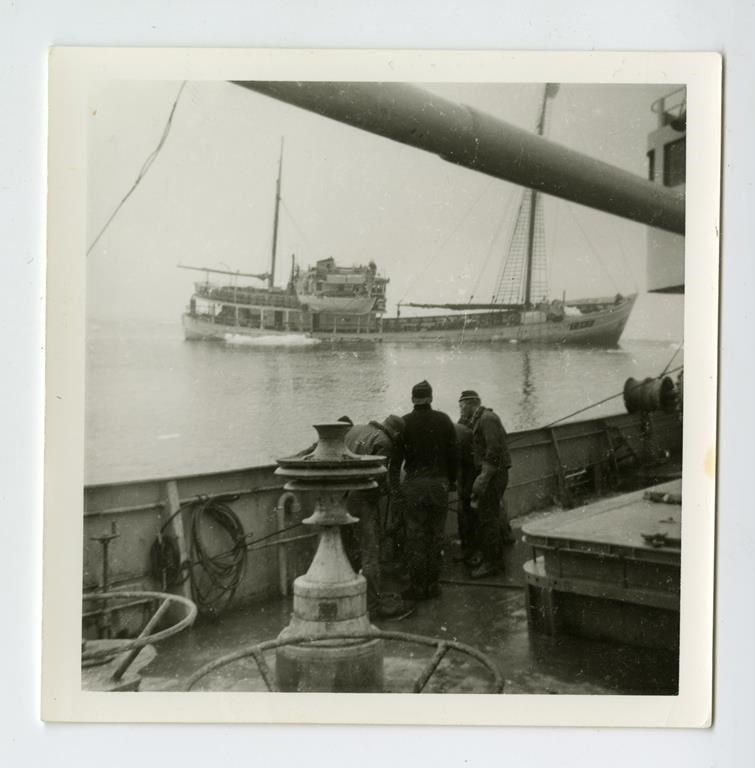
The Norwegian-built Quest was a schooner-rigged steamship, and Shackleton bought it specifically to travel to Canada’s High Arctic, Geiger said. But the federal government at the time axed those plans, and Shackleton decided to set sail once again for the Antarctic.
He died of a heart attack on board the ship when it was just off South Georgia, east of the Falkland Islands in the South Atlantic. He was 47.
After the explorer’s death, the Quest was used for Arctic research and then returned to its original intended use as a sealing vessel. It sank in 1962 after it was damaged by ice in the Labrador Sea while on a whaling trip.
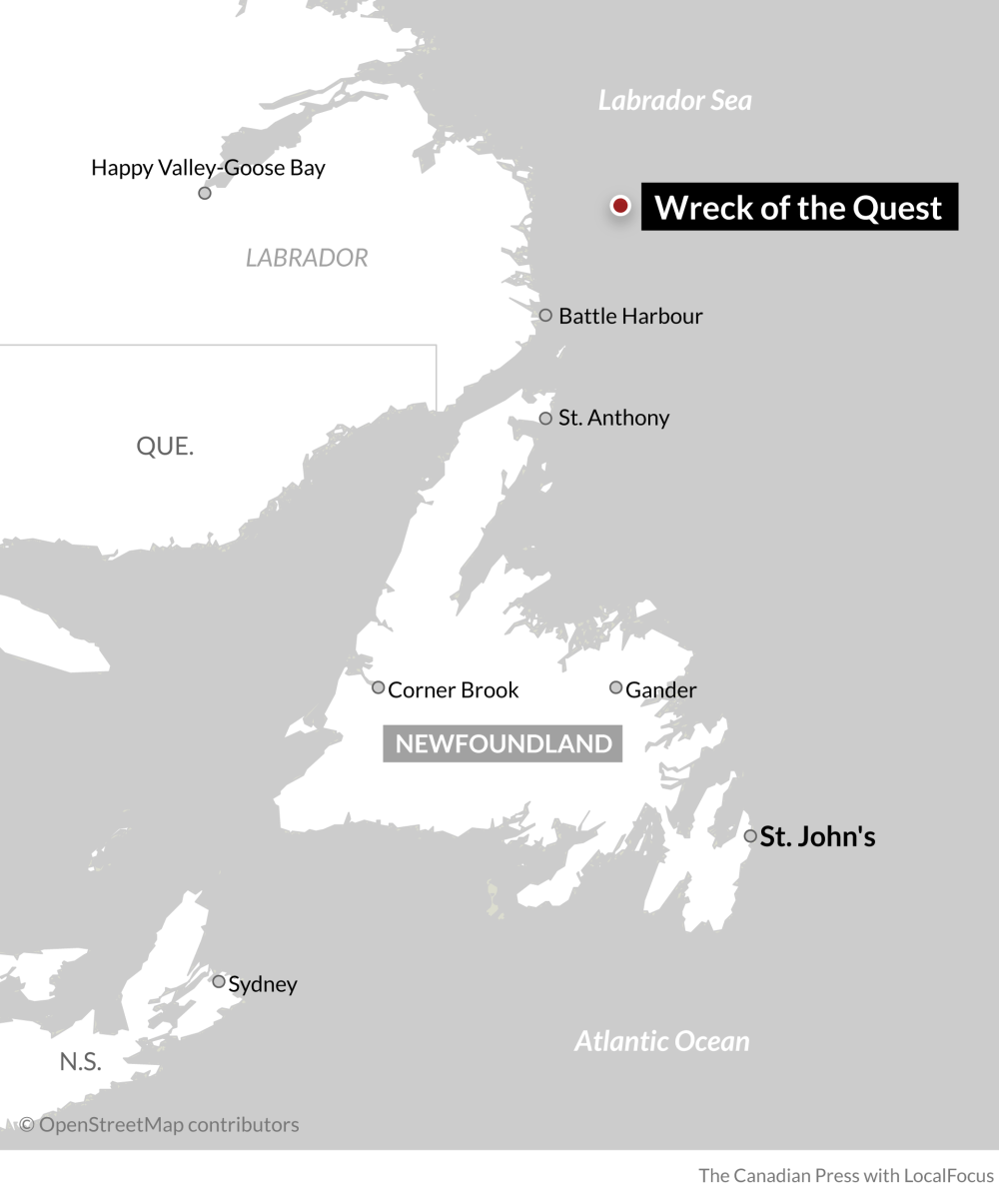
The wreck now sits on the sea floor at a depth of 390 metres, about 80 kilometres off the coast of southern Labrador. It appears to be in “incredible condition,” though it was damaged when it slammed into the seabed, Geiger said. Its towering mast lies broken beside it, likely cracked off as the vessel was sucked into the depths.
It won’t be brought to the surface — that would be far too expensive, Geiger said — but it will be thoroughly documented and studied. A crew will likely head out some time before the end of this summer to begin taking footage of the vessel with a remotely operated vehicle.
“Like everyone else, I want more, we all want to see more,” he said. “We all want to see the name on the ship, we want to get into the ship, we want to see what’s left of it.”
This report by The Canadian Press was first published June 12, 2024.
Related Articles
First images released of the wreck of Quest, explorer Ernest Shackleton's last ship
Advertisement Advertise With Us
Advertisement Advertise With Us