South Sudan says its 6M antelope make up world’s largest land mammal migration, but poaching on rise
Advertisement
Read this article for free:
or
Already have an account? Log in here »
To continue reading, please subscribe:

Digital Subscription
One year of digital access for only $205*
- Enjoy unlimited reading on winnipegfreepress.com
- Read the E-Edition, our digital replica newspaper
- Access News Break, our award-winning app
- Play interactive puzzles
*First annual payment billed as $205.00 + GST for one year. This annual subscription will automatically renew at $233.00 + GST every 52 weeks (10% off the regular annual price of $259.35). Offer available to new and qualified returning subscribers only. Cancel any time.
To continue reading, please subscribe:
Add Free Press access to your Brandon Sun subscription for only an additional
$1 for the first 4 weeks*
- Enjoy unlimited reading on winnipegfreepress.com
- Read the E-Edition, our digital replica newspaper
- Access News Break, our award-winning app
- Play interactive puzzles
*Your next Brandon Sun subscription payment will increase by $1.00 and you will be charged $17.95 plus GST for four weeks. After four weeks, your payment will increase to $24.95 plus GST every four weeks.
Read unlimited articles for free today:
or
Already have an account? Log in here »
Hey there, time traveller!
This article was published 25/06/2024 (842 days ago), so information in it may no longer be current.
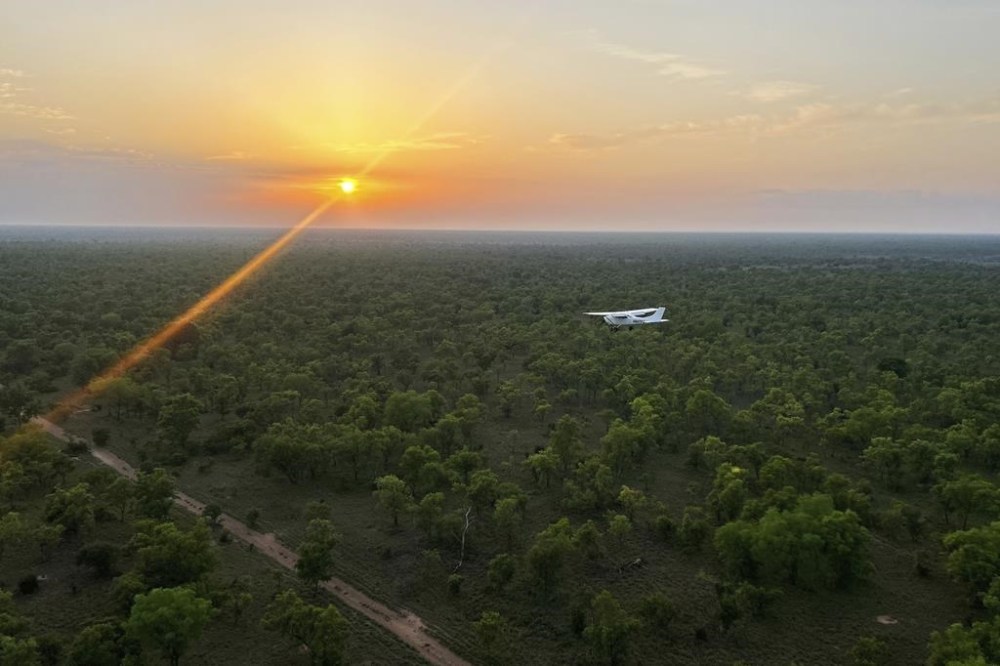
BADINGILO and BOMA NATIONAL PARKS, South Sudan (AP) — Seen from the air, they ripple across the landscape — a river of antelope racing across the vast grasslands of South Sudan in what conservationists say is the world’s largest land mammal migration.
The country’s first comprehensive aerial wildlife survey, released Tuesday, found about 6 million antelope. The survey over a two-week period last year in two national parks and nearby areas relied on spotters in airplanes, nearly 60,000 photos and tracking more than a hundred collared animals over about 46,000 square miles (120,000 square kilometers).
The estimate from the nonprofit African Parks, which conducted the work along with the government, far surpasses other large migratory herds such as the estimated 1.36 million wildebeests surveyed last year in the Serengeti straddling Tanzania and Kenya. But they warned that the animals face a rising threat from commercial poaching in a nation rife with weapons and without strong law enforcement.

“Saving the last great migration of wildlife on the planet is an incredibly important thing,” said Mike Fay, a conservation scientist who led the survey. “There’s so much evidence that the world’s ecosystems are collapsing, the world resources are being severely degraded and it’s causing gigantic disruption on the planet.”
The east African nation is still emerging from five years of fighting that erupted in 2013 and killed nearly 400,000 people. Elections scheduled for last year were postponed to this December, but few preparations are in place for those. Violence continues in some areas, with some 2 million people displaced and 9 million — 75% of the population — reliant on humanitarian aid, according to the United Nations.
The migration is already being touted as a point of national pride by a country trying to move beyond its conflict-riddled past. Billboards of the migration recently went up in the capital of Juba, and the government has aspirations that the animals may someday be a magnet for tourists.
South Sudan has six national parks and a dozen game reserves covering more than 13% of the terrain. The migration stretches from east of the Nile in Badingilo and Boma parks into neighboring Ethiopia — an area roughly the size of the U.S. state of Georgia. It includes four main antelope, the white-eared kob — of which there are some 5 million — the tiang, the Mongalla gazelle and bohor reedbuck.
The survey said some animals have increased since a more limited one in 2010. But it described a “catastrophic” decline of most non-migratory species in the last 40 years, such as the hippo, elephant and warthog. Associated Press journalists flying over the stunning migration of thousands of antelope last week saw few giraffes and no elephants, lions or cheetahs.
Trying to protect the animals over such a vast terrain is challenging.
In recent years, new roads have increased people’s access to markets, contributing to poaching. Years of flooding have meant crop failures that have left some people with little choice but to hunt for food. Some 30,000 animals were being killed each month between March and May this year, African Parks estimated.
The government hasn’t made a priority of protecting wildlife. Less than 1% of its budget is allocated to the wildlife ministry, which said it has few cars to move rangers around to protect animals. Those rangers say they haven’t been paid a salary since October and are outgunned by poachers.
South Sudan President H.E. Salva Kiir Mayardit said the country is committed to turning its wealth of wildlife into sustainable tourism. He called on the Ministry of Wildlife to prioritize training and equipping rangers to fight poaching.
Matthew Kauffman, a wildlife biologist for the U.S. Geological Survey and a professor of zoology at the University of Wyoming, said the work fits a growing global effort “to map these migrations.” One benefit is to be smarter when landscapes are developed to make way for these seasonal movements, he said.
Villagers near the parks told AP they mostly hunted to feed their families or to barter for goods.
A newly paved road between Juba and Bor — the epicenter of the illegal commercial bushmeat trade — has made it easier for trucks to carry large quantities of animals. Bor sits along the Nile, about 27 miles (45 kilometers) from Badingilo Park. In the dry season, animals coming closer to the town to drink are vulnerable to killing.
Officials at the wildlife ministry in Bor told AP the killing of animals had doubled in the last two years.
Even when those involved in the industry are caught, the consequences can be minor. A few years ago, when wildlife rangers came to arrest Lina Garang for selling animals, she said they let her go, instead telling her to conduct business more discreetly. Garang, 38, said her competition has only grown, with 15 new shops opening along her strip to buy and sell animals.
Part of the challenge is that there is no national land management plan, so roads and infrastructure are built without initial discussions about where best placed. The government’s also allocated an oil concession to a South African company in the middle of Badingilo that spans nearly 90% of the park.
African Parks is trying to square modernizing the country with preserving the wildlife. The organization has been criticized in the past for not engaging enough with communities and taking an overly militarized approach in some of the nearly two dozen areas it manages in Africa.
The group says its strategy in South Sudan is focused on community relations and aligning the benefits of wildlife and economic development. One plan is to create land conservancies that local communities would manage, with input from national authorities.
African Parks has set up small hubs in several remote villages and is spreading messages of sustainable practices, such as not killing female or baby animals.
Peter Alberto, undersecretary for the ministry of wildlife, conservation and tourism, said the government hopes the migration can become a point of pride, and reshape how the world thinks of South Sudan.
As for tourism, that may take a while. There aren’t hotels or roads to host people near the parks, and the only option is high-end trips for what one tour company official called a “high-risk” audience. There’s fighting between tribes and attacks by gunmen in the area, and pilots told AP they’ve been shot at while flying.
Will Jones, chief exploration officer for Journeys by Design, a UK-based tour company, charges roughly $150,000 per person for a weeklong tour in South Sudan. He said there isn’t strong demand.
Locals trying to protect the wildlife say it’s hard to shift people’s mentality.
In the remote village of Otallo on the border with Ethiopia, young men have started buying motorbikes. What had been an all-day trip on foot to cross the border to sell animals now takes just five hours, allowing them to double the number of animals they take and make multiple trips.
One of them, Charo Ochogi, said he’d rather be doing something else but there are few options, and he’s not worried about the animals disappearing.
“The kob isn’t going to finish. They’ll reproduce,” he said.
___
The Associated Press’ climate and environmental coverage receives financial support from multiple private foundations. AP is solely responsible for all content. Find AP’s standards for working with philanthropies, a list of supporters and funded coverage areas at AP.org.