The Supreme Court casts doubt on Florida and Texas laws to regulate social media platforms
Advertisement
Read this article for free:
or
Already have an account? Log in here »
To continue reading, please subscribe:

Digital Subscription
One year of digital access for only $205*
- Enjoy unlimited reading on winnipegfreepress.com
- Read the E-Edition, our digital replica newspaper
- Access News Break, our award-winning app
- Play interactive puzzles
*First annual payment billed as $205.00 + GST for one year. This annual subscription will automatically renew at $233.00 + GST every 52 weeks (10% off the regular annual price of $259.35). Offer available to new and qualified returning subscribers only. Cancel any time.
To continue reading, please subscribe:
Add Free Press access to your Brandon Sun subscription for only an additional
$1 for the first 4 weeks*
- Enjoy unlimited reading on winnipegfreepress.com
- Read the E-Edition, our digital replica newspaper
- Access News Break, our award-winning app
- Play interactive puzzles
*Your next Brandon Sun subscription payment will increase by $1.00 and you will be charged $17.95 plus GST for four weeks. After four weeks, your payment will increase to $24.95 plus GST every four weeks.
Read unlimited articles for free today:
or
Already have an account? Log in here »
Hey there, time traveller!
This article was published 01/07/2024 (834 days ago), so information in it may no longer be current.
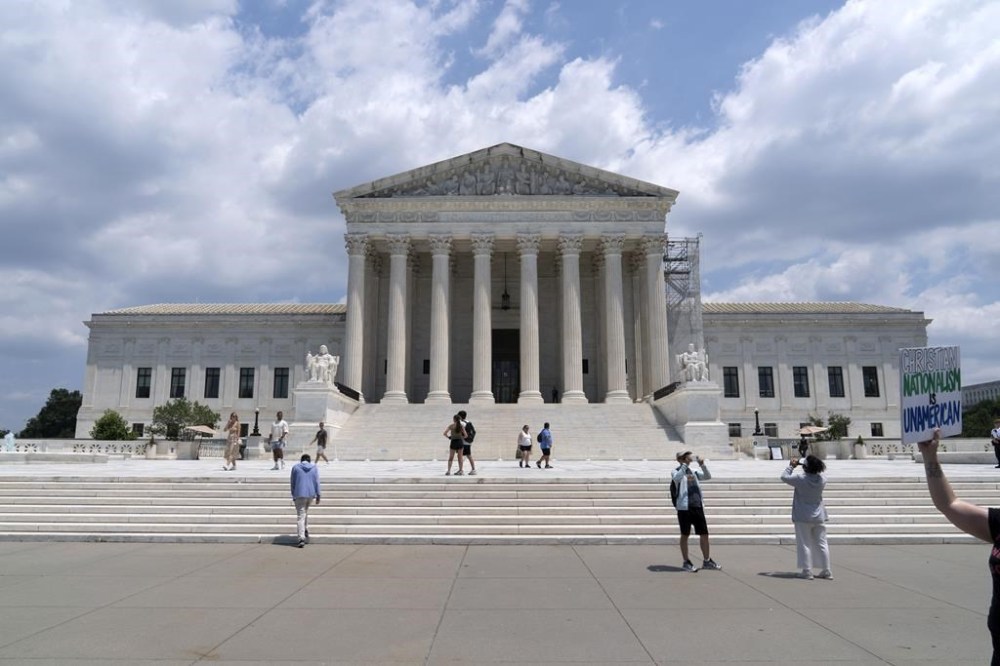
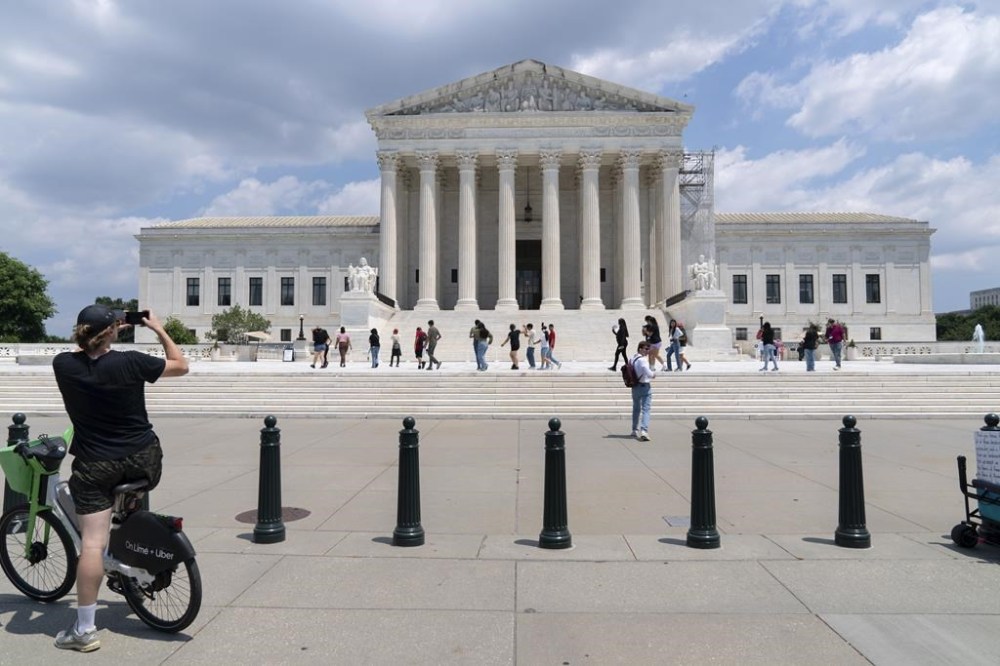
WASHINGTON (AP) — The Supreme Court on Monday kept on hold efforts by Texas and Florida to limit how Facebook, TikTok, X, YouTube and other social media platforms regulate content posted by their users in a ruling that strongly defended the platforms’ free speech rights.
Writing for the court, Justice Elena Kagan said the platforms, like newspapers, deserve protection from governments’ intrusion in determining what to include or exclude from their space. “The principle does not change because the curated compilation has gone from the physical to the virtual world,” Kagan wrote in an opinion signed by five justices. All nine justices agreed on the overall outcome.
The justices returned the cases to lower courts for further review in broad challenges from trade associations for the companies.
While the details vary, both laws aimed to address long-standing conservative complaints that the social media companies were liberal-leaning and censored users based on their viewpoints, especially on the political right. The cases are among several this term in which the justices are wrestling with standards for free speech in the digital age.
The Florida and Texas laws were signed by Republican governors in the months following decisions by Facebook and Twitter, now X, to cut then-President Donald Trump off over his posts related to the Jan. 6, 2021, attack on the U.S. Capitol by his supporters.
Trade associations representing the companies sued in federal court, claiming that the laws violated the platforms’ speech rights. One federal appeals court struck down Florida’s statute, while another upheld the Texas law. But both were on hold pending the outcome at the Supreme Court.
While the cases are complicated, said First Amendment expert and Notre Dame Law School professor Richard W. Garnett, the justices were clear on two things:
“First, the First Amendment protects what we choose to say, but also what we choose not to say, support, or endorse. That is, the freedom of speech includes editorial judgment. This is true whether the speaker is a lone individual or a large media company,” he said. “Second, the government is not permitted to regulate speakers simply to produce what the government thinks would be a better, or more diverse, marketplace of ideas. What’s on offer in that marketplace is, in the end, up to us.”
In a statement when he signed the Florida measure into law, Gov. Ron DeSantis said it would be “protection against the Silicon Valley elites.”
When Gov. Greg Abbott signed the Texas law, he said it was needed to protect free speech in what he termed the new public square. Social media platforms “are a place for healthy public debate where information should be able to flow freely — but there is a dangerous movement by social media companies to silence conservative viewpoints and ideas,” Abbott said. “That is wrong, and we will not allow it in Texas.”
But much has changed since then. Elon Musk purchased Twitter and, besides changing its name, eliminated teams focused on content moderation, welcomed back many users previously banned for hate speech and used the site to spread conspiracy theories.
President Joe Biden’s administration sided with the challengers, though it cautioned the court to seek a narrow ruling that maintained governments’ ability to impose regulations to ensure competition, preserve data privacy and protect consumer interests. Lawyers for Trump filed a brief in the Florida case that had urged the Supreme Court to uphold the state law.
Free speech advocates hailed the ruling as a victory.
“The court’s recognition that the government cannot control social media in an effort to impose its own vision of what online speech should look like is crucial to protecting all of our right to speak our minds and access information on the internet,” said Vera Eidelman, staff attorney with the ACLU’s Speech, Privacy, and Technology Project. “The court’s recognition that the government cannot control social media in an effort to impose its own vision of what online speech should look like is crucial to protecting all of our right to speak our minds and access information on the internet.”
Nora Benavidez, senior counsel at the nonprofit media advocacy group Free Press said that while the decision “rests on procedural grounds, Justice Kagan’s comprehensive opinion for the Court explains in very clear terms why the Florida and Texas laws will have a tough time ever passing First Amendment muster. That’s a very good thing.”
But it’s a “bumpy win,” noted Gus Hurwitz, academic director of the Center for Technology, Innovation & Competition at the University of Pennsylvania Carey Law School. He said the justices were “clearly frustrated” that the case came to them as a facial challenge — where the plaintiff argues that the law is unconstitutional — vacating both cases and sending them back to be “more fully developed.”
“Five of the justices sign on to the direct statement that ‘Texas does not like the way those platforms are selecting and moderating content, and wants them to create a different expressive product, communicating different values and priorities. But under the First Amendment, that is a preference Texas may not impose,” Hurwitz said. “It is hard to see how this doesn’t dictate the ultimate resolution of the case, and clearly foreshadows a rocky road ahead for these statutes if Texas and Florida continue to press forward with them.”
The cases are among several the justices have grappled with over the past year involving social media platforms, including one decided last week in which the court threw out a lawsuit from Louisiana, Missouri and other parties accusing federal officials of pressuring social media companies to silence conservative points of view.
During arguments in February, the justices seemed inclined to prevent the laws from taking effect. Several justices suggested then that they viewed the platforms as akin to newspapers that have broad free-speech protections, rather than like telephone companies, known as common carriers, that are susceptible to broader regulation.


But two justices, Samuel Alito and Clarence Thomas, appeared more ready to embrace the states’ arguments. Thomas raised the idea that the companies are seeking constitutional protection for “censoring other speech.” Alito also equated the platforms’ content moderation to censorship.
The justices also worried about too broad a ruling that might affect businesses that are not the primary targets of the laws, including e-commerce sites like Uber and Etsy and email and messaging services.
___
AP Technology Writer Barbara Ortutay contributed to this story.
Follow the AP’s coverage of the U.S. Supreme Court at https://apnews.com/hub/us-supreme-court.