

Greenhouses are becoming more popular, but there’s little research on how to protect workers
Advertisement
Read this article for free:
or
Already have an account? Log in here »
To continue reading, please subscribe:

Digital Subscription
One year of digital access for only $205*
- Enjoy unlimited reading on winnipegfreepress.com
- Read the E-Edition, our digital replica newspaper
- Access News Break, our award-winning app
- Play interactive puzzles
*First annual payment billed as $205.00 + GST for one year. This annual subscription will automatically renew at $233.00 + GST every 52 weeks (10% off the regular annual price of $259.35). Offer available to new and qualified returning subscribers only. Cancel any time.
To continue reading, please subscribe:
Add Free Press access to your Brandon Sun subscription for only an additional
$1 for the first 4 weeks*
- Enjoy unlimited reading on winnipegfreepress.com
- Read the E-Edition, our digital replica newspaper
- Access News Break, our award-winning app
- Play interactive puzzles
*Your next Brandon Sun subscription payment will increase by $1.00 and you will be charged $17.95 plus GST for four weeks. After four weeks, your payment will increase to $24.95 plus GST every four weeks.
Read unlimited articles for free today:
or
Already have an account? Log in here »
Hey there, time traveller!
This article was published 18/07/2024 (819 days ago), so information in it may no longer be current.
From opposite ends of the world, the uncomfortable conditions Shamim Ahamed and Purvi Tiwari experienced doing separate Ph.D. research inside greenhouses inspired them to study the heat in the indoor structures.
Tiwari, a researcher at Indira Gandhi Agricultural University in India, realized the heat-amplifying effect of greenhouses is a big concern that should be studied because she herself experienced the leg cramps, nausea and dizziness that her farmer subjects later described. Summer outdoor temperatures can reach 120 degrees Fahrenheit (50 degrees Celsius) in parts of India, where greenhouse workers “are feeling suffocated inside.” She added that in the last five years, greenhouses have become a trend as available land shrinks amid development.
“Workplaces shouldn’t harm humans,” she said. “If that workplace area is harming that person, that means it’s not good for working. That should be changed.”
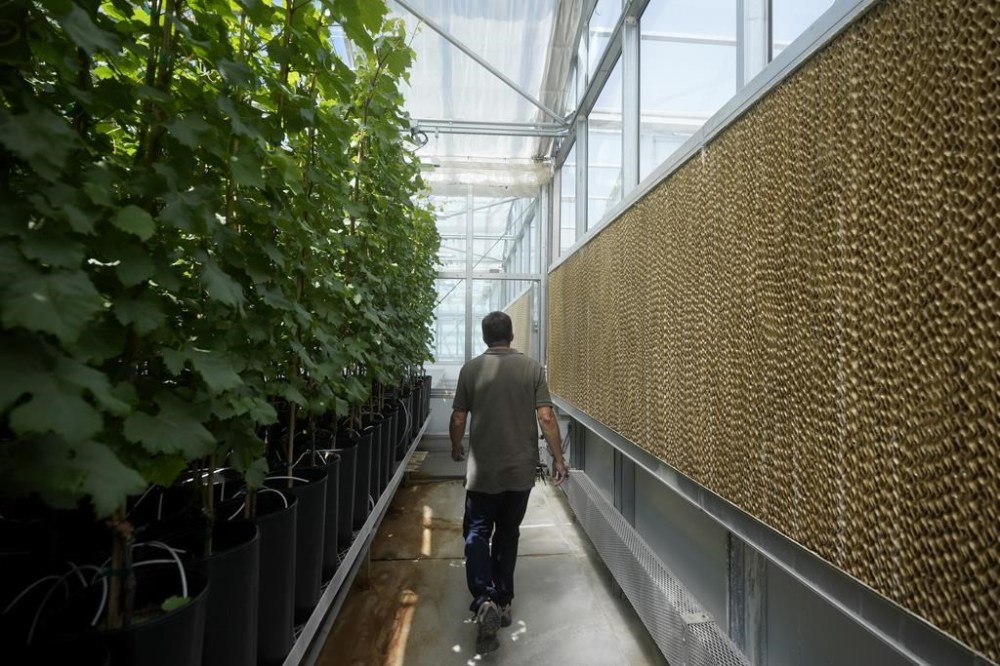
In the United States, the latest agricultural census shows the number of greenhouse and nursery workers in the U.S. has grown by 16,000 in recent years. But there are no federal heat rules even as greenhouses become more popular and the number of workers in them has risen. There is also minimal research on the experiences of workers and their broader working conditions, nor on how to protect people who labor inside their often hot and humid environments. But academics from across the world, like Tiwari and Ahamed, are trying to plug the knowledge gaps about the unique conditions greenhouse farmworkers are exposed to.
Bharat Jayram Venkat, associate professor and founding director of UCLA’s Heat Lab, said that “there’s a lot of research on agricultural workers… but not specifically looking at greenhouses.” Most of the literature focuses on maximizing plant growth and production in greenhouses, not on human health.
“On the face of it it makes sense — that’s what greenhouses are actually for. But of course you need human workers in those greenhouses to make them function,” he said, “so you have to think about human health.”
More heat, more greenhouse workers
Last year was the hottest on record and cities across the U.S. repeatedly experienced triple-digit temperatures. According to the United States Department of Agriculture, the number of farms and square feet under glass, and the value of greenhouse and nursery sales, have all increased from 2017. In addition, use of the H-2A agricultural workers program essentially doubled over the period from 2010-2019, with implications for workers’ ability to complain about extreme heat conditions.
Venkat anticipates more research will emerge as indoor, climate-controlled growing environments likely become more popular as climatic conditions become less predictable and more extreme. Laws such as California’s recently-approved indoor heat rules and the rise in greenhouse workers will also increase interest in studying them, he said.
Jennifer Vanos, an associate professor at Arizona State University, has researched the limits of survival and physical work capacity in extreme heat. Using research led by a former fellow at Loughborough University — which assessed how the body functions under varying temperatures, wind speeds, humidity and radiation — Vanos and colleagues studied the productivity of agricultural workers in a warming planet.
Among their findings was that the warmer it gets, the less productive workers could be, which has economic implications. In the context of agriculture, that could mean fewer crops harvested and the need for more workers.
Ultimately, their results found that “for people to work safely, they have to lower their heart rate, which means lower their workout output to be able to do the same tasks in a hotter environment,” said Vanos.
Signs of heat stress include heavy sweating, cramps and fast heart rate. Exposure to extreme temperatures can increase the risk of injuries due to dizziness, weakness or fainting. And heat stroke, the most serious heat-related illness, can happen when the body stops sweating and its temperature rises.
When heat combines with humidity, it’s harder for sweat to evaporate to cool the body, creating a potentially more dangerous situation.
“When the air is already really saturated with water vapor… the capacity for sweat to evaporate is greatly diminished,” said Venkat. “That means that your risk of heat related illness or even death is going to be that much higher.”
Filling in research gaps
Researchers Tiwari and Ahamed have now published papers on greenhouse environments. Ahamed, now an assistant professor in the Department of Biological and Agricultural Engineering at UC Davis, studied the risks of heat exposure in high-tech greenhouses, comparing the effects on workers when tools like shade “skins” are deployed in greenhouses to keep temperatures cooler. Tiwari spoke to workers in India who experienced nausea, drowsiness and dehydration, and she and her team found that greenhouse workers who labored in the middle of the day had an average working heart rate 20% higher than those in open fields.
Ahamed said Tiwari’s research is relatively rare. Many of the studies that do exist are in countries outside the U.S. And even when studies are U.S.-based, it can be hard to source a proper sample size for greenhouse workers in particular.
For example, researchers at UC Merced found higher rates of preterm birth, low birth weight and birth defects in pregnant agricultural workers across the board – including field and nursery workers. A study from Iran found similar effects in greenhouse workers there, but the UC Merced team said that they didn’t have enough pregnant indoor agriculture workers to confidently look at that result alone.
The holes in the literature, Ahamed said, have led to “a huge gap of how these things could be kind of regulated or standardized.” He thinks there needs to be building codes based upon UV, heat and humidity exposure as well as safety procedures for workers inside.
But with such a wide range of greenhouse technology being used – from mega-farms on many acres to microclimates created with “high tunnel” or “hoop house” setups involving plastic arched over small sections of a field – the patchwork of possible options remains an issue toward implementing standards.
However, he thinks it would be doable to have different protocols in place depending on the type of greenhouse at hand.
“For this, they need to investigate, to find some recommendations,” Ahamed said.
___
The Associated Press’ climate and environmental coverage receives financial support from multiple private foundations. AP is solely responsible for all content. Find AP’s standards for working with philanthropies, a list of supporters and funded coverage areas at AP.org.





