Japan’s Kishida cancels Asia trip after scientists urge preparations for a possible ‘megaquake’
Advertisement
Read this article for free:
or
Already have an account? Log in here »
To continue reading, please subscribe:

Digital Subscription
One year of digital access for only $205*
- Enjoy unlimited reading on winnipegfreepress.com
- Read the E-Edition, our digital replica newspaper
- Access News Break, our award-winning app
- Play interactive puzzles
*First annual payment billed as $205.00 + GST for one year. This annual subscription will automatically renew at $233.00 + GST every 52 weeks (10% off the regular annual price of $259.35). Offer available to new and qualified returning subscribers only. Cancel any time.
To continue reading, please subscribe:
Add Free Press access to your Brandon Sun subscription for only an additional
$1 for the first 4 weeks*
- Enjoy unlimited reading on winnipegfreepress.com
- Read the E-Edition, our digital replica newspaper
- Access News Break, our award-winning app
- Play interactive puzzles
*Your next Brandon Sun subscription payment will increase by $1.00 and you will be charged $17.95 plus GST for four weeks. After four weeks, your payment will increase to $24.95 plus GST every four weeks.
Read unlimited articles for free today:
or
Already have an account? Log in here »
Hey there, time traveller!
This article was published 09/08/2024 (759 days ago), so information in it may no longer be current.
TOKYO (AP) — Japanese Prime Minister Fumio Kishida canceled a planned trip to Central Asia on Friday to lead the government’s response after scientists urged people to prepare for a possible “megaquake” off the country’s southern coast.
The Japan Meteorological Agency issued its first ever “megaquake advisory” on Thursday warning of a possible future major earthquake triggered by the underwater Nankai Trough, after a magnitude 7.1 quake shook just off the eastern coast of Kyushu island earlier in the day. The trough, which runs along Japan’s Pacific coast, was the source of past devastating earthquakes.
Seismologists at the agency held an emergency meeting after Thursday’s quake to analyze whether it had affected the nearby trough and reassessed the risk of a major quake. They urged people to observe high caution levels for about a week.

Thursday’s quake injured 16 people, most of them slightly, and caused no major damage. Tsunami advisories were issued for several areas but lifted hours later.
Kishida announced that he had canceled his planned Aug. 9-12 trip to Kazakhstan, Uzbekistan and Mongolia as a result of the advisory.
“I have decided to stay in the country at least for about a week to make sure that government measures and communication are fully in place,” Kishida said.
The Fire and Disaster Management Agency instructed 707 municipalities designated as at risk from a Nankai Trough quake to review their disaster response measures and evacuation plans.
The meteorological agency’s first “megaquake advisory” sparked public unease and prompted local government offices, rail operators and other agencies to begin introducing precautionary measures, affecting holiday travelers during the summer “Obon” holiday week.
Some municipalities even closed parks or cancelled events for the coming week, although officials and experts stressed that there was no need to shut down any normal activity. They said the advisory was aimed only at raising awareness of a increased probability over the long term, and that it was not for any specific timeframe or location.
Chief Cabinet Secretary Yoshimasa Hayashi called on people to carry on daily social and economic activities such as traveling.

Still, towns such as Higashi Osaka called on residents not to engage in “unnecessary and non-urgent” travel in case of a major quake. Other municipalities opened shelters, called on residents to stock up emergency food and water and to discuss evacuation plans among family members.
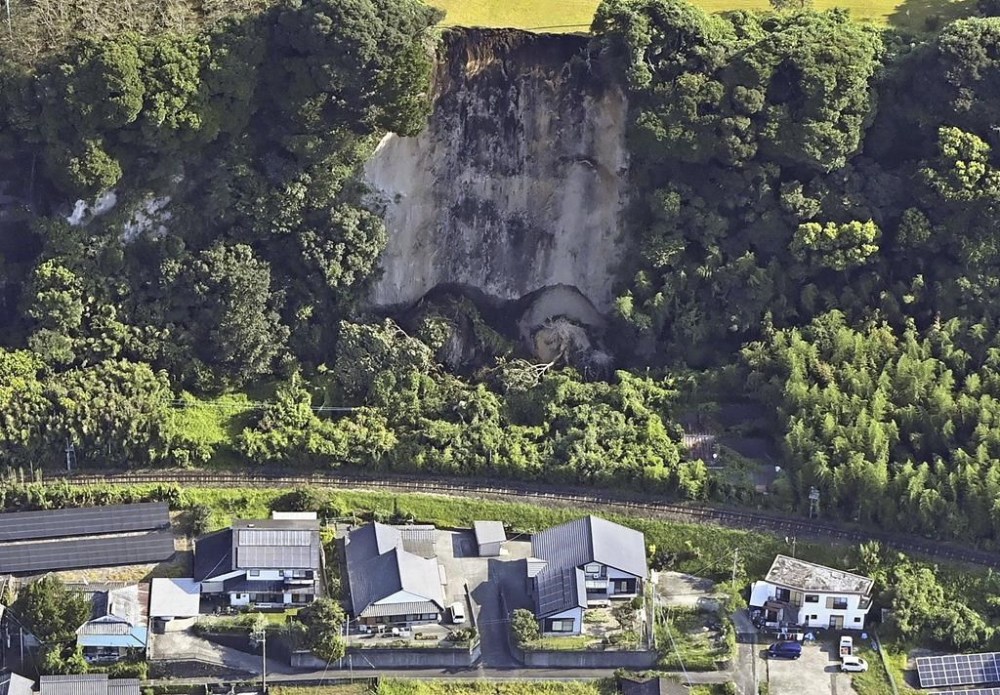
The popular seaside town of Shirahama in Wakayama prefecture said its four beaches, outdoor hot springs, parks and other facilities would be closed for the next week. An annual fireworks festival planned for Saturday was canceled.
Aoshima, another popular beach resort in Miyazaki prefecture, which was hardest hit by Thursday’s quake, also was closed.
Rail companies serving the region said their trains will operate at slightly reduced speeds as a precautionary measure.
In a 2013 report, a government disaster prevention team said that if a magnitude 9.1 quake struck near the southern coast, it could generate a tsunami exceeding 10 meters (33 feet) with a death toll of more than 300,000 and economic damage of more than 220 trillion yen ($1.5 trillion) in a worst case scenario.
Related Articles
No Tsunami threat in B.C. after powerful Japan earthquake
Advertisement Advertise With Us
Advertisement Advertise With Us