You had a lot of questions about next-generation nuclear reactors. We posed them to the experts
Advertisement
Read this article for free:
or
Already have an account? Log in here »
To continue reading, please subscribe:

Digital Subscription
One year of digital access for only $205*
- Enjoy unlimited reading on winnipegfreepress.com
- Read the E-Edition, our digital replica newspaper
- Access News Break, our award-winning app
- Play interactive puzzles
*First annual payment billed as $205.00 + GST for one year. This annual subscription will automatically renew at $233.00 + GST every 52 weeks (10% off the regular annual price of $259.35). Offer available to new and qualified returning subscribers only. Cancel any time.
To continue reading, please subscribe:
Add Free Press access to your Brandon Sun subscription for only an additional
$1 for the first 4 weeks*
- Enjoy unlimited reading on winnipegfreepress.com
- Read the E-Edition, our digital replica newspaper
- Access News Break, our award-winning app
- Play interactive puzzles
*Your next Brandon Sun subscription payment will increase by $1.00 and you will be charged $17.95 plus GST for four weeks. After four weeks, your payment will increase to $24.95 plus GST every four weeks.
Read unlimited articles for free today:
or
Already have an account? Log in here »
Hey there, time traveller!
This article was published 09/08/2024 (769 days ago), so information in it may no longer be current.
The United States is speeding up efforts to license and build a new generation of nuclear reactors to supply carbon-free electricity.
Faster development is one thing Congress and the administration agree on. President Joe Biden signed legislation in July to modernize the licensing of new reactor technologies so they can be built faster. Republican and Democratic leaders of the Senate environment and House energy committees praised the enactment.
The U.S. is pursuing small modular reactors and advanced reactors. Some designs use something other than water for cooling, such as liquid metal, helium or liquid salt. Developers say the advanced coolants allow the reactors to run at low pressure, making them safer than traditional designs.
Russia and China are the only countries that are already operating advanced reactors.
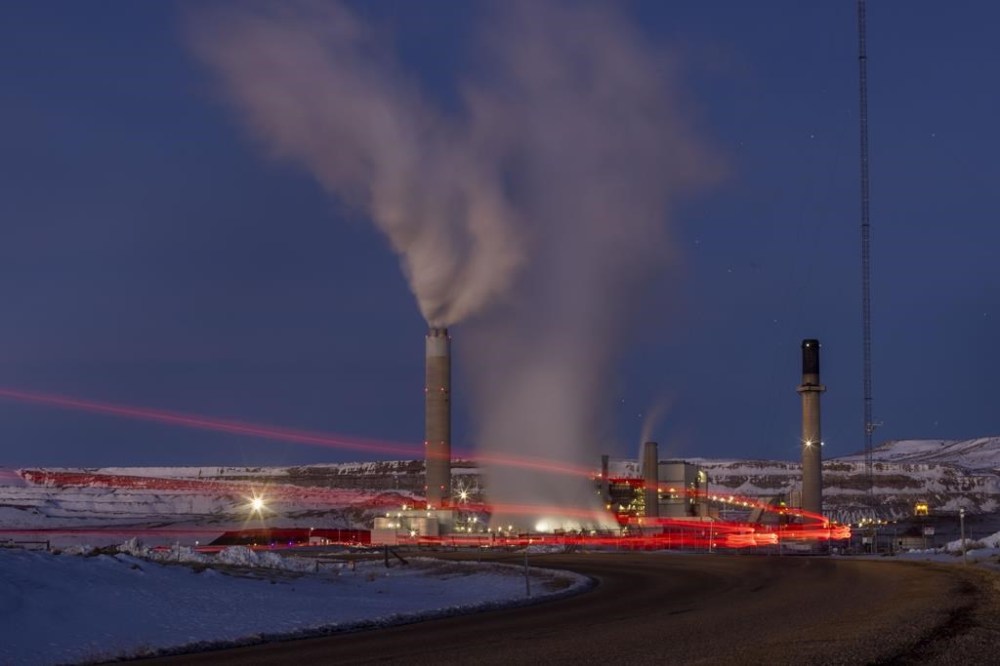
The United States is trying to boost the new technology; the Energy Department announced $900 million in funding in June. Bill Gates’ company, TerraPower, is the first in the U.S. to apply to the Nuclear Regulatory Commission for a construction permit for an advanced reactor that would operate as a commercial nuclear power plant.
Readers had questions for The Associated Press about evolving nuclear. They wonder how the next generation of reactors can be a climate solution, where the radioactive waste would go, and above all, whether these new reactor designs are safe.
The AP turned to White House National Climate Advisor Ali Zaidi and experts at the Energy Department and Nuclear Regulatory Commission to help answer those questions.
Q: Elizabeth M. from Bisbee, Arizona said advanced nuclear seems like a compromise that, despite drawbacks, is the most practical and clean solution for America’s big energy appetite. We asked Zaidi for his take on how these new reactors can be a climate solution.
Zaidi said the world has to feed future energy needs “in a way that doesn’t add to the problem of climate change.” Nuclear energy is one tool that can do that, he said.
“As we are finding ourselves in the middle of the climate crisis in the decisive decade for climate action, it’s incumbent on us to pull every tool off of the sidelines and help harness these technologies in the race for the future,” Zaidi said.
Nuclear power plants don’t emit the planet-warming greenhouse gases that come from power plants that burn fossil fuels.
Q: At least one reader wondered about the timeline for these reactors to come online, lamenting how long it takes for older plants to get running.
Zaidi said the U.S. is working hard to make it happen “in this decade.” And he said the goal is “a massive ramp-up and scale-up of this technology” over the next 10 to 15 years.
The project furthest along, from Gates’ TerraPower, applied for its construction permit in March. The company has said it wants to start operating commercially in Wyoming in 2030. The NRC has a 27-month goal for its technical review. If NRC approves the project along that timeline, TerraPower could be spinning up electricity in the early 2030s if it takes about three years to gets its plant built and obtain an operating license. But that’s not certain. Other first-of-their-kind nuclear projects frequently faced delays and cost overruns.
Q: Lots of readers — including Jim M. from Manheim, Pennsylvania — wanted to know what would happen to the radioactive waste from new reactors. The question stems from the United States’ decades-long inability to find a place to store spent fuel from current and former nuclear plants nationwide. Right now, spent fuel is being stored at more than 70 sites in more than 30 states — enclosed in steel-lined concrete pools of water or in steel containers known as dry storage casks.
Acting Assistant Secretary for Nuclear Energy Michael Goff said spent fuel from the new reactors will be stored at the same sites where it’s used — the same situation the U.S. has today — until some federal storage facility is operational.
Goff said spent fuel from any new plants must be “stored, transported and disposed of” to meet the same NRC requirements that govern waste from current plants. That basically means keeping it cooled and secured.
The shape and composition of the fuel from some of the new reactors will be different, meaning it may require some technical changes to the way the fuel is packaged and contained, the Department of Energy said.
Goff noted that nuclear fuel can be recycled to make new fuel and byproducts, saying that “more than 90%” of its potential energy remains even after the fuel has been used in a reactor for five years. The U.S. doesn’t currently recycle any of its spent nuclear fuel, but Goff said other countries, including France, do. And he said some advanced U.S. reactor designs might “consume or run on spent nuclear fuel” someday.
The French nuclear industry reprocesses spent fuel to recover uranium and plutonium for reuse, which reduces the volume of waste. Some radioactive materials, or byproducts, have commercial, medical and academic uses. The United States has studied the prospect of commercial reprocessing of spent fuel, but expected little interest from applicants for reprocessing facilities and currently does not encourage it.
Q: Anne L. from East Bay, California wants to know if these reactors have the same problems and dangers as large plants. She wasn’t the only reader to wonder about such risks as overloads or meltdowns.
Nuclear Regulatory Commission spokesman Scott Burnell said all U.S. nuclear plants have to meet NRC safety requirements, showing how they operate safely under ordinary conditions.
“They must also show they can safely shut down, and then keep their fuel properly cooled, under normal conditions and in case of severe weather, earthquakes, problems with plant systems and other extreme events. Current reactors use pumps and backup power systems to stay safe; new designs can rely on natural processes such as gravity and convection to remain safe,” he said.
Burnell said the latest designs are proposing nuclear fuels and cooling capabilities that reduce the already small possibility of fuel overheating or melting. The NRC will require even those designs to account for extreme events and keep their fuel cooled and safe, he said.
___
The Associated Press’ climate and environmental coverage receives financial support from multiple private foundations. AP is solely responsible for all content. Find AP’s standards for working with philanthropies, a list of supporters and funded coverage areas at AP.org.