Rollout of Alberta’s school cellphone ban raising concerns among teachers

Advertisement

Advertise with us

EDMONTON - The head of the Alberta Teachers' Association says the rollout of new policies banning cellphone use in classrooms starting this fall has some teachers confused about how they'll be expected to follow them.

Read this article for free:


or

Already have an account? Log in here »

To continue reading, please subscribe:

Subscribe and receive a limited-edition Free Press branded hat or tote.

Digital Subscription

One year of digital access for only $205*

  • Enjoy unlimited reading on winnipegfreepress.com
  • Read the E-Edition, our digital replica newspaper
  • Access News Break, our award-winning app
  • Play interactive puzzles

*First annual payment billed as $205.00 + GST for one year. This annual subscription will automatically renew at $233.00 + GST every 52 weeks (10% off the regular annual price of $259.35). Offer available to new and qualified returning subscribers only. Cancel any time.

To continue reading, please subscribe:

Add Free Press access to your Brandon Sun subscription for only an additional

$1 for the first 4 weeks*

  • Enjoy unlimited reading on winnipegfreepress.com
  • Read the E-Edition, our digital replica newspaper
  • Access News Break, our award-winning app
  • Play interactive puzzles
Start now

*Your next Brandon Sun subscription payment will increase by $1.00 and you will be charged $17.95 plus GST for four weeks. After four weeks, your payment will increase to $24.95 plus GST every four weeks.

Hey there, time traveller!
This article was published 20/08/2024 (774 days ago), so information in it may no longer be current.

EDMONTON – The head of the Alberta Teachers’ Association says the rollout of new policies banning cellphone use in classrooms starting this fall has some teachers confused about how they’ll be expected to follow them.

President Jason Schilling said about two weeks before most kindergarten to Grade 12 students go back to class, it’s unclear why new provincial standards will be in place for Sept. 1, while school divisions have until Jan. 1 to put their own policies and procedures on the books.

“I find the discrepancy between the two dates bizarre,” he told The Canadian Press.
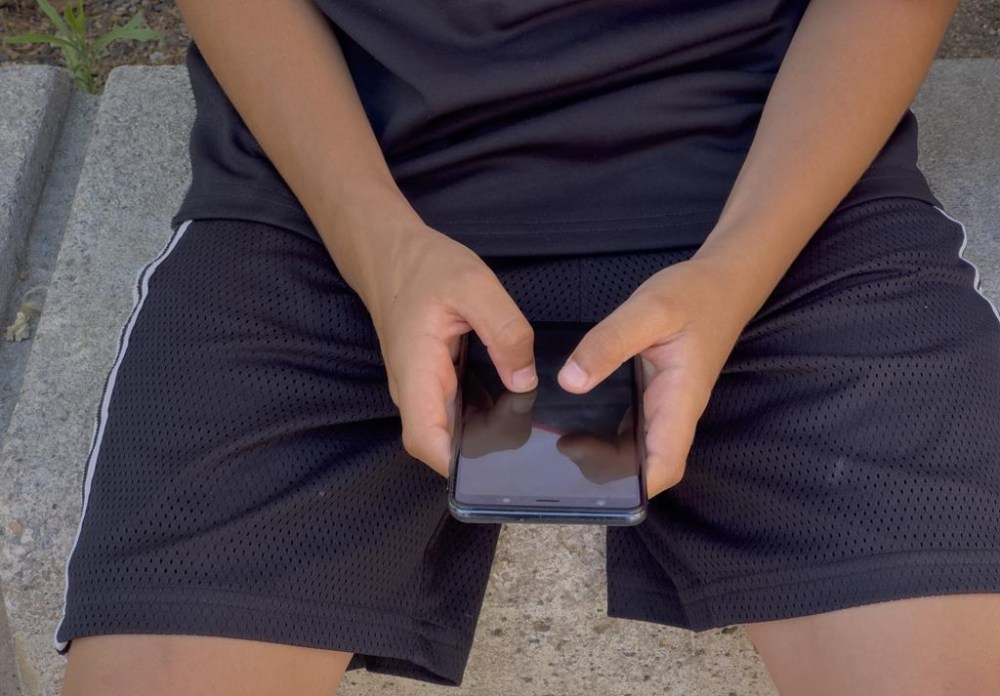
A 12-year-old boy plays with his personal phone outside school, on June 17, 2024. The head of the Alberta Teachers' Association says the rollout of new policies banning cellphone use in classrooms starting this fall has some teachers confused about how they'll be expected to follow them. THE CANADIAN PRESS/AP, Emilio Morenatti

Alberta has previously allowed school boards to decide whether or not to restrict cellphones, but Schilling said for those teachers in schools who don’t yet have such rules, there’s concern.

“When I talk to my colleagues about this, they are (going to be) confiscating phones that are very expensive, and they’ve got some hesitations about doing that without any kind of proper policies or rules and procedures put in place before they start doing this,” he said.

Education Minister Demetrios Nicolaides announced in June that personal devices will need to be turned off and stored out of sight during class time, with exceptions for specialized learning or medical needs.

In a statement to The Canadian Press, Nicolaides said while the ban takes effect in the fall, he’s leaving it up to local school authorities to finalize their own policies by the new year.

Those include rules on how cellphones will need to be stored, “roles and responsibilities, consequences, and annual notification that are reflective of the province’s expectations.”

Schilling said it’s important students and parents understand what happens when the rules are violated.

The province’s move to crack down on cellphones in schools followed the announcement of similar restrictions in Quebec, Ontario and B.C.

Saskatchewan and Manitoba have since followed suit.

Schilling said the Alberta Teachers’ Association supports restricting smartphones during instructional time, but not the timeline.

Instead, the government could call for all the rules to be in place on Jan. 1 so that there’s clarity, he said.

Meanwhile, some Alberta school divisions say they’re ready to have the new ban in place as soon as school starts.

Joanne Anderson, spokesperson for the Calgary Board of Education, said it will take effect on the first day of classes, Aug. 29.

“More information will be provided to staff and families next week in advance of the first day of classes,” said Anderson, noting that “administrative regulation” will be finalized before the Jan. 1 deadline.

Veronica Jubinville, spokesperson at the Edmonton Public School Board, said many schools in the division already have cellphone rules, so the government’s requirements will either reinforce those or set new standards for the beginning of the school year.

“The division feels prepared for the start of the 2024-25 school year,” she wrote in a statement.

Jubinville said the Jan. 1 deadline gives schools time to put in rules that go beyond the government’s orders, if they want.

Superintendent Dave Driscoll at the Palliser School Division, which covers schools in southern Alberta, said in a statement the new direction will be a “significant change,” but procedures will be in effect for the beginning of this school year.

This report by The Canadian Press was first published Aug. 20, 2024.

Report Error Submit a Tip

More Stories

Sisters relieved hospital takes accountability after mother’s death

Scott Billeck 6 minute read Preview

Sisters relieved hospital takes accountability after mother’s death

Scott Billeck 6 minute read Thursday, Oct. 1, 2026

Eight months after losing their mother, two Winnipeg sisters say an internal hospital review has finally given them something they had been seeking since her death: accountability.

Chelsea Mann and Samantha Burns said St. Boniface Hospital officials acknowledged mistakes were made in the care of their mother, Judy Burns, during a recent meeting to discuss the findings of a critical incident review into her death.

The acknowledgement marked a significant departure from an earlier meeting with hospital officials, when they felt their concerns were largely dismissed.

Burns, 68, died on Jan. 21, three days after being admitted, after experiencing rectal bleeding.

Read
Thursday, Oct. 1, 2026

Manitoban Kent Monkman debuts beaver sculpture in Toronto’s ambitious new waterfront park

Alex Nino Gheciu, The Canadian Press 2 minute read Preview

Manitoban Kent Monkman debuts beaver sculpture in Toronto’s ambitious new waterfront park

Alex Nino Gheciu, The Canadian Press 2 minute read Updated: 9:17 AM CDT

TORONTO - Kent Monkman’s first-ever public art installation is dam good.

The celebrated Cree artist’s new permanent sculpture, dubbed “The Colony,” debuts Wednesday in Toronto’s east end.

The 15-foot-high bronze structure features beavers dancing, feasting and celebrating, evoking Indigenous ceremonies.

It highlights the vital role of beavers in the natural, Indigenous and colonial histories of Turtle Island, says a release.

Read
Updated: 9:17 AM CDT

Volunteer pop-up library axed from Manitoba Youth Centre

Matthew Frank 4 minute read Preview

Volunteer pop-up library axed from Manitoba Youth Centre

Matthew Frank 4 minute read Updated: 11:25 AM CDT

Manitoba Corrections has cancelled a pop-up library program at the Manitoba Youth Centre, leaving inmates without librarian services and fewer options to borrow certain books.

The Prison Libraries Committee, part of the non-profit Manitoba Library Association, operated and funded the volunteer program since 2024 before it was shut down by the province last month. The group previously partnered with the province to offer the service because the facility has no dedicated library of its own.

“It is concerning that community members who are incarcerated, especially youth, are losing out on meaningful programming, access to information and rehabilitation efforts, which are offered at no cost to (Manitoba) Corrections. We urge Manitoba Justice to promote more library services and programming, not less,” said a Sept. 24 letter from the non-profit addressed to the justice minister.

Ashley Huot, chair of the Prison Libraries Committee, said she was puzzled when she received an email last month from Manitoba Corrections stating that the pop-up library was no longer needed.

Read
Updated: 11:25 AM CDT

International flavour: Canadian investors may want to make like Ottawa, diversify beyond U.S.

Joel Schlesinger 6 minute read Preview

International flavour: Canadian investors may want to make like Ottawa, diversify beyond U.S.

Joel Schlesinger 6 minute read 2:01 AM CDT

Canada is learning the hard way about the dangers of putting too many eggs in its U.S. economic basket.

Much has been made about the need to diversify our economy away from the United States.

Diversification is understandably beneficial. The more varied streams of revenue a nation has, the less affected the economy will be when one of those sources is interrupted.

The same can be said about investment portfolios.

Read
2:01 AM CDT

Gillingham talks trash, pledges big bin boost

Joyanne Pursaga 4 minute read Preview

Gillingham talks trash, pledges big bin boost

Joyanne Pursaga 4 minute read Yesterday at 2:01 AM CDT

Scott Gillingham says he would add hundreds of locked garbage bins downtown to prevent unsightly trash piles if re-elected as mayor.

Read
Yesterday at 2:01 AM CDT

Health minister warns $1.2 billion in annual federal funding set to expire in March

Scott Billeck 4 minute read Preview

Health minister warns $1.2 billion in annual federal funding set to expire in March

Scott Billeck 4 minute read Thursday, Oct. 1, 2026

Manitoba’s health minister is warning of possible cuts to health care with $1.2 billion in annual funding from Ottawa set to expire next year.

“We’re very concerned that what would be the largest cut to health care in a generation is right in front of us,” Health Minister Uzoma Asagwara said Thursday at the Manitoba legislature. “It means that services that Manitobans depend on will be in jeopardy and be at risk.

“Any reductions, any cuts from Canada, will have direct impacts on the health outcomes of Manitobans.”

Asagwara, who serves as the provincial and territorial health minister lead, chaired a virtual meeting Tuesday with provincial and territorial health ministers to discuss federal funding for health care, mental health care and substance use services, which is scheduled to expire March 31, 2027.

Read
Thursday, Oct. 1, 2026