Drones helped in big Vancouver arrest. It’s time for policy scrutiny, researchers say
Advertisement
Read this article for free:
or
Already have an account? Log in here »
To continue reading, please subscribe:
Digital Subscription
One year of digital access for only $1.44 a week*
- Enjoy unlimited reading on winnipegfreepress.com
- Read the E-Edition, our digital replica newspaper
- Access News Break, our award-winning app
- Play interactive puzzles
*Billed as $5.77 plus GST every four weeks. After 52 weeks, price increases to the regular rate of $19.95 plus GST every four weeks. Offer available to new and qualified returning subscribers only. Cancel any time.
To continue reading, please subscribe:
Add Free Press access to your Brandon Sun subscription for only an additional
$1 for the first 4 weeks*
- Enjoy unlimited reading on winnipegfreepress.com
- Read the E-Edition, our digital replica newspaper
- Access News Break, our award-winning app
- Play interactive puzzles
*Your next Brandon Sun subscription payment will increase by $1.00 and you will be charged $17.95 plus GST for four weeks. After four weeks, your payment will increase to $24.95 plus GST every four weeks.
Read unlimited articles for free today:
or
Already have an account? Log in here »
Hey there, time traveller!
This article was published 05/09/2024 (776 days ago), so information in it may no longer be current.
VANCOUVER – Canadian police forces have been using drones for many years, but scrutiny of their use is lacking, especially as the technology has evolved, privacy and surveillance researchers say.
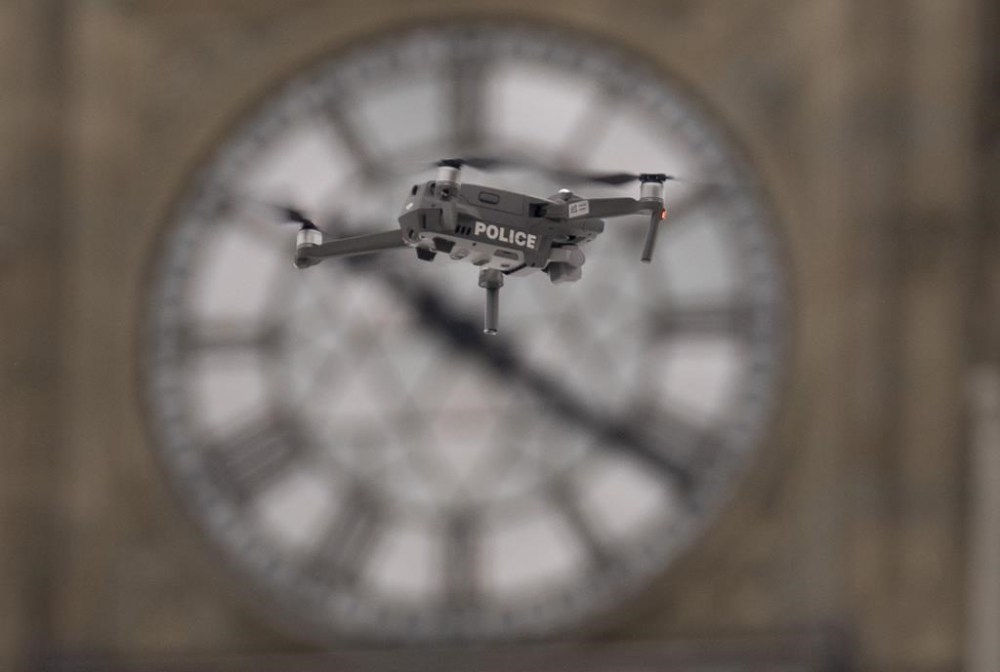
Their concerns come after Vancouver’s Chief Const. Adam Palmer revealed that investigators deployed drones to locate a suspect in a pair of gruesome stranger attacks in the city’s downtown on Wednesday, that left one man dead and another with a severed hand.
Palmer paid tribute to the role of the drone operator in the arrest of 34-year-old White Rock man, who has now been charged with second-degree murder and aggravated assault.
Brenda McPhail, an instructor in the public policy and digital society program at McMaster University, said the public only tends to hear about police use of drones “where there’s been a success.”
“Very generally, the transparency and accountability for the police use of drones is a concern,” McPhail said in an interview. “Police forces across Canada have been using drones for some time and yet you hear very little about them in the public.”
She said the public rarely gets a “line of sight into a failure” or misuse of the technology.
“What we don’t get is scrutiny about the mistakes,” McPhail said.
Drone technology had changed a lot in the last five years, she said, including newer and better cameras, and the potential to couple them with facial recognition technology makes it “time for renewed scrutiny” of police drone programs in Canada.
The Vancouver Police Department’s drone program was launched in 2019, and McPhail said it went through a “policy process” that included consultations with privacy and civil liberties advocates.
The resultant “remotely piloted aerial system” policy includes a ban on flights “for surveillance purposes,” except where there’s an “imminent risk to life or safety.”
It also bans drone flights to record or identify people taking part in peaceful protests.
The 2019 policy touts drones as tools “to gather digital imagery in an effort to support public safety, enhance investigative techniques, expand operational awareness and aid in critical incident resolution.”
Police drone pilots, the policy states, can be authorized to aid in a number of situations including “mass casualty events,” disaster responses, missing persons investigations, hazardous material spills or volatile situations including “barricaded suspects, hostage situations, active deadly threat scenarios, high risk search warrants, and suicidal persons.”
Palmer said Wednesday the department launched “multiple drones” during the hunt for the Vancouver attacker, and one was in “close proximity” to where investigators arrested McBride after a tip from a member of the public.
McPhail, the former director of the privacy, technology and surveillance program at the Canadian Civil Liberties Association, said changes to drone programs and updates to the technology should require more consultations to keep policies up-to-date and “new safeguards.”
She said police in Toronto, for example, used drones to monitor crowds at a Canada Day celebration back in July, causing a “bit of controversy.”
“And yet in Toronto, we’ve absolutely never had a public conversation about whether we want police using surveillance drones for what they would call public safety at public gatherings, which edges very closely to public surveillance at public gatherings,” she said.
“This kind of technology, if used inappropriately and without the right guardrails, has the potential to be really invasive. Police use of them has the potential to violate Charter rights.”
Scott Thompson, an assistant sociology professor and surveillance researcher at the University of Saskatchewan, said public opinion in Canada has been supportive of police drones in “single-event uses,” such as finding criminal suspects or aiding in searches for missing persons.
But public “push back” to the technologies comes when it’s used for collecting personal information like license plates or “pattern of life” data, where peoples’ movements can be tracked over large distances over long periods of time, he said.
Police forces, Thompson said, often portray drone use in the best possible terms.
“They’re kind of shy to let the public know exactly what the capabilities are or how often they’re deployed,” he said. “But if we want an open society in which people can participate, we really need to know how often these technologies are being used and for what purposes.”
Thompson said drones still have limitations, such as battery life, but “the technology is moving forward every day.”
He said some jurisdictions in the United States have started using “drones as first responders,” sending them to every police call, with “continuous” flights over geographic areas, collecting data somewhat indiscriminatingly.
“These are places that policing in Canada have not yet stepped into, but as the technology gets better, they will be issues moving forward and that’s where we run into that concern about routine collection and pattern of life collection,” he said.
Thompson said advancements in surveillance technologies means there’s a growing “invasiveness into our daily lives.”
“That’s why it’s super important that we have these conversations now before we have constant surveillance all the time, so the public can have a say in what it is that they expect in regards to privacy and what type of policing we want in our community,” he said. “Privacy is a serious concern because it’s a central feature of freedom and democracy within our society.”
“Without privacy, we don’t have a capacity to feel free to voice our opinions, so this is something that we always want to be concerned about.”
This report by The Canadian Press was first published Sept. 5, 2024