Spacewalking is the new domain of the rich as billionaire attempts first private spacewalk
Advertisement
Read this article for free:
or
Already have an account? Log in here »
To continue reading, please subscribe:

Digital Subscription
One year of digital access for only $205*
- Enjoy unlimited reading on winnipegfreepress.com
- Read the E-Edition, our digital replica newspaper
- Access News Break, our award-winning app
- Play interactive puzzles
*First annual payment billed as $205.00 + GST for one year. This annual subscription will automatically renew at $233.00 + GST every 52 weeks (10% off the regular annual price of $259.35). Offer available to new and qualified returning subscribers only. Cancel any time.
To continue reading, please subscribe:
Add Free Press access to your Brandon Sun subscription for only an additional
$1 for the first 4 weeks*
- Enjoy unlimited reading on winnipegfreepress.com
- Read the E-Edition, our digital replica newspaper
- Access News Break, our award-winning app
- Play interactive puzzles
*Your next Brandon Sun subscription payment will increase by $1.00 and you will be charged $17.95 plus GST for four weeks. After four weeks, your payment will increase to $24.95 plus GST every four weeks.
Read unlimited articles for free today:
or
Already have an account? Log in here »
Hey there, time traveller!
This article was published 11/09/2024 (752 days ago), so information in it may no longer be current.
CAPE CANAVERAL, Fla. (AP) — First came space tourism. Now comes an even bigger thrill for the monied masses: spacewalking.
The stage is set for the first private spacewalk Thursday. Tech billionaire Jared Isaacman will pop out of the hatch of his orbiting SpaceX capsule, two days after blasting off from Florida on a chartered flight that lifted him and his crew higher than anyone since NASA’s moonwalkers. He partnered with SpaceX CEO Elon Musk to buy a series of rocket rides and help develop brand new spacesuits.
SpaceX is the first private company to attempt a spacewalk, until now the domain of just 12 countries. There’s a reason why it’s such a niche and elite group: Spacewalking is considered the most dangerous part of any flight after launch and reentry, and demands extensive training.
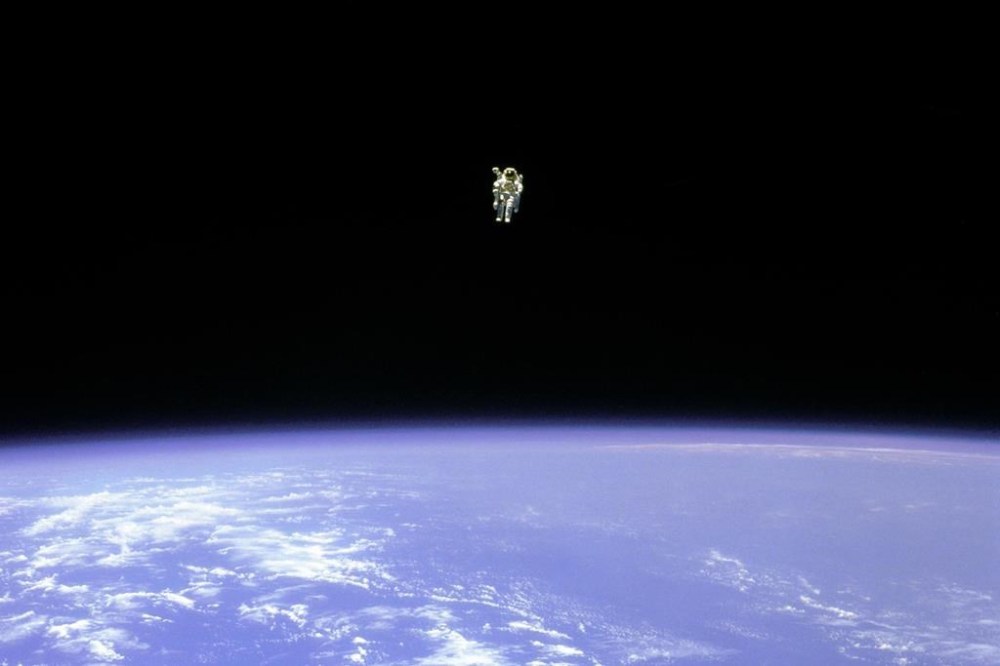
“Spacewalks are a whole different entire ballgame than just strapping into a rocket and riding it, getting some zero-g time and coming back,” said retired NASA astronaut Chris Cassidy.
Cassidy knows firsthand about the dangers of spacewalking: He was working outside the International Space Station in 2013 when his partner, Italian astronaut Luca Parmitano, almost drowned. Parmitano’s helmet filled with water from his cooling garment, and he barely made it back inside in time. Another 30 minutes that day and “the answer might be different,” Cassidy said.
Cassidy worries there’s “a slippery slope” where the wealthy could try to jump to the front of a spacewalking line with minimal training.
Risk and disaster analyst Ilan Kelman of University College London said it’s “appropriate and inevitable” that non-professionals will end up performing spacewalks. But he anticipates fatalities along the way.
“We can and should do plenty to reduce the risk,” said Kelman. “We must be entirely honest with anyone participating, especially the low chance of rescue when something major goes wrong.”
This spacewalk attempt won’t be like what routinely happens at the International Space Station where astronauts float out to do repairs. Isaacman and SpaceX engineer Sarah Gillis will venture just barely outside the capsule as they soar about 450 miles (more than 700 kilometers) above Earth. Their orbit was initially twice that high, but reduced for the spacewalk.
Besides being new to spacewalking, the crew of four will test suits fresh off the factory floor. All will be exposed to the vacuum of space since the Dragon capsule, unlike larger space vehicles, lacks an airlock.
For Isaacman, throwing away the cabin atmosphere and then restoring it is the riskiest part of the endeavor.
“You can’t afford to get anything wrong along that journey or you sidetrack it,” Isaacman said. “We’re going out just long enough to do what we need to do to get the data.”
The bulk of their training over the past two years has focused on the spacewalk, the highlight of their planned five-day flight. SpaceX put considerable preparation and testing into the capsule and suits, said SpaceX’s Bill Gerstenmaier, a former NASA manager.
For safety, Isaacman and Gillis will always keep a foot or hand on the capsule or the ladder-like support that they’ll position above the hatch. They will be tethered to 12-foot (3.6-meter) lines, but there will be no dangling at the end of them.
The duo will take turns emerging from the hatch, each spending 15 to 20 minutes outside as they flex and test their suits. Their crewmates — SpaceX engineer Anna Menon and former Air Force Thunderbird pilot Scott “Kidd” Poteet — will monitor the spacewalk from inside.
The entire spacewalk should last no more than two hours. Isaacman has refused to say how much he invested in the flight.

To date, 263 individuals representing a dozen countries have performed spacewalks, according to NASA statistics, led by Soviet cosmonaut Alexei Leonov in 1965 with NASA’s Ed White close behind.
China, the only other country to launch its own citizens into space, joined the spacewalking club in 2008. Europe, Japan, Canada and the United Arab Emirates also have seen their astronauts float outside, but always in NASA or Russian garb and under NASA or Russian control.
With SpaceX intent on getting people to the moon and Mars, “we need to start somewhere and the first step is what we’re doing on this mission,” Gillis said.
___
The Associated Press Health and Science Department receives support from the Howard Hughes Medical Institute’s Science and Educational Media Group. The AP is solely responsible for all content.
Related Articles
Billionaire steps out of SpaceX capsule for first private spacewalk hundreds of miles above Earth
Advertisement Advertise With Us
Advertisement Advertise With Us