How social media became a storefront for fake pills as families struggle
Advertisement
Read this article for free:
or
Already have an account? Log in here »
To continue reading, please subscribe:

Digital Subscription
One year of digital access for only $205*
- Enjoy unlimited reading on winnipegfreepress.com
- Read the E-Edition, our digital replica newspaper
- Access News Break, our award-winning app
- Play interactive puzzles
*First annual payment billed as $205.00 + GST for one year. This annual subscription will automatically renew at $233.00 + GST every 52 weeks (10% off the regular annual price of $259.35). Offer available to new and qualified returning subscribers only. Cancel any time.
To continue reading, please subscribe:
Add Free Press access to your Brandon Sun subscription for only an additional
$1 for the first 4 weeks*
- Enjoy unlimited reading on winnipegfreepress.com
- Read the E-Edition, our digital replica newspaper
- Access News Break, our award-winning app
- Play interactive puzzles
*Your next Brandon Sun subscription payment will increase by $1.00 and you will be charged $17.95 plus GST for four weeks. After four weeks, your payment will increase to $24.95 plus GST every four weeks.
Read unlimited articles for free today:
or
Already have an account? Log in here »
Hey there, time traveller!
This article was published 12/09/2024 (764 days ago), so information in it may no longer be current.
Fentanyl overdoses have become a leading cause of death for minors in the last five years or so, even as overall drug use has dropped slightly. In a 2022 analysis of fentanyl-laced prescription pills, the DEA found that six out of 10 contained a potentially lethal dose of the drug.
And social media, where tainted, fake prescription drugs can be obtained with just a few clicks, is a big part of the problem. Experts, law enforcement and children’s advocates say companies like Snap, TikTok, Telegram and Meta, which owns Instagram, are not doing enough to keep children safe.
In 2022, two weeks after she turned 17, Coco left home just outside New York City to meet with a dealer she’d messaged through Instagram who promised to sell her Percocet, her mom, Julianna Arnold, recalled recently. She never made it home. She was found dead the next day, two blocks from the address that the guy had provided her.
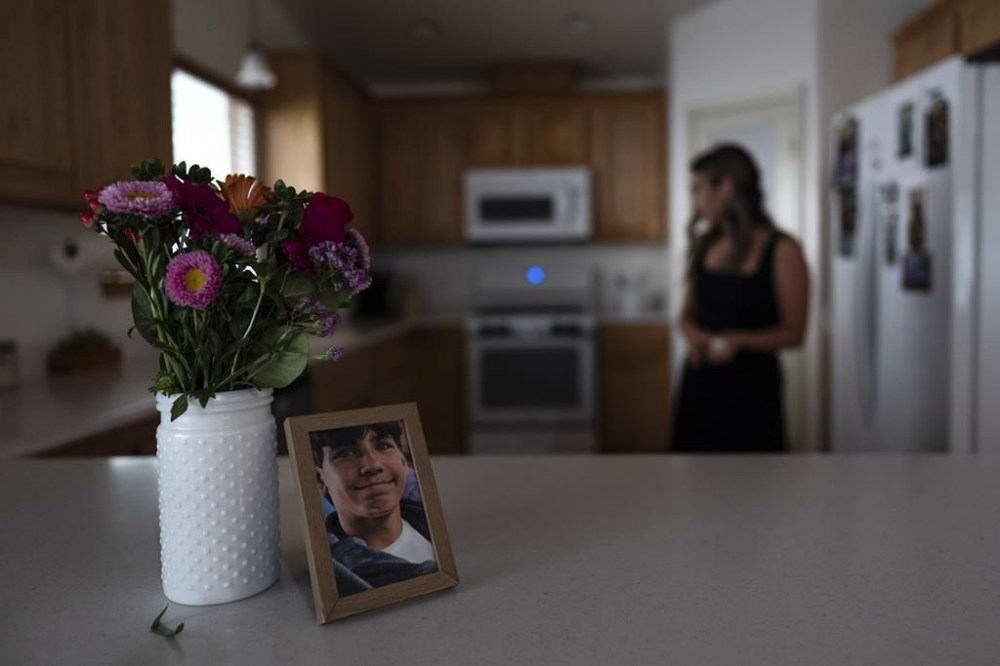
Whatever the dealer gave Coco, her mother said, was not Percocet. It was a fake pill laced with fentanyl, which can be lethal in a dose as small as the tip of a pencil.
Mikayla Brown lost her son Elijah, who went by Eli, to a suspected fentanyl overdose in 2023, two weeks after his 15th birthday. His father found him unresponsive on a September morning last year. His cause of death was accidental fentanyl overdose. But he wasn’t trying to buy fentanyl, he was looking for Xanax, and, like Coco, ended up with tainted pills that killed him.
A few taps away
While data on the prevalence of drug sales on social platforms is hard to come by, the National Crime Prevention Council estimates that 80% of teen and young adult fentanyl poisoning deaths can be traced to some social media contact.
In a sweeping 2023 report on the problem, Colorado’s attorney general called the availability of fentanyl and other illicit substances online “staggering.”
“Due to their ubiquity, convenience, and lack of regulation, social media platforms have become a major venue for drug distribution,” the report said. “Where once a teen might have had to seek out a street dealer, hassle friends, or learn to navigate the dark web to access illicit drugs, young people can now locate drug dealers using their smartphones — with the relative ease of ordering food delivery or calling a ride-share service.”
Accidental overdoses in the U.S. have decreased slightly each year since 2021 according to the Centers for Disease Control and Prevention. Paul DelPonte, executive director and CEO of the National Crime Prevention Council, attributes this partly to more education and awareness about the issue. Among young people ages 0 to 19, there were 1,622 overdose deaths in 2021, then 1,590 in 2022, and 1,511 last year.
The decline, DelPonte said, is “very small.”
Companies respond
In a statement, Meta said drug dealers “are criminals who stop at nothing to sell their dangerous products. This is a challenge that spans across platforms, industries, and communities, and it requires all of us working together to address it.”
The company added that it works with law enforcement and proactively took down 2 million pieces of content, 99.7% before they were reported in the first three months of 2024.
Meta says it blocks and filters “hundreds” of terms associated with illicit drug sales and links to recovery and substance abuse resources when possible. But drug dealers and other bad actors constantly shift their strategies, coming up with fresh ways to avoid detection.
Snap, in a statement, said it is “heartbroken by the fentanyl epidemic and are deeply committed to the fight against it.”
“We’ve invested in advanced technology to detect and remove illicit drug-related content, work extensively with law enforcement helping to bring dealers to justice, and continue to raise awareness and evolve our service to help keep our community safe. Criminals have no place on Snapchat,” said Jacqueline Beauchere, Global Head of Platform Safety at the company.
Lawsuits and regulation
While it can happen on any social media site, experts often single out Snapchat as a particularly dangerous platform, something the company vehemently disagrees with. In October 2022, a group of parents who say their children bought fentanyl from drug dealers they met through Snapchat sued the company for wrongful death and negligence, calling it a “haven for drug trafficking.”
Advocates are hoping that regulation of tech companies could help address the problem, as it might help with other dangers kids face on social media. In July, the Senate passed the Kids Online Safety Act, legislation designed to protect children from dangerous online content. It still awaits a vote in the House. Sen. Jeanne Shaheen, D-N.H., and Sen. Roger Marshall, R-Kan., meanwhile, introduced a bill that would require social media companies to report illicit fentanyl, methamphetamine and fake pill activity occurring on their platforms to law enforcement.
“We must do more at the federal level to combat the flow of fentanyl into our communities, and it starts by holding social media companies accountable for their part in facilitating illicit drug sales,” Shaheen said.