California governor vetoes bill to create first-in-nation AI safety measures
Advertisement
Read this article for free:
or
Already have an account? Log in here »
To continue reading, please subscribe:

Digital Subscription
One year of digital access for only $205*
- Enjoy unlimited reading on winnipegfreepress.com
- Read the E-Edition, our digital replica newspaper
- Access News Break, our award-winning app
- Play interactive puzzles
*First annual payment billed as $205.00 + GST for one year. This annual subscription will automatically renew at $233.00 + GST every 52 weeks (10% off the regular annual price of $259.35). Offer available to new and qualified returning subscribers only. Cancel any time.
To continue reading, please subscribe:
Add Free Press access to your Brandon Sun subscription for only an additional
$1 for the first 4 weeks*
- Enjoy unlimited reading on winnipegfreepress.com
- Read the E-Edition, our digital replica newspaper
- Access News Break, our award-winning app
- Play interactive puzzles
*Your next Brandon Sun subscription payment will increase by $1.00 and you will be charged $17.95 plus GST for four weeks. After four weeks, your payment will increase to $24.95 plus GST every four weeks.
Read unlimited articles for free today:
or
Already have an account? Log in here »
Hey there, time traveller!
This article was published 29/09/2024 (741 days ago), so information in it may no longer be current.
SACRAMENTO, Calif. (AP) — California Gov. Gavin Newsom vetoed a landmark bill aimed at establishing first-in-the-nation safety measures for large artificial intelligence models Sunday.
The decision is a major blow to efforts attempting to rein in the homegrown industry that is rapidly evolving with little oversight. The bill would have established some of the first regulations on large-scale AI models in the nation and paved the way for AI safety regulations across the country, supporters said.
Earlier this month, the Democratic governor told an audience at Dreamforce, an annual conference hosted by software giant Salesforce, that California must lead in regulating AI in the face of federal inaction but that the proposal “can have a chilling effect on the industry.”
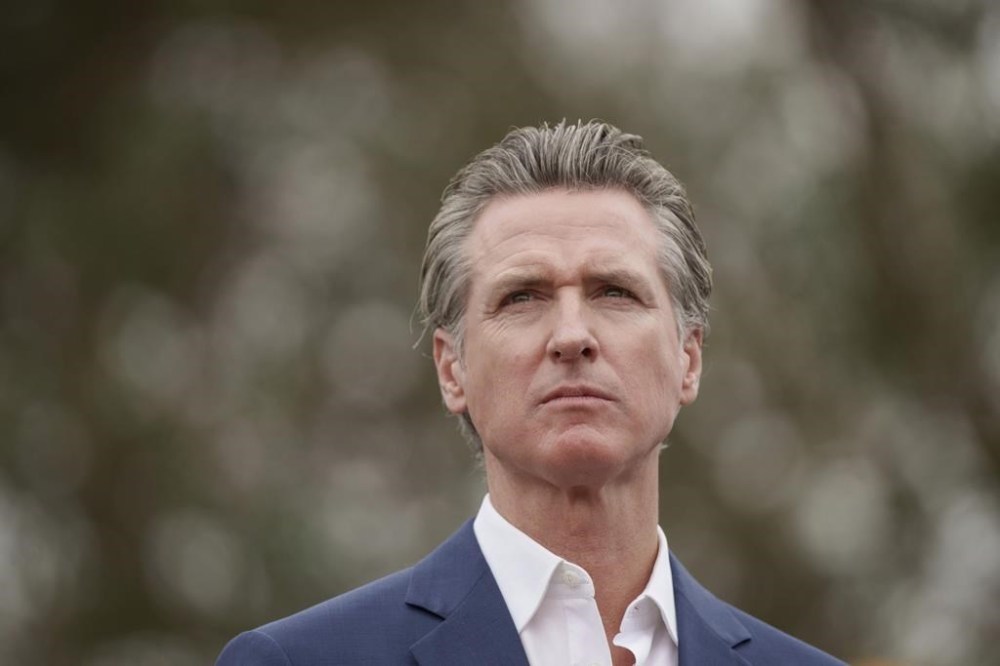
The proposal, which drew fierce opposition from startups, tech giants and several Democratic House members, could have hurt the homegrown industry by establishing rigid requirements, Newsom said.
“While well-intentioned, SB 1047 does not take into account whether an AI system is deployed in high-risk environments, involves critical decision-making or the use of sensitive data,” Newsom said in a statement. “Instead, the bill applies stringent standards to even the most basic functions — so long as a large system deploys it. I do not believe this is the best approach to protecting the public from real threats posed by the technology.”
Newsom on Sunday instead announced that the state will partner with several industry experts, including AI pioneer Fei-Fei Li, to develop guardrails around powerful AI models. Li opposed the AI safety proposal.
The measure, aimed at reducing potential risks created by AI, would have required companies to test their models and publicly disclose their safety protocols to prevent the models from being manipulated to, for example, wipe out the state’s electric grid or help build chemical weapons. Experts say those scenarios could be possible in the future as the industry continues to rapidly advance. It also would have provided whistleblower protections to workers.
The bill’s author, Democratic state Sen. Scott Weiner, called the veto “a setback for everyone who believes in oversight of massive corporations that are making critical decisions that affect the safety and the welfare of the public and the future of the planet.”
“The companies developing advanced AI systems acknowledge that the risks these models present to the public are real and rapidly increasing. While the large AI labs have made admirable commitments to monitor and mitigate these risks, the truth is that voluntary commitments from industry are not enforceable and rarely work out well for the public,” Wiener said in a statement Sunday afternoon.
Wiener said the debate around the bill has dramatically advanced the issue of AI safety, and that he would continue pressing that point.
The legislation is among a host of bills passed by the Legislature this year to regulate AI, fight deepfakes and protect workers. State lawmakers said California must take actions this year, citing hard lessons they learned from failing to rein in social media companies when they might have had a chance.
Proponents of the measure, including Elon Musk and Anthropic, said the proposal could have injected some levels of transparency and accountability around large-scale AI models, as developers and experts say they still don’t have a full understanding of how AI models behave and why.
The bill targeted systems that require a high level of computing power and more than $100 million to build. No current AI models have hit that threshold, but some experts said that could change within the next year.
“This is because of the massive investment scale-up within the industry,” said Daniel Kokotajlo, a former OpenAI researcher who resigned in April over what he saw as the company’s disregard for AI risks. “This is a crazy amount of power to have any private company control unaccountably, and it’s also incredibly risky.”
The United States is already behind Europe in regulating AI to limit risks. The California proposal wasn’t as comprehensive as regulations in Europe, but it would have been a good first step to set guardrails around the rapidly growing technology that is raising concerns about job loss, misinformation, invasions of privacy and automation bias, supporters said.
A number of leading AI companies last year voluntarily agreed to follow safeguards set by the White House, such as testing and sharing information about their models. The California bill would have mandated AI developers to follow requirements similar to those commitments, said the measure’s supporters.
But critics, including former U.S. House Speaker Nancy Pelosi, argued that the bill would “kill California tech” and stifle innovation. It would have discouraged AI developers from investing in large models or sharing open-source software, they said.
Newsom’s decision to veto the bill marks another win in California for big tech companies and AI developers, many of whom spent the past year lobbying alongside the California Chamber of Commerce to sway the governor and lawmakers from advancing AI regulations.
Two other sweeping AI proposals, which also faced mounting opposition from the tech industry and others, died ahead of a legislative deadline last month. The bills would have required AI developers to label AI-generated content and ban discrimination from AI tools used to make employment decisions.
The governor said earlier this summer he wanted to protect California’s status as a global leader in AI, noting that 32 of the world’s top 50 AI companies are located in the state.
He has promoted California as an early adopter as the state could soon deploy generative AI tools to address highway congestion, provide tax guidance and streamline homelessness programs. The state also announced last month a voluntary partnership with AI giant Nvidia to help train students, college faculty, developers and data scientists. California is also considering new rules against AI discrimination in hiring practices.
Earlier this month, Newsom signed some of the toughest laws in the country to crack down on election deepfakes and measures to protect Hollywood workers from unauthorized AI use.
But even with Newsom’s veto, the California safety proposal is inspiring lawmakers in other states to take up similar measures, said Tatiana Rice, deputy director of the Future of Privacy Forum, a nonprofit that works with lawmakers on technology and privacy proposals.
“They are going to potentially either copy it or do something similar next legislative session,” Rice said. “So it’s not going away.”
—-
The Associated Press and OpenAI have a licensing and technology agreement that allows OpenAI access to part of AP’s text archives.