50 well-preserved Viking Age skeletons unearthed in Denmark
Advertisement
Read this article for free:
or
Already have an account? Log in here »
To continue reading, please subscribe:
Digital Subscription
One year of digital access for only $1.44 a week*
- Enjoy unlimited reading on winnipegfreepress.com
- Read the E-Edition, our digital replica newspaper
- Access News Break, our award-winning app
- Play interactive puzzles
*Billed as $5.77 plus GST every four weeks. After 52 weeks, price increases to the regular rate of $19.95 plus GST every four weeks. Offer available to new and qualified returning subscribers only. Cancel any time.
To continue reading, please subscribe:
Add Free Press access to your Brandon Sun subscription for only an additional
$1 for the first 4 weeks*
- Enjoy unlimited reading on winnipegfreepress.com
- Read the E-Edition, our digital replica newspaper
- Access News Break, our award-winning app
- Play interactive puzzles
*Your next Brandon Sun subscription payment will increase by $1.00 and you will be charged $17.95 plus GST for four weeks. After four weeks, your payment will increase to $24.95 plus GST every four weeks.
Read unlimited articles for free today:
or
Already have an account? Log in here »
Hey there, time traveller!
This article was published 14/10/2024 (739 days ago), so information in it may no longer be current.
AASUM, Denmark (AP) —
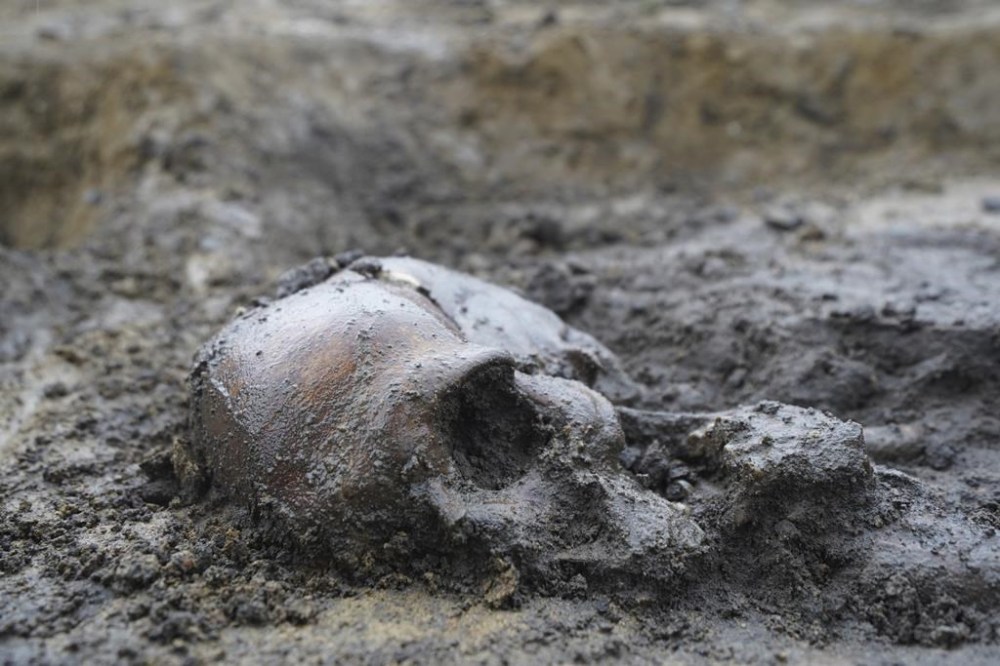
In a village in central Denmark, archeologists made a landmark discovery that could hold important clues to the Viking era: a burial ground, containing some 50 “exceptionally well-preserved” skeletons.
“This is such an exciting find because we found these skeletons that are so very, very well preserved,” said archeologist Michael Borre Lundø, who led the six-month dig. “Normally, we would be lucky to find a few teeth in the graves, but here we have entire skeletons.”
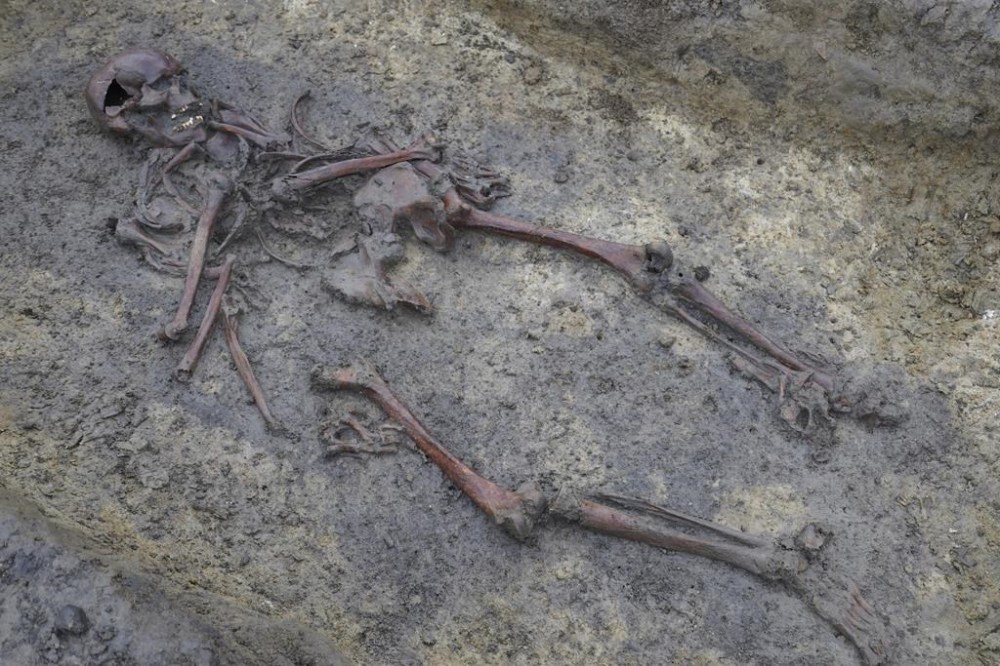
The skeletons were preserved thanks to favorable soil chemistry, particularly chalk and high water levels, experts from Museum Odense said. The site was discovered last year during a routine survey, ahead of power line renovation work on the outskirts of the village of Aasum, 5 kilometers (3 miles), northeast of Odense, Denmark’s third-largest city.
Experts hope to conduct DNA analyses and possibly reconstruct detailed life histories, as well as looking into social patterns in Viking Age, such as kinship, migration patterns and more.
“This opens a whole new toolbox for scientific discovery,” said Borre Lundø as he stood on the muddy, wind-swept excavation site. “Hopefully we can make a DNA analysis on all the skeletons and see if they are related to each other and even where they come from.”
During the Viking Age, considered to run from 793 to 1066 A.D., Norsemen known as Vikings undertook large-scale raids, colonizing, conquering and trading throughout Europe, even reaching North America.
The Vikings unearthed at Aasum likely weren’t warriors. Borre Lundø believes the site was probably a “standard settlement,” perhaps a farming community, located 5 kilometers from a ring fortress in what’s now central Odense.
The 2,000-square meter (21,500-square foot) burial ground holds the remains of men, women and children. Besides the skeletons, there are a few cremated bodies.
In one grave, a woman is buried in a wagon — the higher part of a Viking cart was used as a coffin — suggesting she was from the “upper part of society,” Borre Lundø told The Associated Press.
Archeologists also unearthed brooches, necklace beads, knives, and even a small shard of glass that may have served as an amulet.
Borre Lundø said the brooch designs suggest the dead were buried between 850 and 900 A.D.
“There’s different levels of burials,” he explained. “Some have nothing with them, others have brooches and pearl necklaces.”
Archeologists say many of the artefacts came from far beyond Denmark’s borders, shedding light on extensive Viking trade routes during the 10th century.
“There’s a lot of trade and commerce going on,” said Borre Lundø. “We also found a brooch that comes from the island of Gotland, on the eastern side of Sweden, but also whetstones for honing your knife … all sorts of things point to Norway and Sweden.”
The burial site was discovered last year, and the dig, which started in April, ended Friday. Boxes of artefacts have shipped to Museum Odense’s preservation labs for cleaning and analysis.
Conservator Jannie Amsgaard Ebsen hopes the soil may also hold other preserved organic material on the backs of brooches or knife handles.
“We’re really hoping to gain the larger picture. Who were the people that were living out there? Who did they interact with?” she said. “It’s a little bit like a jigsaw puzzle: all the various puzzle parts will be placed together.”