Presidents and prime ministers: How cross-border personality clashes could play out
Advertisement
Read this article for free:
or
Already have an account? Log in here »
To continue reading, please subscribe:

Digital Subscription
One year of digital access for only $205*
- Enjoy unlimited reading on winnipegfreepress.com
- Read the E-Edition, our digital replica newspaper
- Access News Break, our award-winning app
- Play interactive puzzles
*First annual payment billed as $205.00 + GST for one year. This annual subscription will automatically renew at $233.00 + GST every 52 weeks (10% off the regular annual price of $259.35). Offer available to new and qualified returning subscribers only. Cancel any time.
To continue reading, please subscribe:
Add Free Press access to your Brandon Sun subscription for only an additional
$1 for the first 4 weeks*
- Enjoy unlimited reading on winnipegfreepress.com
- Read the E-Edition, our digital replica newspaper
- Access News Break, our award-winning app
- Play interactive puzzles
*Your next Brandon Sun subscription payment will increase by $1.00 and you will be charged $17.95 plus GST for four weeks. After four weeks, your payment will increase to $24.95 plus GST every four weeks.
Read unlimited articles for free today:
or
Already have an account? Log in here »
Hey there, time traveller!
This article was published 23/10/2024 (709 days ago), so information in it may no longer be current.
WASHINGTON – President John F. Kennedy stood before Canadian lawmakers elucidating the important relationship between the two countries: “Geography has made us neighbours. History has made us friends. Economics has made us partners.”
“And necessity has made us allies,” Kennedy said in a 1961 address to Parliament.
But behind the scenes, the relationship between the charismatic Kennedy and then-prime minister John Diefenbaker was toxic.
With the looming United States election, the future of who will be at the helm of the bilateral relationship remains unclear, but Canada cannot escape the geopolitical pull of its closest neighbour.
While some presidents and prime ministers have been on friendly terms, the shared geography and history hasn’t stopped clashes between others.
“We have a long history of presidents and prime ministers hating each other’s guts… and yet the system works,” said Aaron Ettinger, a political science professor at Carleton University.
Experts say incompatible personalities won’t irreparably harm the relationship, but it can make it harder for Canada.
“It’s very difficult to operate when you have outright antagonism between the leaders — and that is less a function of ideology and more a function of personality,” said Laura Dawson, an expert on Canada-U. S. relations and the executive director of the Future Borders Coalition.
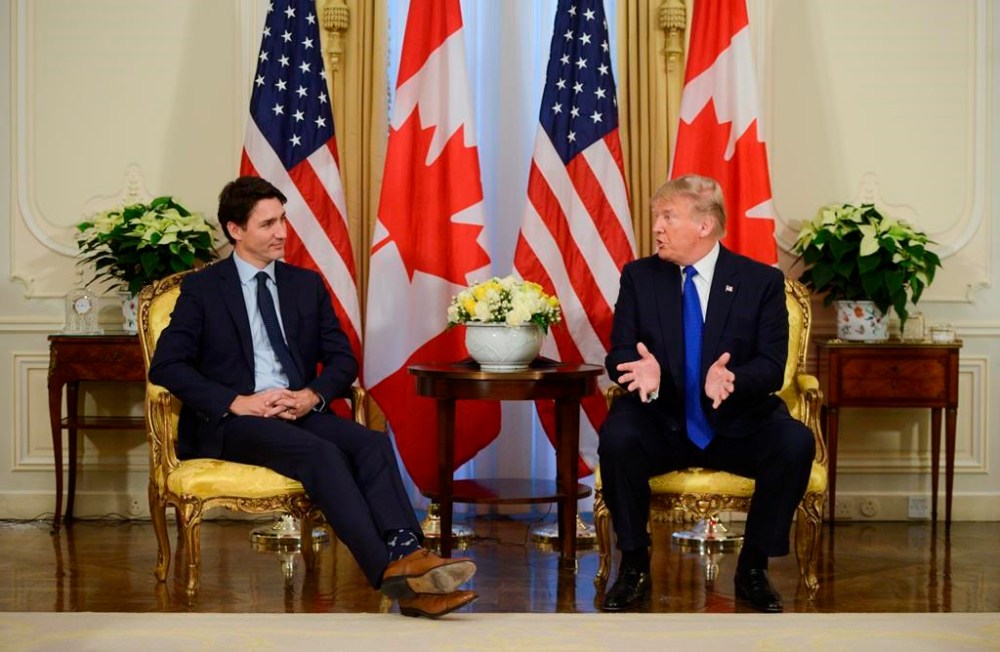
That became clear during the first Trump administration when the former president scrapped the North American Free Trade Agreement. Negotiations of it’s replacement, the Canada-U.S.-Mexico Agreement, were marked by public spats between Prime Minister Justin Trudeau and former president Donald Trump.
Trump called Trudeau “weak” and “dishonest” after the prime minister criticized the president’s 2018 tariff actions at the G7 summit in Quebec.
Robert Lighthizer, Trump’s trade representative, recounted in his book that U.S.-Canada relations were “at their lowest ebb since the failed American invasion of Upper Canada during the War of 1812.”
The following year there was another blow-up when Trudeau and other NATO leaders appeared to be on video talking about a Trump press conference. The former president called the prime minister “two-faced.”
While the relationship between the leaders was publicly rocky, behind the scenes CUSMA was successfully negotiated. Deputy Prime Minister Chrystia Freeland called the agreement a “victory for all Canadians,” and experts say it was more moderate than Trump originally threatened.
Whoever takes the White House will be in charge during trade pact’s 2026 review.
Trudeau is a political veteran now, Dawson said, and is more prepared for a possible second Trump administration.
“We know that Trump-Trudeau is not a good fit,” Dawson said. “But I’m sure that Trudeau will figure out a way to make it work.”
Most experts say Kamala Harris’ personality would be a better match with Trudeau. It’s been reported they already have a good relationship and many of their policy goals align. He originally ran on “sunny ways” and she kicked off her campaign with “joy.”
The vice-president also spent part of her youth living in Canada, although observers say the impact of her teenage years in Montreal is probably overstated.
“Harris would obviously be easier for probably anyone to get along with,” Dawson said. “But getting along only goes so far.”
Harris has been campaigning on her vote against CUSMA, saying it didn’t do enough to protect U.S. workers, and is expected to follow the Biden administration’s Buy American procurement rules.
There’s another outcome to consider: a change in Canadian leadership. A general election must be held by October next year, but it could come sooner if the Liberals lose the confidence of the House.
The Conservatives have long held a lead in the polls amid high inflation, an exodus of Liberal ministers and uncertainty over Trudeau’s political future.
“We have a whole lot of turnover in the works coming up in the next two years between Canada and the United States,” Ettinger said. “And it’s possible that we have two leaders who have never met one another.”
It’s not clear how Conservative Leader Pierre Poilievre would get along with either presidential candidate.
Ivan Ivanov, an assistant professor at the University of Ottawa, said Poilievre “is a professional communicator.” The expert in public relations and crisis management said the Conservative leader can be combative — which could hurt or help the bilateral relationship — but it plays well among Canadian voters.
During President Joe Biden’s state visit to Canada last year he met with Poilievre and they discussed Canadian exemptions to Buy America rules, national defence interests and other issues. A photo shared on Poilievre’s social media shows the leaders shaking hands.
However, Ettinger said he doesn’t think we can “glean much about how he personally will interact with other leaders on the international stage.”
“He’s a complete cipher.”
Poilievre’s promises share some insight. He pledged to match American tariffs on Chinese-produced electric vehicles a few weeks before the Liberal government took action this summer and promised to push Americans on the longstanding softwood lumber dispute.

Poilievre has also been known to use slogans in the Republican lexicon. For example, Poilievre said he will “replace woke culture with warrior culture” in the military and that “biological males” should not be in women’s sports and change rooms — both talking points were included in multiple speeches at the recent Republican National Convention.
But that doesn’t necessarily make him the better match for Trump, Dawson said.
“We might think that a Poilievre-Trump pairing would be better because he’s got a more ideological fit,” Dawson said.
“But we know that Trump is not a traditional Republican at all.”
This report by The Canadian Press was first published Oct. 23, 2024.
Related Articles
What you need to know as Trudeau fights to retain leadership of the Liberal party





Advertisement Advertise With Us
Advertisement Advertise With Us