AI will get better than humans at cyber offence by 2030: Hinton Lectures speaker
Advertisement
Read this article for free:
or
Already have an account? Log in here »
To continue reading, please subscribe:

Digital Subscription
One year of digital access for only $205*
- Enjoy unlimited reading on winnipegfreepress.com
- Read the E-Edition, our digital replica newspaper
- Access News Break, our award-winning app
- Play interactive puzzles
*First annual payment billed as $205.00 + GST for one year. This annual subscription will automatically renew at $233.00 + GST every 52 weeks (10% off the regular annual price of $259.35). Offer available to new and qualified returning subscribers only. Cancel any time.
To continue reading, please subscribe:
Add Free Press access to your Brandon Sun subscription for only an additional
$1 for the first 4 weeks*
- Enjoy unlimited reading on winnipegfreepress.com
- Read the E-Edition, our digital replica newspaper
- Access News Break, our award-winning app
- Play interactive puzzles
*Your next Brandon Sun subscription payment will increase by $1.00 and you will be charged $17.95 plus GST for four weeks. After four weeks, your payment will increase to $24.95 plus GST every four weeks.
Read unlimited articles for free today:
or
Already have an account? Log in here »
Hey there, time traveller!
This article was published 29/10/2024 (686 days ago), so information in it may no longer be current.
TORONTO – Artificial intelligence will be able to beat humans at cyber offence by the end of the decade, predicted the keynote speaker at a series of lectures hosted by computer science luminary Geoffrey Hinton this week.
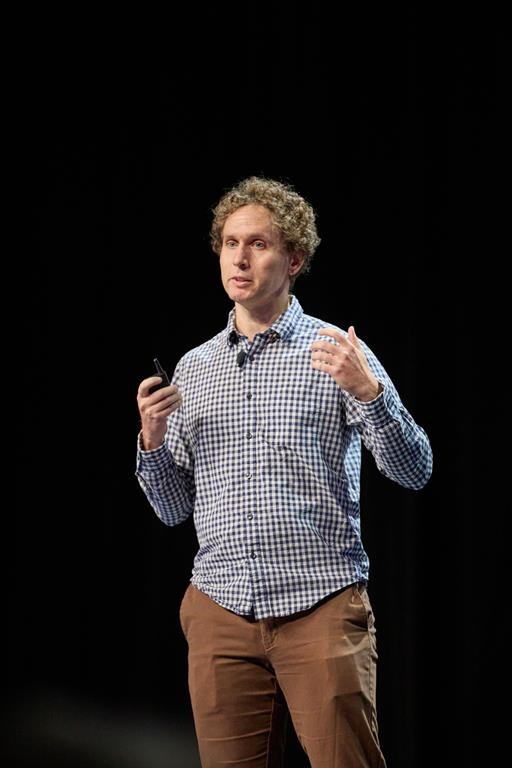
Jacob Steinhardt, an assistant professor of electrical engineering and computer sciences and statistics at UC Berkeley in California, made that projection Tuesday, saying it was based around his belief that AI systems will eventually become “superhuman” when tasked with coding and finding exploits.
Exploits are weak points in software and hardware that people can abuse. Cyber criminals often covet these exploits because they can be used to gain unauthorized access to systems.
Once a criminal has access through an exploit, they can run a ransomware attack where they encrypt sensitive data or block administrators from getting into software, in hopes of extracting cash from victims.
To find exploits, Steinhardt said humans would have to read all the code underpinning a system, so that they can find an exploit and carry out an attack.
“This is really boring,” Steinhardt said. “Most people just don’t have the patience to do it, but AI systems don’t get bored.”
Not only will AI undertake the drudgery associated with finding an exploit, but it will also be meticulous with the task, Steinhardt said.
Steinhardt’s remarks come as cybercrime has been increasing
A 2023 study from EY Canada of 60 Canadian organizations found that four out of five had seen at least 25 cybersecurity incidents in the past year and experts say some companies face thousands of attempts every day.
Many have hailed AI as a potential solution because it can be used to quickly identify attackers and gather information on them, but Steinhardt said it is just as likely to be used by people with nefarious intentions.
Already, he said the world has seen instances where bad actors have harnessed the technology to create deep fakes — digitally manipulated images, videos or audio clips depicting people saying or doing things they have not said or done.
In some instances, deep fakes have been used by bad actors to make calls to people suggesting it’s their loved one reaching out and they are in need of money quicky.
Businesses have been victims, too.
Earlier this year, media reported that a worker at Arup, the British engineering company behind prominent buildings including the Sydney Opera House, had been duped into handing over US $25 million to fraudsters making use of deep fake technology to pose as the company’s chief financial officer.
“I’ve been trained to watch out for scams and phishing emails and I think I would have confirmed before sending $25 million over but I’m not sure,” Steinhardt said, explaining how new this phenomenon is and how realistic the fakes seem.
“This is not something that we’re used to and this isn’t the only use of digital impersonation to create problems.”
Steinhardt’s talk concluded the Hinton Lectures, a two-evening series of talks put on by the Global Risk Institute at the John W. H. Bassett Theatre in Toronto.
The event’s namesake, Geoffrey Hinton, who is widely known as the godfather of AI, introduced Steinhardt earlier in the evening, describing the professor as the most popular choice to debut the lecture series.
The evening before Steinhardt had told the audience he sees himself as a “worried optimist,” who believes there’s a 10 per cent chance AI will lead to human extinction and a 50 per cent chance it will cause immense economic value and “radical prosperity.”
This report by The Canadian Press was first published Oct. 29, 2024.