

Northern lights may be faintly visible across parts of the US this Thanksgiving
Advertisement
Read this article for free:
or
Already have an account? Log in here »
To continue reading, please subscribe:
Monthly Digital Subscription
$0 for the first 4 weeks*
- Enjoy unlimited reading on winnipegfreepress.com
- Read the E-Edition, our digital replica newspaper
- Access News Break, our award-winning app
- Play interactive puzzles
*No charge for 4 weeks then price increases to the regular rate of $19.00 plus GST every four weeks. Offer available to new and qualified returning subscribers only. Cancel any time.
Monthly Digital Subscription
$4.75/week*
- Enjoy unlimited reading on winnipegfreepress.com
- Read the E-Edition, our digital replica newspaper
- Access News Break, our award-winning app
- Play interactive puzzles
*Billed as $19 plus GST every four weeks. Cancel any time.
To continue reading, please subscribe:
Add Free Press access to your Brandon Sun subscription for only an additional
$1 for the first 4 weeks*
*Your next subscription payment will increase by $1.00 and you will be charged $16.99 plus GST for four weeks. After four weeks, your payment will increase to $23.99 plus GST every four weeks.
Read unlimited articles for free today:
or
Already have an account? Log in here »
Hey there, time traveller!
This article was published 27/11/2024 (374 days ago), so information in it may no longer be current.
NEW YORK (AP) — This Thanksgiving, solar storms may produce faint auroras across the northern rim of the United States.
Pale auroras may be seen across many northern states Thursday and Friday, but they may be brief and and seeing them will depend on how intense the solar storms get, NOAA meteorologist Mike Bettwy said in an email.
Much of the following states are best positioned for potential auroras: Washington, Montana, the Dakotas, Minnesota, Wisconsin, Michigan and Maine. Northern parts of Idaho, Wyoming, New York, Vermont and New Hampshire may also see auroras.
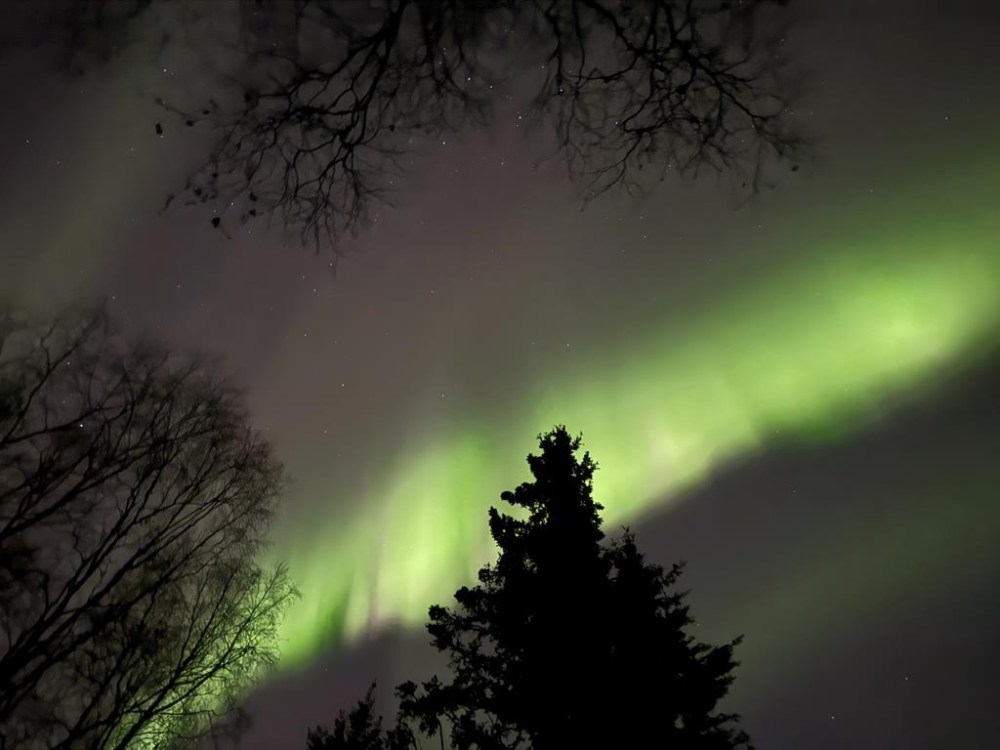
Space weather experts say auroras could be visible from 10 p.m. EST Thursday to 1 a.m. Friday EST, though it’s difficult to pin down an exact window. Updated forecasts may be available as the event draws closer on NOAA’s Space Weather Prediction Center website or an aurora forecasting app.
To spy the spectacle, wait for clear skies to get dark and then go outside, ideally away from bright city lights. Taking a picture with a smartphone camera may also reveal hints of the aurora that aren’t visible to the naked eye.
The sun is currently at the maximum phase of its 11-year cycle, making solar surges and northern lights more frequent. Earlier this week, the sun shot a pulse of high-energy plasma towards Earth.
The active period is expected to last for at least another year, though scientists won’t know when solar activity peaked until months after the fact, according to NASA and the U.S. National Oceanic and Atmospheric Administration.
Experts don’t expect major communication disruptions from this week’s solar storm.
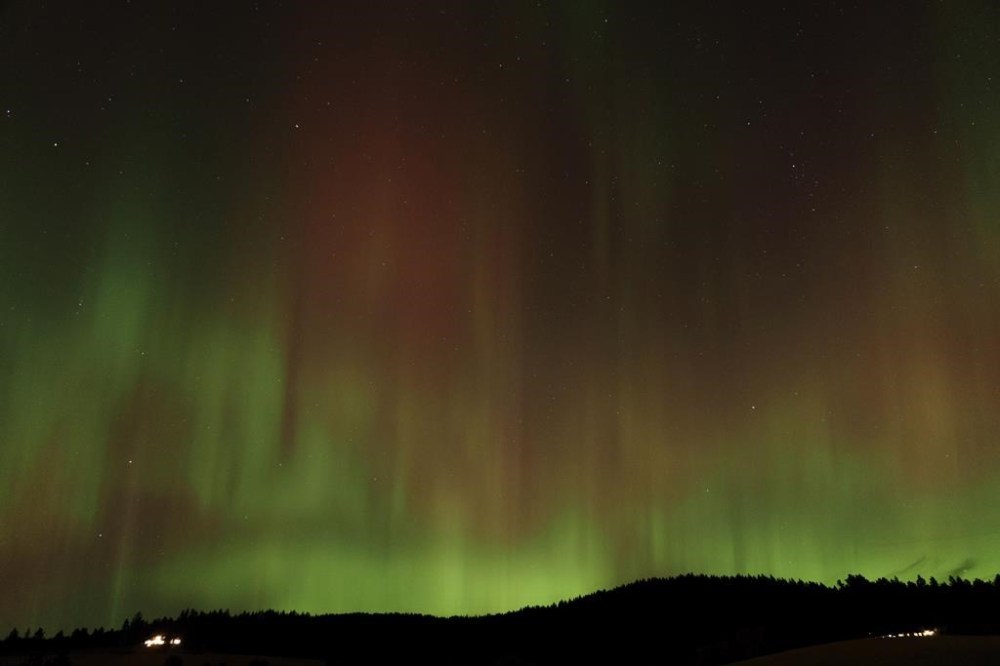
In May, NOAA issued a rare severe geomagnetic storm warning — it was the strongest storm in more than two decades, producing light displays across the Northern Hemisphere. Last month, a powerful solar storm dazzled skygazers far from the Arctic Circle when auroras appeared in unexpected places, including Germany, the United Kingdom, New England and New York City.
—-
The Associated Press Health and Science Department receives support from the Howard Hughes Medical Institute’s Science and Educational Media Group. The AP is solely responsible for all content.