TikTok is inching closer to a potential ban in the US. So what’s next?
Advertisement
Read this article for free:
or
Already have an account? Log in here »
To continue reading, please subscribe:

Digital Subscription
One year of digital access for only $205*
- Enjoy unlimited reading on winnipegfreepress.com
- Read the E-Edition, our digital replica newspaper
- Access News Break, our award-winning app
- Play interactive puzzles
*First annual payment billed as $205.00 + GST for one year. This annual subscription will automatically renew at $233.00 + GST every 52 weeks (10% off the regular annual price of $259.35). Offer available to new and qualified returning subscribers only. Cancel any time.
To continue reading, please subscribe:
Add Free Press access to your Brandon Sun subscription for only an additional
$1 for the first 4 weeks*
- Enjoy unlimited reading on winnipegfreepress.com
- Read the E-Edition, our digital replica newspaper
- Access News Break, our award-winning app
- Play interactive puzzles
*Your next Brandon Sun subscription payment will increase by $1.00 and you will be charged $17.95 plus GST for four weeks. After four weeks, your payment will increase to $24.95 plus GST every four weeks.
Read unlimited articles for free today:
or
Already have an account? Log in here »
Hey there, time traveller!
This article was published 06/12/2024 (673 days ago), so information in it may no longer be current.
TikTok’s future in the U.S. appeared uncertain on Friday after a federal appeals court rejected a legal challenge to a law that requires the social media platform to cut ties with its China-based parent company or be banned by mid-January.
A panel of three judges on The U.S. Court of Appeals for the District of Columbia Circuit ruled unanimously that the law withstood constitutional scrutiny, rebuffing arguments from the two companies that the statute violated their rights and the rights of TikTok users in the U.S.
The government has said it wants ByteDance, TikTok’s parent company, to divest its stakes. But if it doesn’t and the platform goes away, it would have a seismic impact on the lives of content creators who rely on the platform for income as well as users who use it for entertainment and connection.
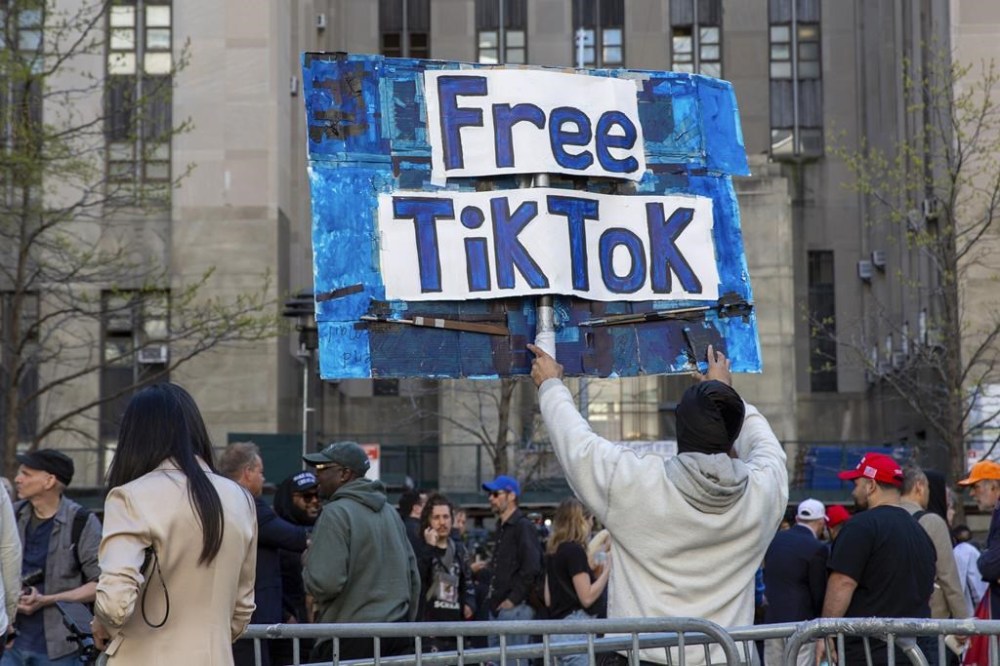
Here are some details on the ruling and what could happen next:
What does the ruling say?
In their lawsuit, TikTok and ByteDance, which is also a plaintiff in the case, had challenged the law on various fronts, arguing in part that the statute ran afoul of the First Amendment and was an unconstitutional bill of attainder that unfairly targeted the two companies.
But the court sided with attorneys for the Justice Department who said that the government was attempting to address national security concerns and the way in which it chose to do so did not violate the constitution.
The Justice Department has argued in court that TikTok poses a national security risk due to its connections to China. Officials say that Chinese authorities can compel ByteDance to hand over information on TikTok’s U.S. patrons or use the platform to spread, or suppress, information. However, the U.S. hasn’t publicly provided examples of that happening.
The appeals court ruling, written by Judge Douglas Ginsburg, said the law was “carefully crafted to deal only with control by a foreign adversary.” The judges also rejected the claim that the statute was an unlawful bill of attainder or a taking of property in violation of the Fifth Amendment. Furthermore, Ginsburg wrote the law did not violate the First Amendment because the government is not looking to “suppress content or require a certain mix of content” on TikTok.
What happens next?
TikTok and ByteDance are expected to appeal the case to the Supreme Court, but it’s unclear whether the court will take up the case.
TikTok indicated in a statement on Friday the two companies are preparing to take their case to high court, saying the Supreme Court has “an established historical record of protecting Americans’ right to free speech.”
“We expect they will do just that on this important constitutional issue,” a company spokesperson said.
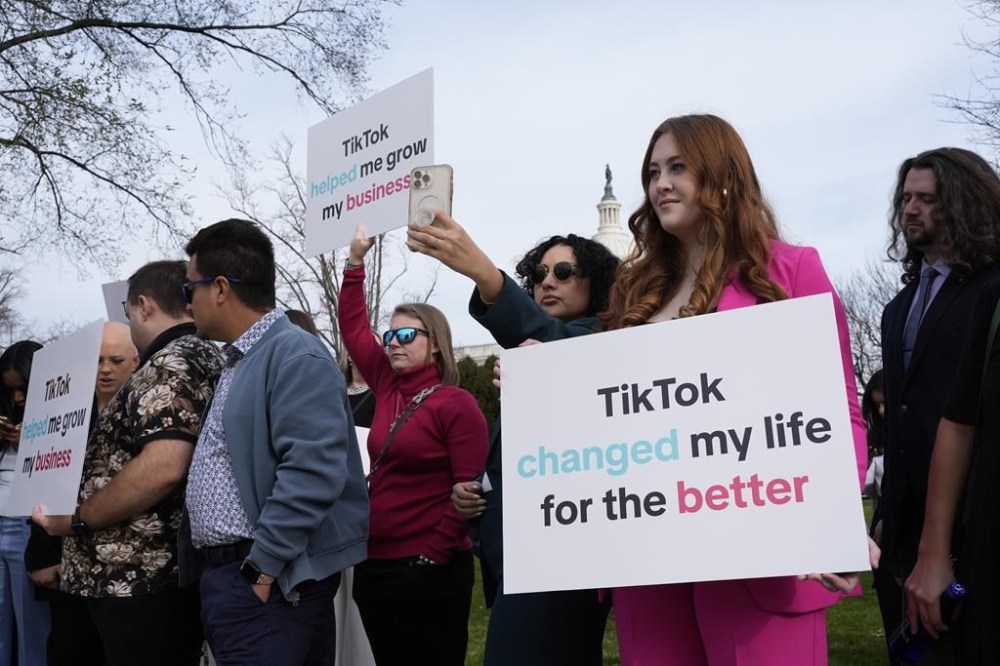
Alan Morrison, a professor at The George Washington University Law School, said he expects the Supreme Court to take up the case because of the novelty of the issues raised in the lawsuit. If that happens, attorneys for the two companies still have to convince the court to grant them an emergency stay that will prevent the government from enforcing the Jan. 19 divestiture deadline stipulated in the law, Morrison said.
Such a move could drag out the process until the Justices make a ruling.
Tiffany Cianci, a TikTok content creator who has supported the platform, said she was not shocked about the outcome of the court’s ruling on Friday because lower courts typically defer to the executive branch on these types of cases. She believes the company will have a stronger case at the Supreme Court.
“I believe that the next stages are more likely to produce a victory for TikTokers and for TikTok as a whole,” Cianci said.
What about Trump?
Another wild card is President-elect Donald Trump, who tried to ban TikTok during his first term but said during the recent presidential campaign that he is now against such action.
The Trump transition team has not offered details on how Trump plans to carry out his pledge to “save TikTok.” But spokeswoman Karoline Leavitt said in a statement last month that he plans to “deliver” on his campaign promises.
After Trump takes office on Jan. 20th, it would fall on his Justice Department to enforce the law and punish any potential violators. Penalties would apply to any app stores that would violate a prohibition on TikTok and to internet hosting services which would be barred from supporting it.
Some have speculated that Trump could ask his Justice Department to abstain from enforcing the law. But tech companies like Apple and Google, which offer TikTok’s app on their app stores, would then have to trust that the administration would not come after them for any violations.
Craig Singleton, senior director of the China program at the Foundation for Defense of Democracies, said enforcement discretion — or executive orders — can not override existing law, leaving Trump with “limited room for unilateral action.”

There are other things Trump could potentially do. It’s possible he could invoke provisions of the law that allow the president to determine whether a sale or a similar transaction frees TikTok from “foreign adversary” control. Another option is to urge Congress to repeal the law. But that too would require support from congressional Republicans who have overwhelmingly supported the prospect of getting TikTok out of the hands of a Chinese company.
In a statement issued Friday, Republican Rep. John Moolenaar of Michigan, chairman of the House Select Committee on China, said he was “optimistic that President Trump will facilitate an American takeover of TikTok” and allow its continued use in the United States.
Is anyone trying to buy TikTok?
ByteDance has said it won’t sell TikTok. And even if it wanted to, a sale of the proprietary algorithm that powers TikTok is likely to get blocked under Chinese export controls that the country issued in 2020.
That means if TikTok is sold without the algorithm, its likely that the buyer would only purchase a shell of the platform that doesn’t contain the technology that made the app a cultural powerhouse.
Still, some investors, including Trump’s former Treasury Secretary Steven Mnuchin and billionaire Frank McCourt, have expressed interest in buying it.
This week, a spokesperson for McCourt’s Project Liberty initiative, which aims to protect online privacy, said participants in their bid have made informal commitments of more than $20 billion in capital. The spokesperson did not disclose the identity of the participants.
Related Articles
BookTok sparks long-form resurgence for teens, young adults
Advertisement Advertise With Us
Advertisement Advertise With Us