Senate report alleges Amazon rejected warehouse safety recommendations due to productivity concerns
Advertisement
Read this article for free:
or
Already have an account? Log in here »
To continue reading, please subscribe:

Digital Subscription
One year of digital access for only $205*
- Enjoy unlimited reading on winnipegfreepress.com
- Read the E-Edition, our digital replica newspaper
- Access News Break, our award-winning app
- Play interactive puzzles
*First annual payment billed as $205.00 + GST for one year. This annual subscription will automatically renew at $233.00 + GST every 52 weeks (10% off the regular annual price of $259.35). Offer available to new and qualified returning subscribers only. Cancel any time.
To continue reading, please subscribe:
Add Free Press access to your Brandon Sun subscription for only an additional
$1 for the first 4 weeks*
- Enjoy unlimited reading on winnipegfreepress.com
- Read the E-Edition, our digital replica newspaper
- Access News Break, our award-winning app
- Play interactive puzzles
*Your next Brandon Sun subscription payment will increase by $1.00 and you will be charged $17.95 plus GST for four weeks. After four weeks, your payment will increase to $24.95 plus GST every four weeks.
Read unlimited articles for free today:
or
Already have an account? Log in here »
Hey there, time traveller!
This article was published 16/12/2024 (639 days ago), so information in it may no longer be current.
At least two internal Amazon studies found a link between how quickly the online retailer’s warehouse workers perform tasks and workplace injuries, but the company rejected many safety recommendations out of concern the proposed changes might reduce productivity, according to a U.S. Senate committee report.
The 160-page review issued Sunday night was compiled by the Democratic majority staff of the Senate Committee on Health, Education, Labor, and Pensions. The report is the final product of a probe into Amazon’s warehouse safety practices that U.S. Sen. Bernie Sanders initiated last year.
The Vermont independent, a frequent critic of Amazon who chairs the panel, released an interim report in July that featured some findings from the investigation. The final report, which was mostly based on interviews with nearly 500 former and current Amazon workers, included more details, such as the two internal studies and the reactions they received inside the company.
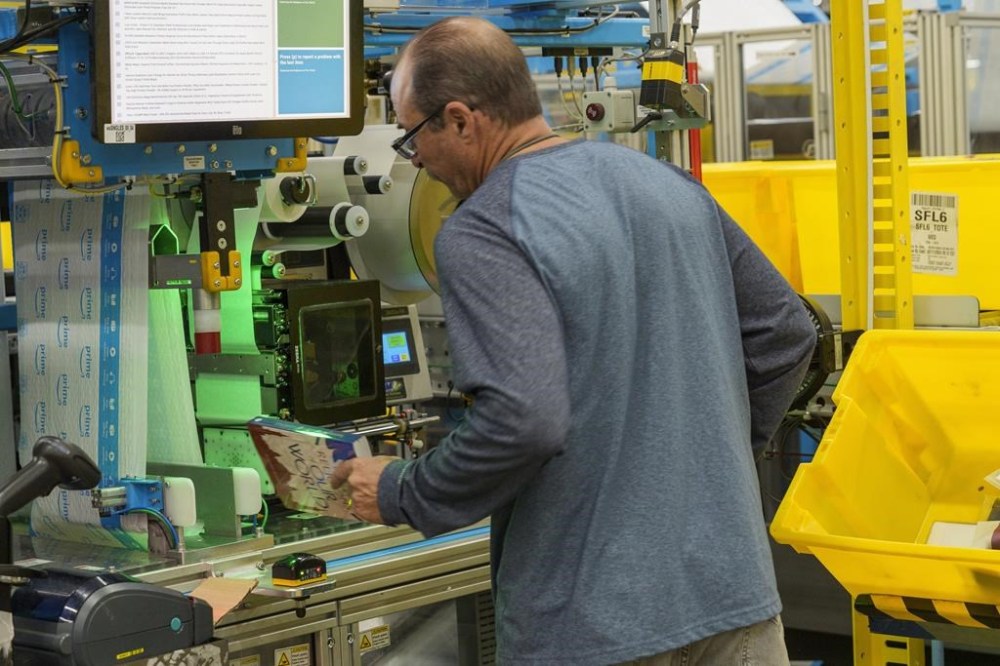
Amazon pushed back on the findings Monday, saying in a blog post that Sanders “continues to mislead the American public” about the company’s safety practices and that the report was “wrong on the facts and features selective, outdated information that lacks context and isn’t grounded in reality.”
The Senate report said Amazon launched an internal study in 2021 to determine the maximum number of times a warehouse worker could perform the same physical tasks without increased risk of harm and potentially developing musculoskeletal disorders.
The team conducting the Amazon study, known as Project Elderwand, focused on workers who picked items from robotic shelf units. The study concluded that the “likelihood of back injury increases” along with the number of items picked and identified an upper limit on repetitive movements – 1,940 – per 10-hour shift, the report said.
The study recommended using software to implement breaks “according to each worker’s rate.” It suggested expanding an existing Amazon program that recommended “microbreaks” and making them mandatory for employees who worked above the maximum pace.
The team stated that the success of a mini pilot program to test out its idea would be conditional on “any negative impact to the (workers) or customer experience,” according to documents cited in the committee report.
Ultimately, Amazon did not make changes to reduce repetitive worker movements, the report said. The company told the Senate committee it chose not to do so due to “technical reasons” involving the proposed software program, the report said.
Amazon also said in its blog post that the Project Elderwand pilot program showed the study team’s suggested intervention was “ineffective.”
Amazon previously had undertaken another study, known as Project Soteria, in 2020 to identify risk factors for injuries and recommend policy changes that would improve worker safety. The multi-team initiative studied two policies Amazon implemented temporarily during the COVID-19 pandemic – giving workers more time off and pausing disciplinary measures “for workers who failed to meet speed requirements,” the report said.
The study found that both policies lowered injury risks and asked for their permanent adoption.
But company leaders denied the request, saying it might “negatively impact” productivity, according to Amazon documents cited in the Senate committee report. Amazon leaders also changed the focus of the Project Soteria study by telling the people conducting the review to provide recommendations on how to improve productivity without worsening worker injuries, the report said.
Amazon disputed the report’s characterization of the events.
“Project Soteria is an example of this type of team evaluation, where one team explored whether there’s a causal link between pace of work and injuries and another team evaluated the methodology and findings and determined they weren’t valid,” Amazon spokesperson Kelly Nantel said in a written statement.

Nantel also said that information about Project Soteria was raised in a Washington state worker safety case in which Amazon was accused of four safety violations. A judge assigned to the case ruled in Amazon’s favor in July. Regulators are appealing the ruling.
“It’s unfortunate that the senator chose to ignore the facts and all of this context,” Nantel said.
The Senate committee report also alleged that Amazon manipulates its workplace injury data to portray its warehouses as safer than they are, an allegation the company disputed.
Amazon said it produced “thousands of pages of information and data” for the committee. The majority staff, however, said the company failed to produce documents on the connection between the pace of work and injuries.
The author’s of the committee report said they learned about the two internal studies from the Washington worker safety case, not Amazon. Once the committee staff members identified the studies by name, they reached out to the company, which ultimately provided the individual documents.