Canada set to preside over G7 in 2025 — what that means and what’s at stake
Advertisement
Read this article for free:
or
Already have an account? Log in here »
To continue reading, please subscribe:

Digital Subscription
One year of digital access for only $205*
- Enjoy unlimited reading on winnipegfreepress.com
- Read the E-Edition, our digital replica newspaper
- Access News Break, our award-winning app
- Play interactive puzzles
*First annual payment billed as $205.00 + GST for one year. This annual subscription will automatically renew at $233.00 + GST every 52 weeks (10% off the regular annual price of $259.35). Offer available to new and qualified returning subscribers only. Cancel any time.
To continue reading, please subscribe:
Add Free Press access to your Brandon Sun subscription for only an additional
$1 for the first 4 weeks*
- Enjoy unlimited reading on winnipegfreepress.com
- Read the E-Edition, our digital replica newspaper
- Access News Break, our award-winning app
- Play interactive puzzles
*Your next Brandon Sun subscription payment will increase by $1.00 and you will be charged $17.95 plus GST for four weeks. After four weeks, your payment will increase to $24.95 plus GST every four weeks.
Read unlimited articles for free today:
or
Already have an account? Log in here »
Hey there, time traveller!
This article was published 02/01/2025 (647 days ago), so information in it may no longer be current.
OTTAWA – Canada is set to take over the presidency of the G7 in 2025, leading a forum of seven of the world’s most advanced economies at a time of political instability at home and around the world.
Here’s a look at what hosting the G7 means, and what’s at stake.
What is the G7?
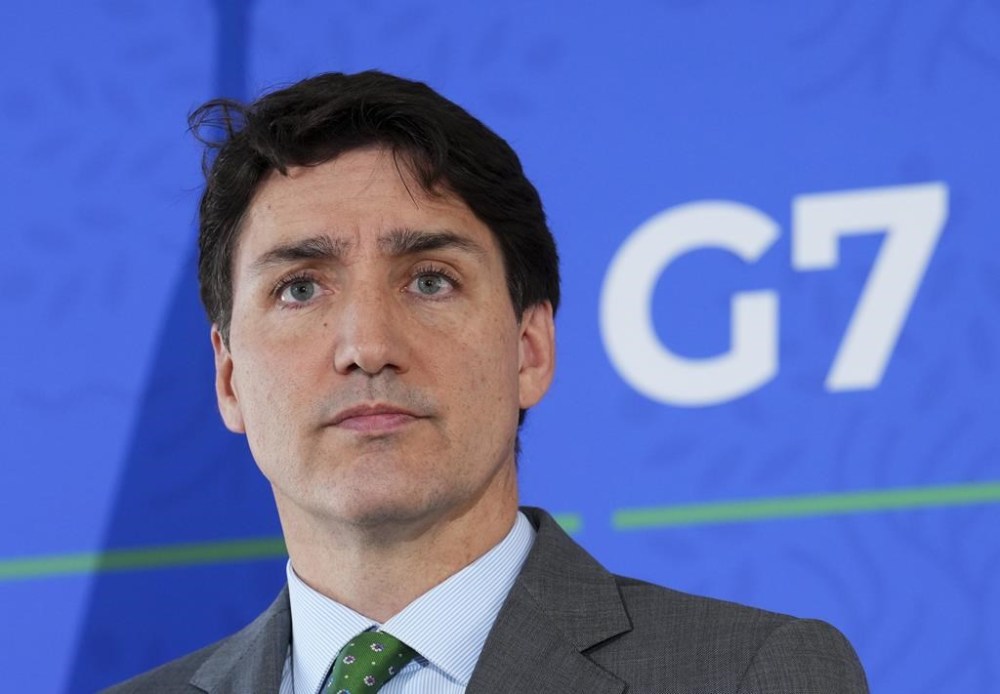
The G7 includes the United States, France, Germany, Japan, the United Kingdom, Italy and Canada, as well as the European Union. For five decades, the group’s governments have co-ordinated how liberal democracies respond to economic and societal challenges.
The G7 has no charter, offices or permanent administration. It makes decisions based on consensus, without formal votes.
The rotating presidency involves a series of meetings across the hosting country for senior officials of G7 countries, who co-ordinate policies ranging from defence to digital regulation. Some meetings involve civil society groups, business leaders and organized labour.
Hosting culminates in a leaders’ summit, where heads of government gather to take stock of the world’s main challenges. That often ends with a communiqué that sets the tone for other industrialized democracies, and can shape global policies at the United Nations.
Canada joined the group in 1976 and this year will be chairing its meetings for the seventh time. Ottawa plans to host the leaders’ summit June 15 to 17 in Kananaskis, Alta.
Canada is also known for the University of Toronto’s G7 Research Group, an independent project keeping tabs on whether countries stick to the commitments they agreed to through the G7.
Russia was a member of the group from 1997, making it the G8, until the other members expelled Moscow in 2014 for invading Ukraine.
Why be part of the G7?
U.S. National Security Advisor Jake Sullivan referred to the G7 as the “steering committee of the free world” in 2022.
Sen. Peter Boehm, a former diplomat who played a central role in Canada’s participation in the G7 for decades, said it’s a key tool for Canada to exert influence and safeguard economic and security interests. “Our participation in the G7 is is potentially the jewel of the crown of our foreign policy.”
The group originally focused largely on economic matters. But the rise of countries like China and India has prompted the G7 to hone in on the rule of law, human rights and open markets.
The G7 also spurs projects, like a monitoring service led by Canada that tracks how adversarial countries spread disinformation, particularly through social media during general elections.
When hosting the G7, countries often launch a “signature initiative,” usually a multi-year development project that gets large amounts of funding from peer countries.
Canada last hosted in 2018 in the Charlevoix region of Quebec, where the Liberals rallied nearly $3.8 billion for educating women and girls in crisis and conflict situations. In Huntsville, Ont., in 2010, the Conservatives pledged $1.1 billion for maternal health, and got peer countries to focus part of their aid budgets on this cause.
Boehm argues the summits feature “frank and unscripted discussions among leaders” that help them get on the same page, “despite the almost universal skepticism of first-time participants.”
What issues is Canada focused on?
Global Affairs Canada has so far only said that Canada will advance “common priorities, such as building economies that benefit everyone, fighting climate change, and managing rapidly evolving technologies.”
Prime Minister Justin Trudeau has pledged to support projects that research how artificial intelligence can be used without breaching human rights and democratic values, and said last week he will champion “peace and freedom for Ukraine.”
He is widely expected to stick with some of Canada’s main global priorities, including support for Ukraine, countering foreign interference and reforming financial agencies like the World Bank so they can better serve developing countries.
Boehm said Trudeau might try to bolster support for the World Health Organization, or join calls to reform the institution. U.S. president-elect Donald Trump has sought to withdraw from the agency, though it could be crucial in fighting a bird-flu pandemic.
Civil society groups have proposed other priorities, such as rallying western countries to confiscate Russian assets to fund Ukraine’s war effort, and reversing cuts to foreign aid spending since the COVID-19 pandemic that have stymied progress on eradicating major diseases.
Former foreign minister Lloyd Axworthy and others have argued that Canada should reboot a 2002 initiative to reduce stockpiles of chemical and nuclear weapons. Axworthy said this could help instil safeguards to prevent countries using nuclear power from pursuing nuclear weapons.
“This opportunity with the G7, I think, is a chance for Canada to regain its footing in becoming an effective diplomatic player in the world. I think we’ve let a lot of it sort of fall by the wayside,” he told the Global Exchange podcast published by the Canadian Global Affairs Institute last October.
How will the year look?
As last year’s host, Italy held a whopping 24 meetings between March and November 2024, ranging from one for tourism ministers to another about science and technology.
Boehm said Canada will likely hold fewer meetings and pair them, perhaps having foreign and defence ministers convene parallel meetings in one city, and then one joint meeting. He said Ottawa did this last time to limit hefty security costs.
“The challenge for Canada will be the timing and how that fits into our political and electoral calendar, but also what sort of initiatives to put through, where consensus can be achieved,” Boehm said.
Timing has been a challenge for Ottawa before. Last year, Trudeau didn’t meet his goal of hosting the North American Leaders’ Summit, in what some like Boehm chalk up to tricky scheduling amid elections in the U.S. and Mexico.
Meanwhile, Canada will need to decide who to invite to the summit. Canada’s 2018 summit included leaders from island countries who discussed the impact of climate change and plastic pollution in oceans.
South Africa is separately chairing the G20 this year, a much wider grouping that has much less consensus than the G7, and Boehm said it would “be very smart” to have the country represented in Alberta. South Korea has said it wants to join the G7 as a permanent member.
What about Trump?
The last time Canada hosted the G7, Trump overshadowed the leaders’ summit during his first administration by refusing to sign the communiqué. He left early and lambasted Trudeau as “very dishonest and weak” in a spat over tariffs.
Boehm said the communiqué required two late nights of negotiations because the Trump administration didn’t align with the others on climate change or on how to prevent Iran from pursuing nuclear weapons.
He noted that some summits end with the host country issuing a statement that summarizes the negotiations if the countries cannot reach consensus, which he said Canada avoided last time.
Trump’s return to the White House this month has cast new uncertainty on the G7, given his preference for making deals directly instead of working within multilateral groups.
Boehm says the G7 is much more important to Canada than the U.S., and Ottawa must co-ordinate with whoever is in Trump’s inner circle, especially if he continually replaces his main team.
Meanwhile, Canadian immigration lawyers have said that Trump is technically barred from crossing into Canada since a New York court deemed him a convicted felon last May. It means he might require special permission from Ottawa to enter the country.
What about the chaos in Ottawa?
Ahead of the political tumult last month, Trudeau had repeatedly spoken about his looming role chairing the G7 summit in June, leading observers to believe he would try his best to keep his minority government in office until the fall.
Yet the surprise resignation of finance minister Chrystia Freeland and resulting caucus turmoil could see Trudeau toppled by a confidence vote, sending Canadians to the polls.
If Trudeau does chair the G7 summit in June, he will be the longest-serving among his peers, Boehm noted. “He will have a sense of what he wants to achieve, and what issues and themes are the most relevant.”
Boehm added he has “full confidence” in Canada’s officials to have a successful G7 term, regardless of who is prime minister.
This report by The Canadian Press was first published Jan. 2, 2025.