New research shows a quarter of freshwater animals are threatened with extinction
Advertisement
Read this article for free:
or
Already have an account? Log in here »
To continue reading, please subscribe:

Digital Subscription
One year of digital access for only $205*
- Enjoy unlimited reading on winnipegfreepress.com
- Read the E-Edition, our digital replica newspaper
- Access News Break, our award-winning app
- Play interactive puzzles
*First annual payment billed as $205.00 + GST for one year. This annual subscription will automatically renew at $233.00 + GST every 52 weeks (10% off the regular annual price of $259.35). Offer available to new and qualified returning subscribers only. Cancel any time.
To continue reading, please subscribe:
Add Free Press access to your Brandon Sun subscription for only an additional
$1 for the first 4 weeks*
- Enjoy unlimited reading on winnipegfreepress.com
- Read the E-Edition, our digital replica newspaper
- Access News Break, our award-winning app
- Play interactive puzzles
*Your next Brandon Sun subscription payment will increase by $1.00 and you will be charged $17.95 plus GST for four weeks. After four weeks, your payment will increase to $24.95 plus GST every four weeks.
Read unlimited articles for free today:
or
Already have an account? Log in here »
Hey there, time traveller!
This article was published 08/01/2025 (639 days ago), so information in it may no longer be current.
WASHINGTON (AP) — Nearly a quarter of animals living in rivers, lakes and other freshwater sources are threatened with extinction, according to new research published Wednesday.
“Huge rivers like the Amazon can appear mighty, but at the same time freshwater environments are very fragile,” said study co-author Patricia Charvet, a biologist at Brazil’s Federal University of Ceará.
Freshwater habitats – including rivers, lakes, ponds, streams, bogs and wetlands – cover less than 1% of the planet’s surface, but support 10% of its animal species, said Catherine Sayer, a zoologist at the International Union for Conservation of Nature in England.
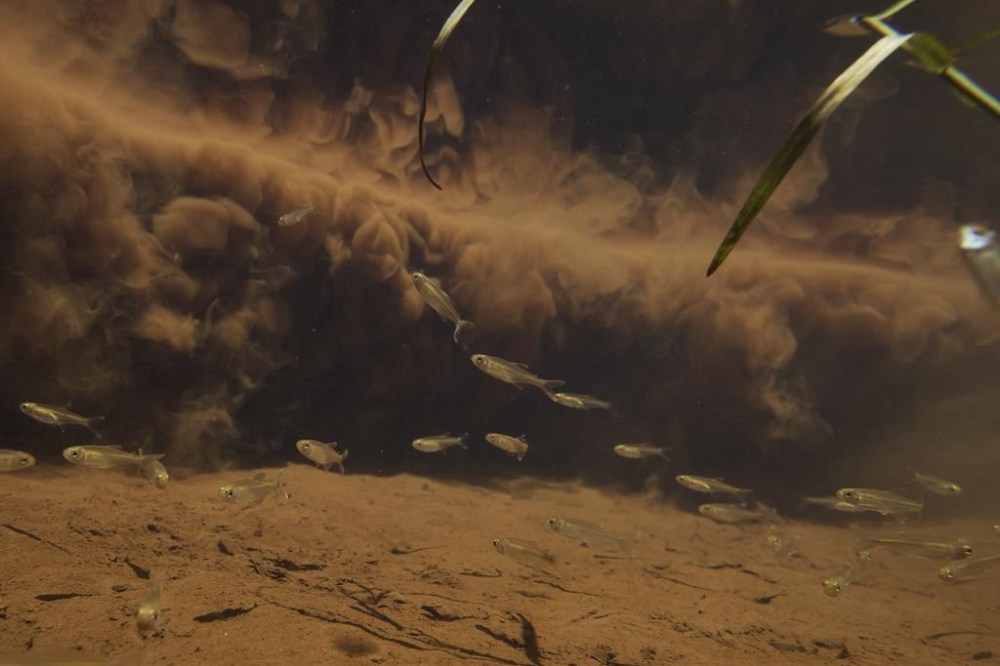
The researchers examined around 23,500 species of dragonflies, fish, crabs and other animals that depend exclusively on freshwater ecosystems. They found that 24% were at risk of extinction – classified as vulnerable, endangered or critically endangered – due to compounding threats from pollution, dams, water extraction, agriculture, invasive species, climate change and other disruptions.
“Most species don’t have just one threat putting them at risk of extinction, but many threats acting together,” said Sayer, a study-co-author.
The tally, published in the journal Nature, is the first that time researchers have analyzed the global risk to freshwater species. Previous studies have focused on land animals including including mammals, birds and reptiles.
Duke University ecologist Stuart Pimm, who was not involved in the study, called it “a long-awaited and hugely important paper.”
“Almost every big river in North America and Europe is massively modified” through damming, putting freshwater species at risk, he said.
In South America, the vast Amazon River ecosystem also faces threats from deforestation, wildfires and illegal gold mining, said Charvet.
Illegal fires to clear forest result in waves of ash polluting the river, and unlicensed gold miners dump mercury into the water, she said.
Rivers and wetlands “concentrate everything that happens around them,” she said. “If something goes really wrong, like an acid or oil spill, you can threaten an entire species. There’s nowhere else for these animals to go.”
___
The Associated Press Health and Science Department receives support from the Howard Hughes Medical Institute’s Science and Educational Media Group. The AP is solely responsible for all content.