Operation underway to capture B.C. wolves for relocation in Colorado
Advertisement
Read this article for free:
or
Already have an account? Log in here »
To continue reading, please subscribe:

Digital Subscription
One year of digital access for only $205*
- Enjoy unlimited reading on winnipegfreepress.com
- Read the E-Edition, our digital replica newspaper
- Access News Break, our award-winning app
- Play interactive puzzles
*First annual payment billed as $205.00 + GST for one year. This annual subscription will automatically renew at $233.00 + GST every 52 weeks (10% off the regular annual price of $259.35). Offer available to new and qualified returning subscribers only. Cancel any time.
To continue reading, please subscribe:
Add Free Press access to your Brandon Sun subscription for only an additional
$1 for the first 4 weeks*
- Enjoy unlimited reading on winnipegfreepress.com
- Read the E-Edition, our digital replica newspaper
- Access News Break, our award-winning app
- Play interactive puzzles
*Your next Brandon Sun subscription payment will increase by $1.00 and you will be charged $17.95 plus GST for four weeks. After four weeks, your payment will increase to $24.95 plus GST every four weeks.
Read unlimited articles for free today:
or
Already have an account? Log in here »
Hey there, time traveller!
This article was published 15/01/2025 (610 days ago), so information in it may no longer be current.
A wildlife team from the United States has begun capturing grey wolves in British Columbia for release in Colorado after voters in the state approved a proposal to reintroduce the animals, which have been “functionally extinct” there for 75 years.
The operation by Colorado Parks and Wildlife comes following an agreement with the B.C. government to “translocate” up to 15 wolves each year over the next three to five years.
Before the capture operation measures were taken aimed at minimizing conflict between wolves and livestock, Colorado Parks said in a statement.
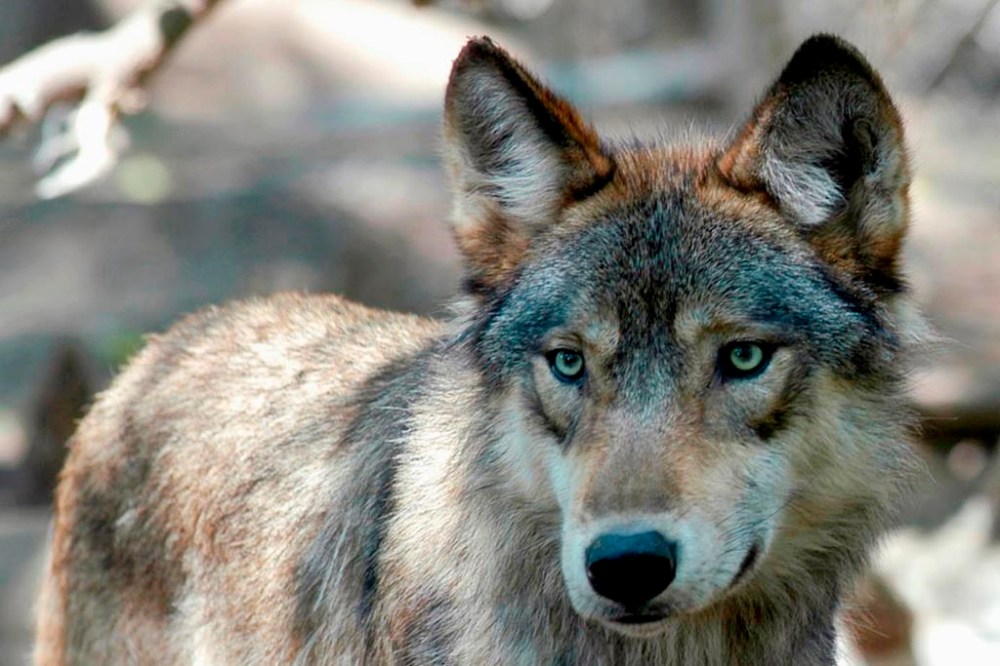
The operation in B.C. is expected to last up to two weeks, with the goal to “recover and maintain a viable, self-sustaining wolf population in Colorado,” said the agency, which is a division of the state’s Department of Natural Resources.
The statement said captured B.C. wolves will be tested and treated for disease before they are relocated, and collars will be placed on the animals to monitor their behaviours.
Colorado voters approved a ballot initiative in 2020 to reintroduce the animals, which are listed as endangered in the state under U.S. federal law. Grey wolves are not considered to be an endangered or threatened species in B.C.
The ballot initiative states wolves were historically “an essential part of the wild habitat” of Colorado, but they were “exterminated and have been functionally extinct for 75 years in the state.”
The agency began the process by bringing in five wolves from Oregon in late 2023.
Eric Odell, Colorado’s wolf program manager, said in a news release issued Saturday that they were “excited to be working with B.C. to bring together our combined experience and expertise while ensuring the safety of animals and staff.”
“This new source population of grey wolves will provide additional genetic diversity to Colorado’s wolf population,” he said.
The B.C. wolves will come from areas where no livestock is present, “so, there are no concerns about reintroducing wolves that are from packs that are involved in situations of repeated livestock depredations,” the statement said.
But the program has seen pushback from Colorado residents, including those involved in the ranching, farming, hunting and guiding sectors.
Last Wednesday, just two days before the operation in B.C. began, Colorado wildlife commissioners voted down a citizen petition that aimed to delay the plan.
Colorado Parks and Wildlife said the department had addressed the petitioners’ concerns, including wolves’ potential predation of livestock.
At a meeting last April, commissioners supported measures that included raising the cap on compensation for lost livestock, guard or herding animals to $15,000 per animal.
At least one of the wolves relocated from Oregon in 2023 died from a gunshot wound last fall.
On Jan. 2, the U.S. Fish and Wildlife Service issued a news release saying it was offering a reward for information about the alleged illegal killing of the wolf in Colorado.
In a statement last September, Jeff Davis, director of Colorado Parks and Wildlife, said the male wolf had been involved in “multiple depredations.”
The wolf family was captured along with its mate and four pups and transferred to a secure enclosure, but the male wolf was in poor condition and died a few days later.
A necropsy revealed that a gunshot wound led to its death.
The wolf’s body weight was nearly 30 per cent lower at death than it had been when the animal was released in Colorado the previous December, the statement from Colorado Parks and Wildlife said.
Jesse Zeman, executive director of the B.C. Wildlife Federation, said opinions about relocating wolves tend to be split across the urban-rural divide.
“People who live in urban areas really want to see wolf reintroduction, and people who live in rural areas who interact with (the animals), for example people who have cattle, ranchers who are impacted, they don’t want them,” he said.
In B.C., the government has said the overall wolf population is “stable to increasing,” numbering an estimated 8,500.
In 2015, the province began culling wolves in an effort to save threatened caribou herds, a controversial program that involves shooting wolves from helicopters.
The wolf culling relates to about a dozen caribou herds and typically costs between $100,000 and $275,000 per herd, according to a B.C. government website.
Zeman said he has questions for the B.C. government about the relocation of wolves, including where from B.C. will they be captured, as the province did not consult his group about the plan.
“We sit on a number of advisory committees and engagement committees all over the province, and as the largest conservation organization, you know, we would have expected to be engaged on this, but we weren’t,” he said in an interview.
Zeman said some of his top questions involve the cost of the relocation program, who is paying for it, and how much time B.C. government scientists are putting in.

“(B.C.) biologists, right now, the budget is so bad that they can’t even afford cellphones,” he said.
“We’re being told that inventories can’t be carried out, that projects can’t be carried out, that (B.C. government) staff are not allowed to work overtime,” he said.
B.C.’s Ministry of Land, Water and Resource Stewardship did not immediately reply to questions about the program.
This report by The Canadian Press was first published Jan. 15, 2025.
Note to readers: This is a corrected story. A previous version incorrectly said grey wolves are considered to be endangered or threatened in B.C.