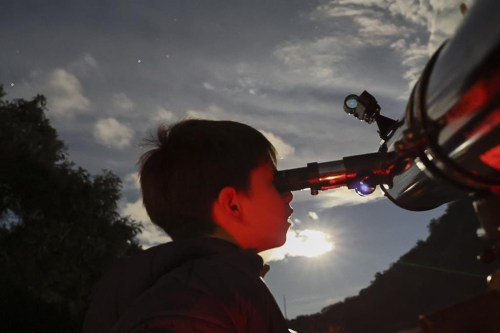
How to glimpse a parade of planets in the January night sky
Advertisement
Read this article for free:
or
Already have an account? Log in here »
To continue reading, please subscribe:

Digital Subscription
One year of digital access for only $205*
- Enjoy unlimited reading on winnipegfreepress.com
- Read the E-Edition, our digital replica newspaper
- Access News Break, our award-winning app
- Play interactive puzzles
*First annual payment billed as $205.00 + GST for one year. This annual subscription will automatically renew at $233.00 + GST every 52 weeks (10% off the regular annual price of $259.35). Offer available to new and qualified returning subscribers only. Cancel any time.
To continue reading, please subscribe:
Add Free Press access to your Brandon Sun subscription for only an additional
$1 for the first 4 weeks*
- Enjoy unlimited reading on winnipegfreepress.com
- Read the E-Edition, our digital replica newspaper
- Access News Break, our award-winning app
- Play interactive puzzles
*Your next Brandon Sun subscription payment will increase by $1.00 and you will be charged $17.95 plus GST for four weeks. After four weeks, your payment will increase to $24.95 plus GST every four weeks.
Read unlimited articles for free today:
or
Already have an account? Log in here »
Hey there, time traveller!
This article was published 17/01/2025 (613 days ago), so information in it may no longer be current.
NEW YORK (AP) — Six planets grace the sky this month in what’s known as a planetary parade, and most can be seen with the naked eye.
These planetary hangouts happen when several planets appear to line up in the night sky at once.
“They’re not in a straight line, but they’re pretty close together on one side of the sun,” said Hannah Sparkes, planetarium supervisor at the Bishop Museum of Science and Nature in Florida.
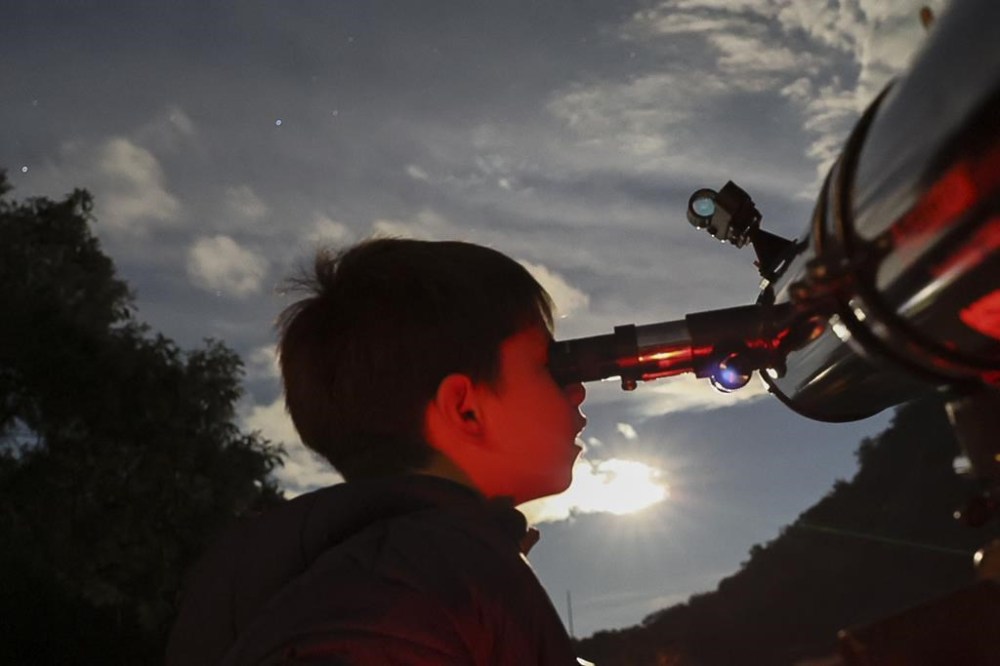
The astronomical linkup is fairly common and can happen at least every year depending on the number of planets. A similar parade took place last June, but only two planets could be seen without any special equipment.
Venus, Mars, Jupiter and Saturn are visible to the naked eye this month and for part of February. Uranus and Neptune can be spotted with binoculars and telescopes.
During this latest spectacle, Mars shines especially bright because it’s located directly opposite the sun. And on Friday and Saturday night, skygazers will see Venus and Saturn snuggle up extra close — just two degrees apart.
Any clear, cloudless night this month is ideal to spot the planets. To get in on the sighting, go outside on a clear night a few hours after sunset and face south, said Kevin Williams, planetarium director at Buffalo State University.
Venus and Saturn will glow in the southwestern sky, with Jupiter in the southern sky and Mars in the southeast or east. The planets will shine brighter than the stars, and Mars will look like a reddish-orange dot.
Consider downloading stargazing apps to help with where to look, Sparkes said.
A faint Mercury is set to join the parade as a bonus seventh planet at the end of February, and the planets will slowly make their exit through the spring.
“It gives us a little bit better sense of our place in the solar system and the universe,” Williams said.
___
The Associated Press Health and Science Department receives support from the Howard Hughes Medical Institute’s Science and Educational Media Group and the Robert Wood Johnson Foundation. The AP is solely responsible for all content.