DeepSeek says it built its chatbot cheap. What does that mean for AI’s energy needs and the climate?
Advertisement
Read this article for free:
or
Already have an account? Log in here »
To continue reading, please subscribe:

Digital Subscription
One year of digital access for only $205*
- Enjoy unlimited reading on winnipegfreepress.com
- Read the E-Edition, our digital replica newspaper
- Access News Break, our award-winning app
- Play interactive puzzles
*First annual payment billed as $205.00 + GST for one year. This annual subscription will automatically renew at $233.00 + GST every 52 weeks (10% off the regular annual price of $259.35). Offer available to new and qualified returning subscribers only. Cancel any time.
To continue reading, please subscribe:
Add Free Press access to your Brandon Sun subscription for only an additional
$1 for the first 4 weeks*
- Enjoy unlimited reading on winnipegfreepress.com
- Read the E-Edition, our digital replica newspaper
- Access News Break, our award-winning app
- Play interactive puzzles
*Your next Brandon Sun subscription payment will increase by $1.00 and you will be charged $17.95 plus GST for four weeks. After four weeks, your payment will increase to $24.95 plus GST every four weeks.
Read unlimited articles for free today:
or
Already have an account? Log in here »
Hey there, time traveller!
This article was published 28/01/2025 (595 days ago), so information in it may no longer be current.
Chinese artificial intelligence startup company DeepSeek stunned markets and AI experts with its claim that it built its immensely popular chatbot at a fraction of the cost of those made by American tech titans.
That immediately called into question the billions of dollars U.S. tech companies are spending on a massive expansion of energy-hungry data centers they say are needed to unlock the next wave of artificial intelligence.
Could this new AI mean the world needs significantly less electricity for the technology than everyone thinks? The answer has profound implications for the overheating climate . AI uses vast amounts of energy, much of which comes from burning fossil fuels, which causes climate change. Tech companies have said their electricity use is going up, when it was supposed to be ramping down, ruining their carefully-laid plans to address climate change.
“There has been a very gung ho, go ahead at all costs mentality in this space, pushing toward investment in fossil fuels,” said Eric Gimon, senior fellow at Energy Innovation. “This is an opportunity to tap the brakes.”
Making AI more efficient could be less taxing on the environment, experts say, even if its huge electricity needs are not going away.
People flock to new DeepSeek assistant
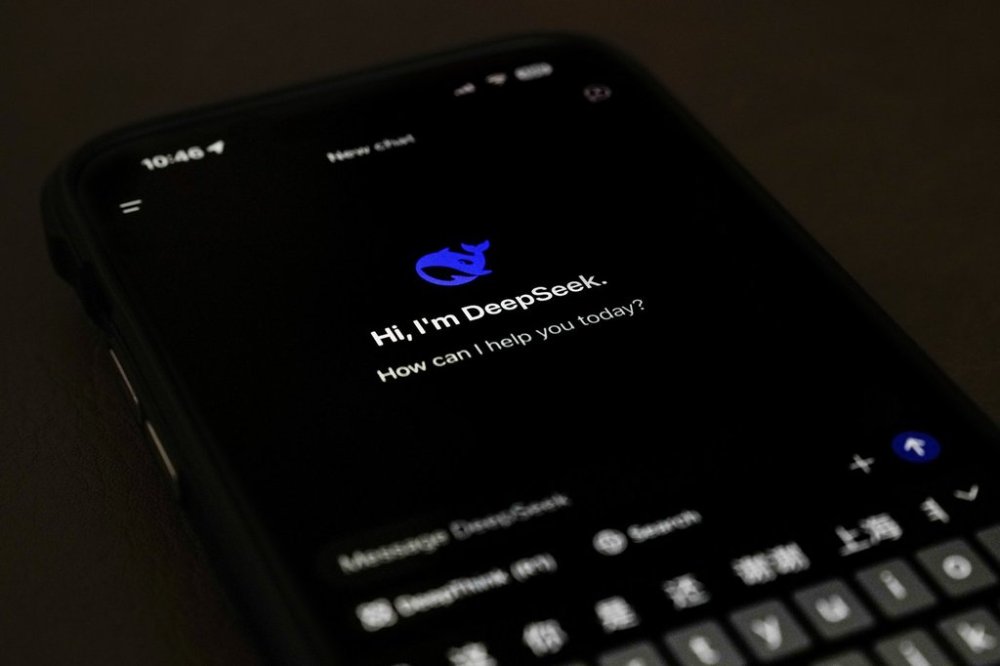
DeepSeek’s claims of building its impressive chatbot on a budget drew curiosity that helped make its AI assistant the No. 1 downloaded free app on Apple’s iPhone this week, ahead of U.S.-made chatbots ChatGPT and Google’s Gemini.
“All of a sudden we wake up Monday morning and we see a new player number one on the App Store, and all of a sudden it could be a potential gamechanger overnight,” said Jay Woods, chief global strategist at Freedom Capital Markets. “ It caused a bit of a panic. These were the hottest stocks in the world.”
DeepSeek’s app competes well with other leading AI models. It can compose software code, solve math problems and address other questions that take multiple steps of planning. It’s attracted attention for its ability to explain its reasoning in the process of answering questions.
Leading analysts have been poring through the startup’s public research papers about its new model, R1, and its precursors. Among the details that stood out was DeepSeek’s assertion that the cost to train the flagship v3 model behind its AI assistant was only $5.6 million, a stunningly low number compared to the multiple billions of dollars spent to build ChatGPT and other well-known systems. DeepSeek hasn’t responded to requests for comment.
The $5.6 million number only included actually training the chatbot, not the costs of earlier-stage research and experiments, the paper said. DeepSeek was also working under some constraints: U.S. export controls on the most powerful AI chips. It said it relied on a relatively low-performing AI chip from California chipmaker Nvidia that the U.S. hasn’t banned for sale in China.
The energy use of data centers in the United States is projected to double or triple by 2028
Data centers consumed about 4.4% of all U.S. electricity in 2023 and that’s expected to increase to 6.7% to 12% of total U.S. electricity by 2028, according to the Lawrence Berkeley National Laboratory.
It’s been axiomatic that U.S. tech giants must spend much more on building out data centers and other infrastructure to train and run their AI systems. Meta Platforms, the parent of Facebook and Instagram, says it plans to spend up to $65 billion this year, including on a massive data center complex coming to Louisiana.
Microsoft said it plans to spend $80 billion this year. And Trump last week joined the CEOs of OpenAI, Oracle and SoftBank to announce a joint venture that hopes to invest up to $500 billion on data centers and the electricity generation needed for AI development, starting with a project already under construction in Texas.
Experts think that if AI is more efficient, it will be used more, so energy demand will still grow.
When there’s an innovative technology that’s useful to the general population and it’s affordable, people will use it, said Vic Shao, founder of DC Grid, which delivers off-grid, direct current power to data centers and electric vehicle charging stations.
That means data centers will still be built, though they may be able to operate more efficiently, said Travis Miller, an energy and utilities strategist at Morningstar Securities Research.
“We think that the growth in electricity demand will end up at the lower end of most of the ranges out there,” he said.
If DeepSeek’s claims hold true, some routine AI queries might not need a data center and could be shifted to phones, said Rahul Sandil, vice president and general manager for global marketing and communications at MediaTek, a semiconductor company. That would ease the computing need and give more time to scale up renewable energy sources for data centers.
Bloom Energy is one of the AI-related stocks that took a hit Monday. KR Sridhar, founder and CEO, said it’s imperative that the U.S. leads in AI because it can power data centers with clean energy, unlike other countries that still primarily rely on coal.

“We can continue to make it better and we will continue to make it better,” he said.
Rick Villars, an analyst for market research group IDC, said the DeepSeek news could influence how AI researchers advance their models, but they’ll still need plenty of data centers and electricity.
“We think this actually could boost and accelerate the time frame for when AI becomes much more embedded into our lives, in the work sense, the living sense and in health care,” Villars said. “So we still think the capacity is required.”
___
The Associated Press’ climate and environmental coverage receives financial support from multiple private foundations. AP is solely responsible for all content. Find AP’s standards for working with philanthropies, a list of supporters and funded coverage areas at AP.org.