Saving species ‘not rocket science,’ but few faring better than long ago: researcher

Advertisement

Advertise with us

Researcher Laurenne Schiller says "it's not rocket science" that recovery for threatened or endangered species in Canada is driven by stopping the primary cause for their decline.

Read this article for free:


or

Already have an account? Log in here »

To continue reading, please subscribe:

Subscribe and receive a limited-edition Free Press branded hat or tote.

Digital Subscription

One year of digital access for only $205*

  • Enjoy unlimited reading on winnipegfreepress.com
  • Read the E-Edition, our digital replica newspaper
  • Access News Break, our award-winning app
  • Play interactive puzzles

*First annual payment billed as $205.00 + GST for one year. This annual subscription will automatically renew at $233.00 + GST every 52 weeks (10% off the regular annual price of $259.35). Offer available to new and qualified returning subscribers only. Cancel any time.

To continue reading, please subscribe:

Add Free Press access to your Brandon Sun subscription for only an additional

$1 for the first 4 weeks*

  • Enjoy unlimited reading on winnipegfreepress.com
  • Read the E-Edition, our digital replica newspaper
  • Access News Break, our award-winning app
  • Play interactive puzzles
Start now

*Your next Brandon Sun subscription payment will increase by $1.00 and you will be charged $17.95 plus GST for four weeks. After four weeks, your payment will increase to $24.95 plus GST every four weeks.

Hey there, time traveller!
This article was published 09/02/2025 (611 days ago), so information in it may no longer be current.

Researcher Laurenne Schiller says “it’s not rocket science” that recovery for threatened or endangered species in Canada is driven by stopping the primary cause for their decline.

“If you take away the cause of population decline, they’re going to recover,” said Schiller of research she and others recently published in the peer-reviewed journal Facets.

“But what’s surprising is, I guess, how little that’s actually been accomplished.”
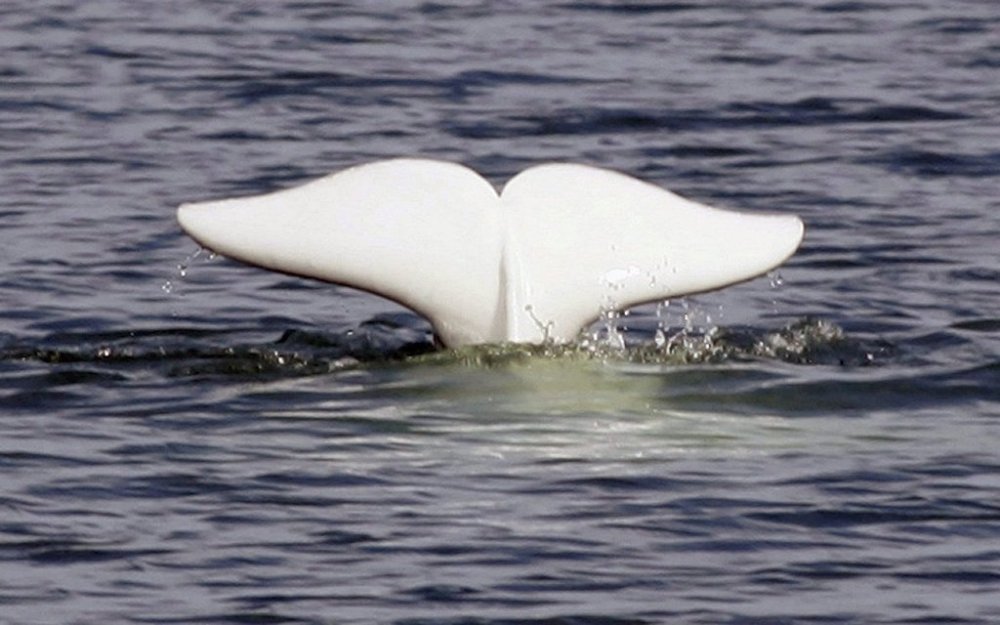
A beluga whale shows his tail in the St.Lawrence River near Tadoussac Que., Monday, July 24, 2006.  THE CANADIAN PRESS/Jacques Boissinot
A beluga whale shows his tail in the St.Lawrence River near Tadoussac Que., Monday, July 24, 2006. THE CANADIAN PRESS/Jacques Boissinot

The study shows just a handful of species at risk are faring better now than they were two and three decades ago, in the early years of Canada’s system for assessing and protecting them.

That regime includes the Committee on the Status of Endangered Wildlife in Canada, an independent panel formed in the late 1970s to advise the federal government, as well as the Species at Risk Act first passed in 2002.

Yet little has changed for the threats facing wildlife in Canada, the paper says, particularly when it comes to habitat loss and degradation.

The study published in January involved a two-pronged analysis. The researchers started by looking at the trajectories of 36 species that represent the original taxonomic groups assessed by Canada’s endangered wildlife committee.

They found the risk of extinction had decreased for just eight of those species relative to the past, and “the only significant difference” in species doing better or worse was whether the primary cause of their decline had been stopped.

Historically, Schiller said some species faced singular threats, such as the now-banned insecticide DDT poisoning peregrine falcons and pushing them to the brink of extinction, or the overexploitation of sea otters during the colonial fur trade.

Both of those species are now faring better.

“When we can identify what the problem is and when there’s action to address it, very, very targeted, we see really good outcomes,” said Schiller, who is a post-doctoral fellow affiliated with both Carleton and Dalhousie universities.

But the road to recovery has been more challenging for species that are struggling because of habitat loss and degradation from industry and other development.

The beluga whales of the St. Lawrence estuary are one such species that is worse off today, said Schiller, adding she “fell in love” with belugas as a child visiting the Vancouver Aquarium and the species motivated her to become a marine biologist.

“These whales live in one of the busiest shipping transport areas in North America, if not the world, the St. Lawrence estuary,” she said. “They’re bombarded with noise pollution, they’re bombarded with chemical pollutants from the region.”

Schiller said it’s “excellent” that a protected area exists for the whales, along with more recent measures, such as seasonal speed limits for vessels.

“It’s more than a lot of species have,” she said of the marine park created in 1998.

But the belugas are now at a higher risk of extinction, Schiller said, as the existing measures have not addressed the habitat degradation at the root of their decline.

“I think of it in human terms,” she said. “If someone is diagnosed with a life-threatening illness and … you’re offering them, you know, a healthy diet and healthy lifestyle and complimentary yoga sessions, all of that is great, and it will probably help them prolong their life. But it’s not actually treating what is killing them.”

The Canadian economy is highly dependent on extractive resources, which infringe on wildlife habitat, and those constraints are evident in government decisions related to protecting endangered species, Schiller said.

The paper also notes that three decades ago, Canada’s own species recovery documents emphasized that, “although development projects produce short-term economic benefits, a truly sustainable economy requires a healthy environment.”

Schiller said the Canadian government has contributed to international agreements and made commitments related to addressing climate change and biodiversity loss at the global scale, and Canadians typically say they care about wildlife.

“But unfortunately, when we look at the evidence that we have, it’s showing that right now … it’s not enough,” she said.

In addition to looking at the 36 “sentinel” species, the study looked at species assessed by the wildlife advisory committee at least twice between 2000 and 2019. 

The researchers found just 1.9 per cent, or eight of 422 species, had experienced both population growth and decreasing risk of extinction.

“(It’s) a really small number when you think of the time and effort and money that has gone into conservation in Canada,” Schiller said of the recovering species.

In both analyses, the driving factor behind a species faring better or worse was whether the primary cause of the decline had ceased.

On a hopeful note, Schiller said the study shows eliminating that threat offers a pathway to recovery.

“Nature is incredibly resilient, if we give (species) the space and enabling conditions to recover.”

This report by The Canadian Press was first published Feb. 9, 2025.

Report Error Submit a Tip

More Stories

Carney: Trump’s ‘energy ceasefire’ could ‘de-escalate’ war in Ukraine

Kyle Duggan, The Canadian Press 4 minute read Preview

Carney: Trump’s ‘energy ceasefire’ could ‘de-escalate’ war in Ukraine

Kyle Duggan, The Canadian Press 4 minute read Updated: Yesterday at 5:18 PM CDT

OTTAWA - Mark Carney thanked U.S. President Donald Trump for “his leadership toward securing an energy ceasefire" between Ukraine and Russia, the Prime Minister's Office said on Sunday.

But on the same day, Carney also expressed to Ukraine's leader that Trump's new diesel supply agreement with Russia undermines Canada's efforts to end the war in Europe.

Trump posted on his Truth Social account on Sunday that Ukraine and Russia have agreed to an "energy ceasefire," but did not immediately offer any details.

Carney expressed “strong support for this agreement," according to a readout from the PMO that followed a conversation between the two leaders. And on his own social media account, Carney offered that Trump’s newly announced “energy ceasefire” could help wind down Russia’s war against Ukraine.

Read
Updated: Yesterday at 5:18 PM CDT

Piece of magic history disappears

Kelly-Anne Riess 5 minute read Preview

Piece of magic history disappears

Kelly-Anne Riess 5 minute read Updated: 4:15 PM CDT

A piece of Winnipeg’s magic history has vanished, and internationally renowned escape artist Dean Gunnarson is offering a $500 reward to anyone who can make it reappear.

The plaque marked the birthplace of what has become the world’s largest organization of professional and amateur magicians, the International Brotherhood of Magicians, which was founded in Winnipeg more than a century ago.

Gunnarson said fellow magician and local magic historian Bruce Thompson discovered the disappearance Tuesday while on his way to work.

Thompson returned to inspect the site and found what appeared to be evidence it had been forcibly removed.

Read
Updated: 4:15 PM CDT

‘People count on this place’: Pembina Hwy. Giant Tiger latest location slated to close

By Matthew Frank 3 minute read Preview

‘People count on this place’: Pembina Hwy. Giant Tiger latest location slated to close

By Matthew Frank 3 minute read 4:34 PM CDT

Another Giant Tiger store in Winnipeg will shutter next year, leaving some area residents concerned about a lack of affordable groceries in the neighbourhood.

Red papers taped to the front doors of the Canadian retail chain’s location at Pembina Highway and Southpark Drive indicate it will close Feb. 27.

Doreen Yanchuk, a self-described bargain hunter, shook her head when she saw the signs Monday. The 67-year-old said she’s a regular customer at the location because it’s a five-minute drive from her home.

“They have very good sales here, which draws people to the shop because everything is expensive,” Yanchuk said.

Read
4:34 PM CDT

Collaros turns back the clock in crucial win over Stamps

Taylor Allen 7 minute read Preview

Collaros turns back the clock in crucial win over Stamps

Taylor Allen 7 minute read Yesterday at 7:14 PM CDT

It was around this time seven years ago that the Winnipeg Blue Bombers officially became Zach Collaros’s team.

Making his first start in blue and gold after being acquired via trade, Collaros ran backwards to escape a collapsing pocket before rolling to his right and firing a perfect pass to Darvin Adams in the back corner of the south end zone during a home game against the Calgary Stampeders.

The play marked the beginning of the Collaros era in Winnipeg.

And a similar play Saturday night, once again against the Stampeders, served as a reminder that the 38-year-old pivot isn’t done just yet.

Read
Yesterday at 7:14 PM CDT

Hurricane Simon pounds resorts and vulnerable towns along Mexico’s Pacific coast

Fernando Llano And Martin Silva, The Associated Press 5 minute read Preview

Hurricane Simon pounds resorts and vulnerable towns along Mexico’s Pacific coast

Fernando Llano And Martin Silva, The Associated Press 5 minute read Updated: 2:38 AM CDT

PUERTO VALLARTA, Mexico (AP) — Hurricane Simon pounded Mexico’s Pacific coast as a Category 3 storm on Sunday, its eye remaining just offshore as its most powerful winds and rain slammed people living between the Sierra Madre and the ocean.

The hurricane's center swirled parallel to the coast, closing in on the Puerto Vallarta area, where its most damaging winds and rain were expected to hit around midnight and continue through Monday morning. Its maximum sustained winds weakened late Sunday to 115 mph (185 kph), according to the U.S. National Hurricane Center in Miami, but it was still expected to remain a dangerous hurricane.

That’s not good news for people in and around Puerto Vallarta, a popular tourist destination in the state of Jalisco. Just inland and uphill from the resort areas, many Mexicans live in communities where housing might not stand up to the storm.

By late Sunday, Simon's eye was moving northwest about 45 miles (75 kilometers) south of Cabo Corrientes at about 5 mph (7 kph). A senior hurricane center specialist, Philippe Papin, said this westernmost tip of mainland Mexico is the area most likely to get a direct hit from the system. Cabo Corrientes is at the southern tip of Bahia de Banderas, the wide bay where Puerto Vallarta looks out to the Pacific.

Read
Updated: 2:38 AM CDT

France’s envoy says Carney admired for response to ‘extremely radical’ U.S.

Dylan Robertson, The Canadian Press 4 minute read Preview

France’s envoy says Carney admired for response to ‘extremely radical’ U.S.

Dylan Robertson, The Canadian Press 4 minute read Updated: Yesterday at 9:16 AM CDT

OTTAWA - France's new ambassador to Canada says her country admires the Carney government's response to "extremely radical" American demands and is calling for swift action to boost Canada's strategic ties with Europe.

"My mission is very clear. It's to work toward making France one of Canada’s closest allies in Europe, in each field, in every sector," French Ambassador Hélène Farnaud-Defromont told The Canadian Press on Friday.

In her first interview since her posting started last month, Farnaud-Defromont said in French her country sees Prime Minister Mark Carney's approach to managing trade negotiations with U.S. President Donald Trump's administration as "exemplary."

The prime minister called a halt to trade talks with Washington in August and accused the Trump administration of bringing fresh demands to the table at the last minute. Carney also has vowed to protect Canada's language sovereignty and ability to regulate big tech firms.

Read
Updated: Yesterday at 9:16 AM CDT