Researchers link a gene to the emergence of spoken language
Advertisement
Read this article for free:
or
Already have an account? Log in here »
To continue reading, please subscribe:

Digital Subscription
One year of digital access for only $205*
- Enjoy unlimited reading on winnipegfreepress.com
- Read the E-Edition, our digital replica newspaper
- Access News Break, our award-winning app
- Play interactive puzzles
*First annual payment billed as $205.00 + GST for one year. This annual subscription will automatically renew at $233.00 + GST every 52 weeks (10% off the regular annual price of $259.35). Offer available to new and qualified returning subscribers only. Cancel any time.
To continue reading, please subscribe:
Add Free Press access to your Brandon Sun subscription for only an additional
$1 for the first 4 weeks*
- Enjoy unlimited reading on winnipegfreepress.com
- Read the E-Edition, our digital replica newspaper
- Access News Break, our award-winning app
- Play interactive puzzles
*Your next Brandon Sun subscription payment will increase by $1.00 and you will be charged $17.95 plus GST for four weeks. After four weeks, your payment will increase to $24.95 plus GST every four weeks.
Read unlimited articles for free today:
or
Already have an account? Log in here »
Hey there, time traveller!
This article was published 18/02/2025 (598 days ago), so information in it may no longer be current.
Why did humans start speaking? Scientists suggest genetics played a big role – and they say the evolution of this singular ability was key to our survival.
A new study links a particular gene to the ancient origins of spoken language, proposing that a protein variant found only in humans may have helped us communicate in a novel way. Speech allowed us to share information, coordinate activities and pass down knowledge, giving us an edge over extinct cousins like Neanderthals and Denisovans.
The new study is “a good first step to start looking at the specific genes” that may affect speech and language development, said Liza Finestack at the University of Minnesota, who was not involved with the research.
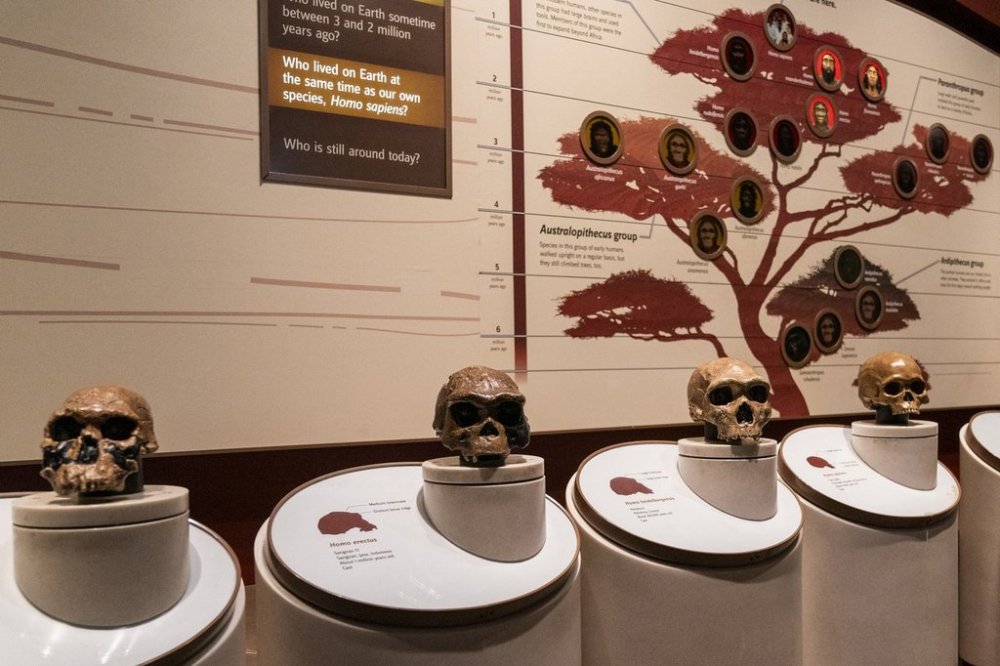
What scientists learn may someday even help people with speech problems.
The genetic variant researchers were looking at was one of a variety of genes “that contributed to the emergence of Homo sapiens as the dominant species, which we are today” said Dr. Robert Darnell, an author of the study published Tuesday in the journal Nature Communications.
Darnell has been studying the protein – called NOVA1 and known to be crucial to brain development – since the early 1990s. For the latest research, scientists in his lab at New York’s Rockefeller University used CRISPR gene editing to replace the NOVA1 protein found in mice with the exclusively human type to test the real-life effects of the genetic variant. To their surprise, it changed the way the animals vocalized when they called out to each other.
Baby mice with the human variant squeaked differently than normal littermates when their mom came around. Adult male mice with the variant chirped differently than their normal counterparts when they saw a female in heat.
Both are settings where mice are motivated to speak, Darnell said, “and they spoke differently” with the human variant, illustrating its role in speech.
This isn’t the first time a gene has been linked to speech. In 2001, British scientists said they had discovered the first gene tied to a language and speech disorder.
Called FOXP2, it was referred to as the human language gene. But though FOXP2 is involved in human language, it turned out that the variant in modern humans wasn’t unique to us. Later research found it was shared with Neanderthals. The NOVA1 variant in modern humans, on the other hand, is found exclusively in our species, Darnell said.
The presence of a gene variant isn’t the only reason people can speak. The ability also depends on things like anatomical features in the human throat and areas of the brain that work together to allow people to speak and understand language.

Darnell hopes the recent work not only helps people better understand their origins but also eventually leads to new ways to treat speech-related problems.
University of Minnesota’s Finestack said it’s more likely the genetic findings might someday allow scientists to detect, very early in life, who might need speech and language interventions.
“That’s certainly a possibility,” she said.
——
The Associated Press Health and Science Department receives support from the Howard Hughes Medical Institute’s Science and Educational Media Group and the Robert Wood Johnson Foundation. The AP is solely responsible for all content.