

More endangered Mexican gray wolves are roaming the southwestern US, annual survey shows
Advertisement
Read this article for free:
or
Already have an account? Log in here »
To continue reading, please subscribe:
Monthly Digital Subscription
$1 per week for 24 weeks*
- Enjoy unlimited reading on winnipegfreepress.com
- Read the E-Edition, our digital replica newspaper
- Access News Break, our award-winning app
- Play interactive puzzles
*Billed as $4.00 plus GST every four weeks. After 24 weeks, price increases to the regular rate of $19.95 plus GST every four weeks. Offer available to new and qualified returning subscribers only. Cancel any time.
Monthly Digital Subscription
$4.99/week*
- Enjoy unlimited reading on winnipegfreepress.com
- Read the E-Edition, our digital replica newspaper
- Access News Break, our award-winning app
- Play interactive puzzles
*Billed as $19.95 plus GST every four weeks. Cancel any time.
To continue reading, please subscribe:
Add Free Press access to your Brandon Sun subscription for only an additional
$1 for the first 4 weeks*
*Your next subscription payment will increase by $1.00 and you will be charged $16.99 plus GST for four weeks. After four weeks, your payment will increase to $23.99 plus GST every four weeks.
Read unlimited articles for free today:
or
Already have an account? Log in here »
Hey there, time traveller!
This article was published 04/03/2025 (387 days ago), so information in it may no longer be current.
ALBUQUERQUE, N.M. (AP) — It is a ritual that takes place every winter — federal and state wildlife managers use remote cameras, scat collection, radio telemetry devices and helicopters to count Mexican gray wolves that are roaming mountain ranges in parts of New Mexico and Arizona.
The predators that are captured during the annual survey are weighed and vaccinated, their blood is drawn and their radio collars are checked. It is all part of a decades-long effort to gauge the success of the work being done to return the endangered species to its historic range in the southwestern U.S. and in Mexico.
This year’s count shows the recovery of Mexican wolves is inching forward.
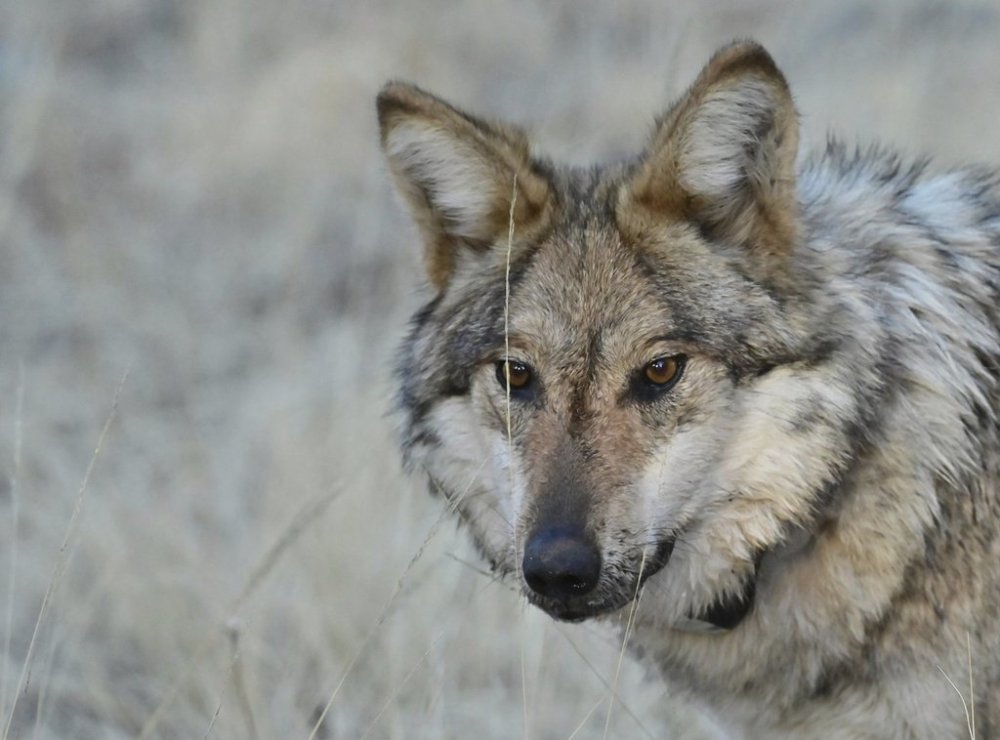
The smallest subspecies of gray wolf in North America, Mexican wolves were listed as endangered in 1976, and a binational captive breeding program was started to guard against extinction. The reintroduction program has been the source of many legal battles over the years — with environmentalists seeking to get more captive wolves released into the wild and ranchers fighting to protect their way of life.
Here is a look at Mexican gray wolves by the numbers:
286
That is at least how many Mexican wolves there are in the wild in New Mexico and Arizona. It’s 11% more than the previous year, and it marks the ninth straight year that the population has grown. Reintroductions began in 1998 with the release of 11 captive-reared wolves in southeastern Arizona.
60
The minimum number of packs that were documented at the end of 2024, with more than half of those living in southwestern New Mexico. Wildlife managers define a pack as two or more wolves that stick to a home range.
26
That is how many breeding pairs are in the wild — 16 in New Mexico and 10 in Arizona.
48%
The survival rate of the 160 pups that were born in 2024. Wildlife managers say 79 pups survived at least through the end of the year.
27
Mexican wolf pups that were fostered in 2024 — captive bred pups that were placed into dens in the wild to be raised by other wolf packs. Officials say cross-fostering pups helps boost wolf numbers and genetic diversity.
30
The number of wolf deaths documented during 2024. That includes six in fourth quarter, with all but one of those being in New Mexico.
99
The number of confirmed cases in 2024 in which wolves killed livestock, with seven investigations still pending. Officials with the wolf recovery team say the number of livestock deaths due to wolves has been decreasing, but ranchers still see it as a safety issue for their families and livelihoods.
290

That is how many times wildlife managers conducted successful hazing operations in 2024 to keep wolves away from rural homes and livestock.
350
There are about that many Mexican wolves living in captivity in zoos and other facilities in the United States and Mexico that work to conserve the species.
$203 million
The price tag of Mexican gray wolf recovery based on a 25-year time frame, according to estimates included in the 2022 revised recovery plan. Environmentalists are concerned that recent federal funding and job cuts could derail the progress made so far.