Venus passes between the Earth and sun this weekend — but don’t try to look for it
Advertisement
Read this article for free:
or
Already have an account? Log in here »
To continue reading, please subscribe:

Digital Subscription
One year of digital access for only $205*
- Enjoy unlimited reading on winnipegfreepress.com
- Read the E-Edition, our digital replica newspaper
- Access News Break, our award-winning app
- Play interactive puzzles
*First annual payment billed as $205.00 + GST for one year. This annual subscription will automatically renew at $233.00 + GST every 52 weeks (10% off the regular annual price of $259.35). Offer available to new and qualified returning subscribers only. Cancel any time.
To continue reading, please subscribe:
Add Free Press access to your Brandon Sun subscription for only an additional
$1 for the first 4 weeks*
- Enjoy unlimited reading on winnipegfreepress.com
- Read the E-Edition, our digital replica newspaper
- Access News Break, our award-winning app
- Play interactive puzzles
*Your next Brandon Sun subscription payment will increase by $1.00 and you will be charged $17.95 plus GST for four weeks. After four weeks, your payment will increase to $24.95 plus GST every four weeks.
Read unlimited articles for free today:
or
Already have an account? Log in here »
Hey there, time traveller!
This article was published 20/03/2025 (544 days ago), so information in it may no longer be current.
NEW YORK (AP) — Venus will pass between the Earth and sun on Saturday during what’s called an inferior conjunction.
But don’t plan on seeing the linkup. The sight is extremely difficult to spot without special equipment and a trained eye.
“The glare from the sun makes it really, really difficult to see,” said Michelle Nichols with Chicago’s Adler Planetarium.
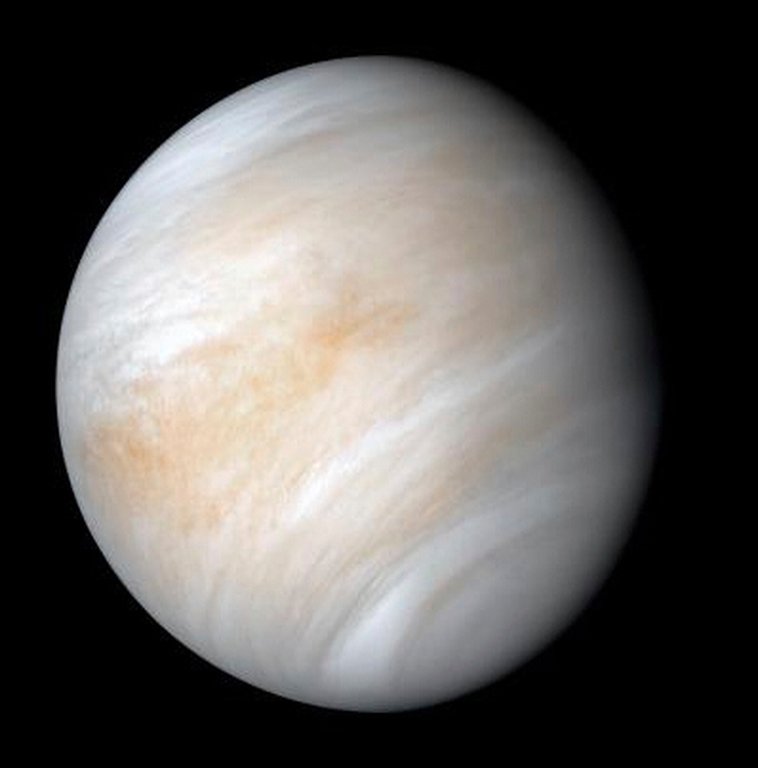
A conjunction happens when two celestial bodies appear close together in the sky. It could be two planets, or a planet and the sun. An inferior conjunction of Venus happens when the planet swings between the sun and Earth.
Such an alignment happens about every 19 months because of how Venus and Earth orbit the sun. The moment of inferior conjunction happens around 9 p.m. EDT.
“Some people call that a Venus kiss because we’re extremely close together,” said astronomer Geary Albright with James Madison University.
Venus has phases just like the moon. Before and after the conjunction, Venus looks like a thin crescent — though only telescopes can see it. Those looking for signs of the transition can watch Venus move from the evening to morning sky Sunday.
In the nights leading up to the conjunction, find a flat area and look near the horizon just after sunset to glimpse Venus before it sets. It appears as one of the brightest objects in the sky.
After the conjunction, Venus will be visible in the morning sky just before sunrise. Take precaution to not stare directly at the sun.
While this weekend’s event isn’t much of a visual spectacle, scientists say it’s an opportunity to track how the planets shift in space.
“Get a chance to get to know Venus,” said Nichols.
Paul McCartney’s “The Kiss of Venus” was partly inspired by a book chapter describing the inferior conjunction. And two upcoming NASA missions will put a spotlight on Venus, investigating how it formed and why it turned out so different from Earth.
—-
The Associated Press Health and Science Department receives support from the Howard Hughes Medical Institute’s Science and Educational Media Group and the Robert Wood Johnson Foundation. The AP is solely responsible for all content.