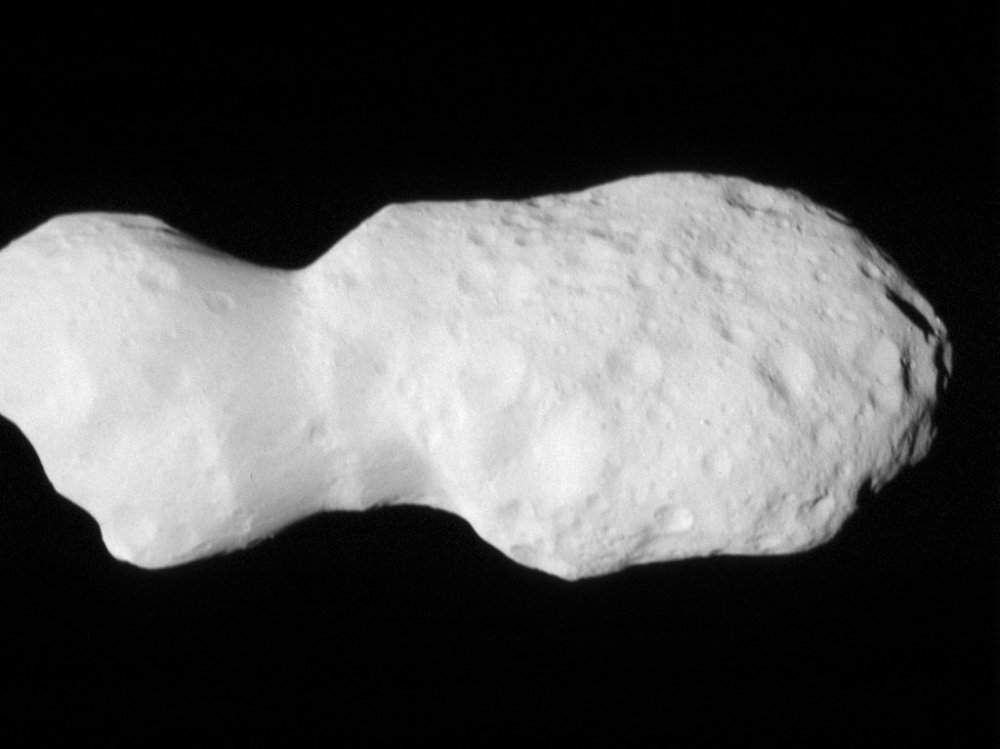
NASA’s Lucy spacecraft beams back pictures of an asteroid shaped like a lumpy bowling pin
Advertisement
Read this article for free:
or
Already have an account? Log in here »
To continue reading, please subscribe:

Digital Subscription
One year of digital access for only $205*
- Enjoy unlimited reading on winnipegfreepress.com
- Read the E-Edition, our digital replica newspaper
- Access News Break, our award-winning app
- Play interactive puzzles
*First annual payment billed as $205.00 + GST for one year. This annual subscription will automatically renew at $233.00 + GST every 52 weeks (10% off the regular annual price of $259.35). Offer available to new and qualified returning subscribers only. Cancel any time.
To continue reading, please subscribe:
Add Free Press access to your Brandon Sun subscription for only an additional
$1 for the first 4 weeks*
- Enjoy unlimited reading on winnipegfreepress.com
- Read the E-Edition, our digital replica newspaper
- Access News Break, our award-winning app
- Play interactive puzzles
*Your next Brandon Sun subscription payment will increase by $1.00 and you will be charged $17.95 plus GST for four weeks. After four weeks, your payment will increase to $24.95 plus GST every four weeks.
Read unlimited articles for free today:
or
Already have an account? Log in here »
Hey there, time traveller!
This article was published 21/04/2025 (519 days ago), so information in it may no longer be current.
CAPE CANAVERAL, Fla. (AP) — NASA’s Lucy spacecraft has beamed back pictures from its latest asteroid flyby, revealing a long, lumpy, odd-shaped space rock.
The space agency released the images Monday, a day after the close approach. It was considered a dress rehearsal for the more critical asteroid encounters ahead closer to Jupiter.
This asteroid is bigger than scientists anticipated, about 5 miles (8 kilometers) long and 2 miles (3.5 kilometers) wide at its widest point — resembling an irregular bowling pin. It’s so long that the spacecraft couldn’t capture it in its entirety in the initial downloaded images.
Data returned over the next week should help clarify the asteroid’s shape, according to NASA.
Lucy passed within 600 miles (960 kilometers) of the harmless asteroid known as Donaldjohanson on Sunday in the main asteroid belt between Mars and Jupiter. It’s named for the paleontologist who discovered the fossil Lucy 50 years ago in Ethiopia.
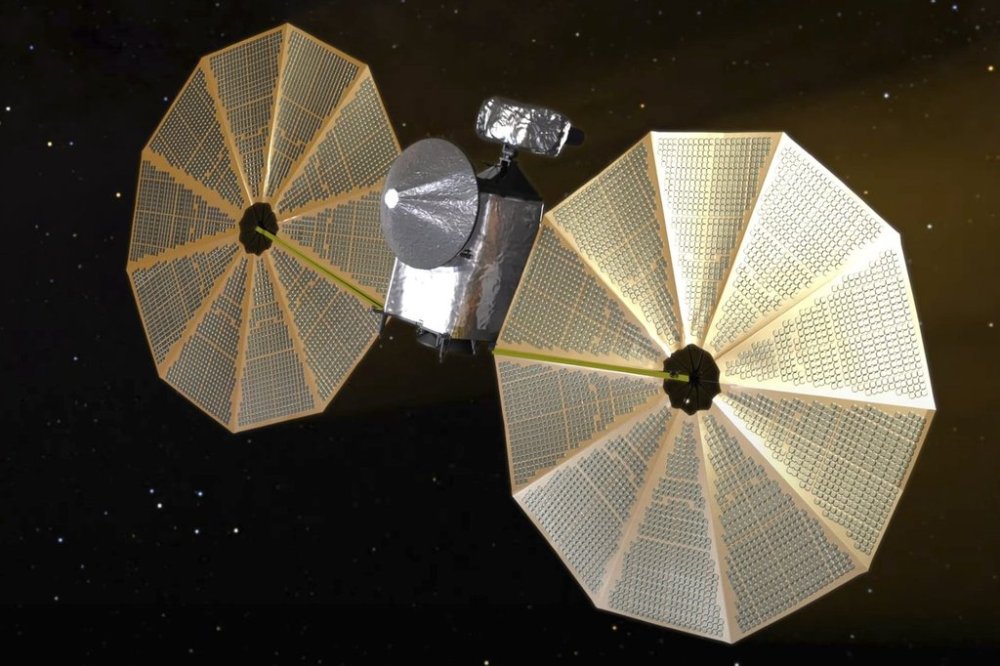
The spacecraft was launched in 2021 to study the unexplored so-called Trojan asteroids out near Jupiter. Eight Trojan flybys are planned through 2033.

___
The Associated Press Health and Science Department receives support from the Howard Hughes Medical Institute’s Science and Educational Media Group and the Robert Wood Johnson Foundation. The AP is solely responsible for all content.