

Amazon launches its first internet satellites to compete against SpaceX’s Starlinks
Advertisement
Read this article for free:
or
Already have an account? Log in here »
To continue reading, please subscribe:
Monthly Digital Subscription
$1 per week for 24 weeks*
- Enjoy unlimited reading on winnipegfreepress.com
- Read the E-Edition, our digital replica newspaper
- Access News Break, our award-winning app
- Play interactive puzzles
*Billed as $4.00 plus GST every four weeks. After 24 weeks, price increases to the regular rate of $19.95 plus GST every four weeks. Offer available to new and qualified returning subscribers only. Cancel any time.
Monthly Digital Subscription
$4.99/week*
- Enjoy unlimited reading on winnipegfreepress.com
- Read the E-Edition, our digital replica newspaper
- Access News Break, our award-winning app
- Play interactive puzzles
*Billed as $19.95 plus GST every four weeks. Cancel any time.
To continue reading, please subscribe:
Add Free Press access to your Brandon Sun subscription for only an additional
$1 for the first 4 weeks*
*Your next subscription payment will increase by $1.00 and you will be charged $16.99 plus GST for four weeks. After four weeks, your payment will increase to $23.99 plus GST every four weeks.
Read unlimited articles for free today:
or
Already have an account? Log in here »
Hey there, time traveller!
This article was published 28/04/2025 (334 days ago), so information in it may no longer be current.
CAPE CANAVERAL, Fla. (AP) — Amazon’s first batch of internet satellites rocketed into orbit Monday, the latest entry in the mega constellation market currently dominated by SpaceX’s thousands of Starlinks.
The United Launch Alliance’s Atlas V rocket carried up 27 of Amazon’s Project Kuiper satellites, named after the frigid fringes of our solar system beyond Neptune. Once released in orbit, the satellites will eventually reach an altitude of nearly 400 miles (630 kilometers).
Two test satellites were launched in 2023, also by an Atlas V. Project officials said major upgrades were made to the newest version. The latest satellites also are coated with a mirror film designed to scatter reflected sunlight in an attempt to accommodate astronomers.
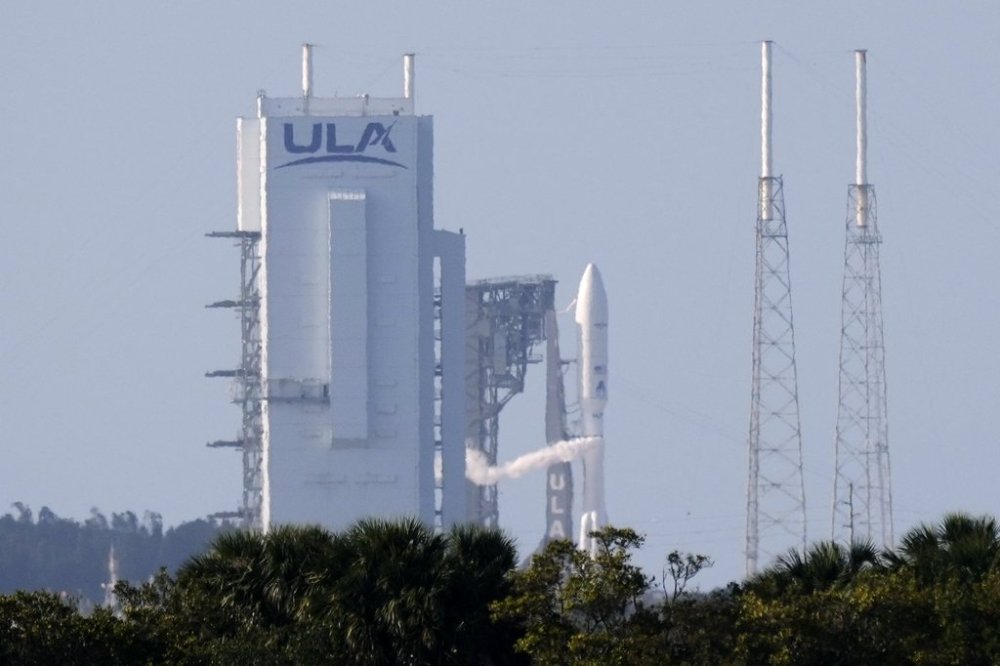
Stargazers oppose the fast-growing constellations of low-orbiting satellites, arguing they spoil observations. Others fear more satellite collisions.
Founded by Jeff Bezos, who now runs his own rocket company, Blue Origin, Amazon aims to put more than 3,200 of these satellites into orbit to provide fast, affordable broadband service around the globe.
Elon Musk’s SpaceX already has launched more than 8,000 Starlinks since 2019. The company marked its 250th Starlink launch Sunday night. More than 7,000 Starlinks are still in orbit some 300-plus miles (550 kilometers) above Earth.
The European-based OneWeb satellite constellation numbers in the hundreds in an even higher orbit.
Amazon already has purchased dozens of rocket launches from United Launch Alliance and Blue Origin for Project Kuiper, as well as others.
“There are some things you can only learn in flight” despite extensive testing on the ground, said Rajeev Badyal, the project’s vice president.
“No matter how the mission unfolds, this is just the start of our journey,” he said in a statement ahead of the evening liftoff.
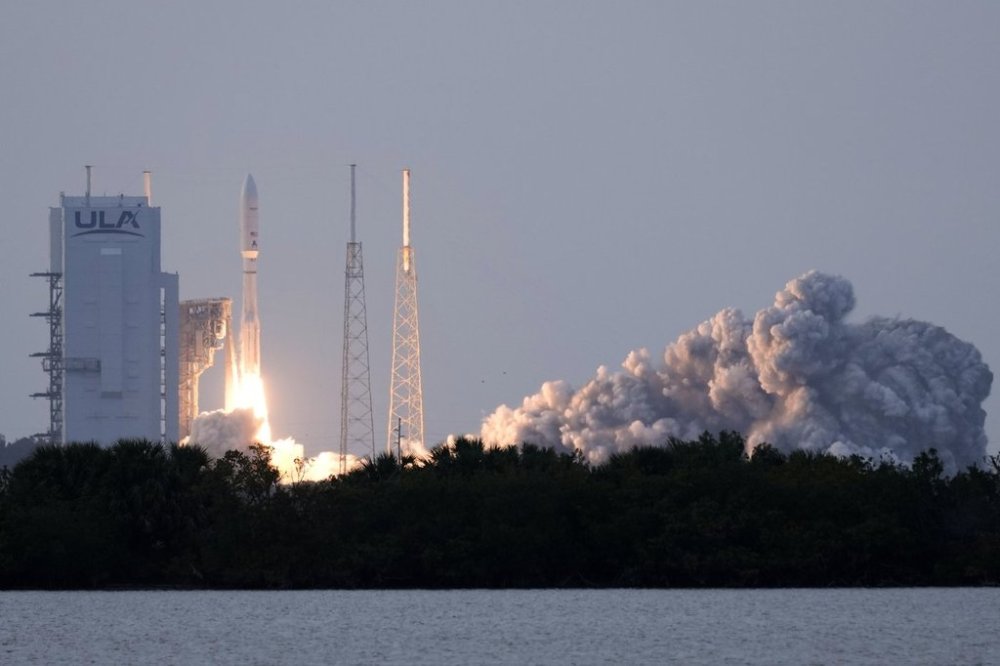
The first liftoff attempt earlier this month was nixed by bad weather. It took until now to secure another spot in the launch lineup at Cape Canaveral Space Force Station.
___
The Associated Press Health and Science Department receives support from the Howard Hughes Medical Institute’s Science and Educational Media Group and the Robert Wood Johnson Foundation. The AP is solely responsible for all content.