What Trump’s budget cuts could mean for the environment
Advertisement
Read this article for free:
or
Already have an account? Log in here »
To continue reading, please subscribe:
Digital Subscription
One year of digital access for only $1.44 a week*
- Enjoy unlimited reading on winnipegfreepress.com
- Read the E-Edition, our digital replica newspaper
- Access News Break, our award-winning app
- Play interactive puzzles
*Billed as $5.77 plus GST every four weeks. After 52 weeks, price increases to the regular rate of $19.95 plus GST every four weeks. Offer available to new and qualified returning subscribers only. Cancel any time.
To continue reading, please subscribe:
Add Free Press access to your Brandon Sun subscription for only an additional
$1 for the first 4 weeks*
- Enjoy unlimited reading on winnipegfreepress.com
- Read the E-Edition, our digital replica newspaper
- Access News Break, our award-winning app
- Play interactive puzzles
*Your next Brandon Sun subscription payment will increase by $1.00 and you will be charged $17.95 plus GST for four weeks. After four weeks, your payment will increase to $24.95 plus GST every four weeks.
Read unlimited articles for free today:
or
Already have an account? Log in here »
Hey there, time traveller!
This article was published 02/05/2025 (533 days ago), so information in it may no longer be current.
President Donald Trump’s first 100 days included a wide range of attacks on environmental and climate initiatives. His proposed budget does the same.
The document released Friday looks to curtail or cut billions of dollars for everything from drinking water, clean energy and weather satellites to national parks, emergency management and environmental justice, to name a few.
That aligns with Trump’s aggressive targeting of climate policy and crackdown on diversity initiatives as he pushes fossil fuel investment. Federal agencies are racing to bolster coal power and oil and gas while blocking renewable energy sources, rolling back landmark water and air regulations and attacking scientists in federal weather work tied to climate research.
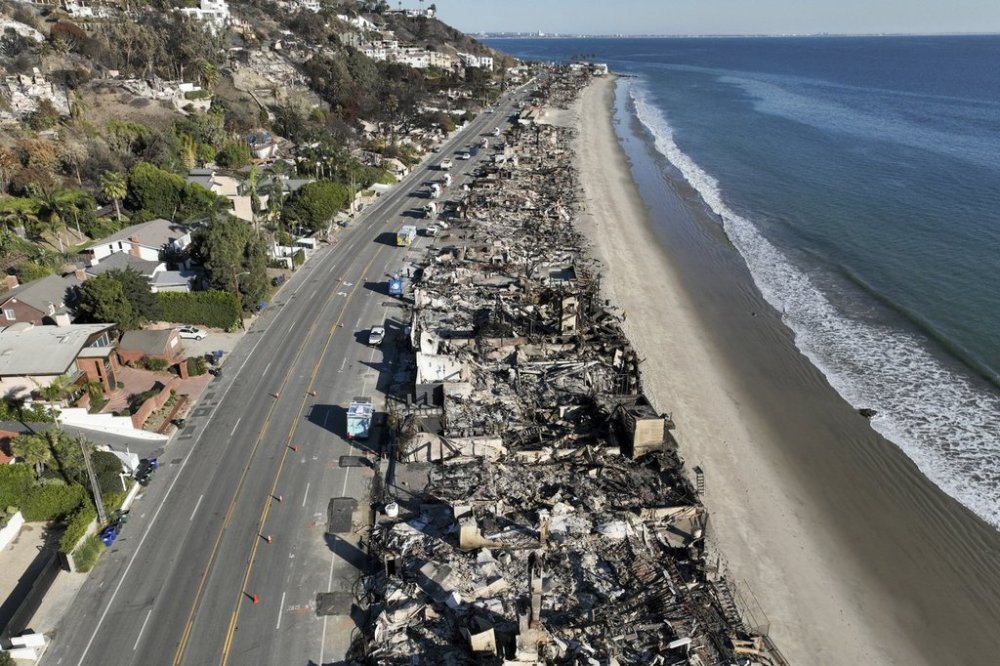
The much-anticipated plan will define the Republican president’s second term, but it’s important to note that Congress will ultimately decide the spending plans.
This skinny budget is a proposal, often considered a statement of the administration’s values. It includes topline numbers only, regarding discretionary spending. A more detailed budget is expected soon.
Here’s a look at some of the environmental and climate funding at risk:
Clean water
The proposed budget looks to slash $2.46 billion in Clean and Drinking Water State Revolving Loan Funds.
The clean water funds, through federal-state partnerships, give low-cost financing to communities for water quality infrastructure including municipal wastewater facilities, decentralized wastewater treatment systems and more. The drinking water funds provide money to states and water systems to help them align with the Safe Drinking Water Act.
The plan says states should be responsible for funding their own water infrastructure projects, but would provide a decreased amount, $305 million total, to give states time to adjust.
National Parks
The administration is targeting $1.2 billion in spending cuts to the National Park Service’s operations, construction, its Historic Preservation Fund, and National Recreation and Preservation grants. The budget said the reason for the cuts is because parks get “duplicative” state, local and private sector support.
The Service has been the subject of an aggressive downsizing effort, which could impact park hours, safety and upkeep. Millions of tourists are expected to visit national parks this summer.
Severe weather reporting and resources
The weather, oceans and fisheries agency — the parent agency to the National Weather Service — has been the subject of massive Department of Government Efficiency layoffs, impacting its crucial observations and forecasts.
The proposal outlines $1.5 billion in cuts to what it calls “climate-dominated” NOAA operations, research and grants, plus infrastructure and satellites. It says these are not aligned with the administration ending the Green New Deal, referring to the Democrats’ moonshot plan to combat climate change and shift away from fossil fuels.
The budget says NOAA’s educational grant programs have, for instance, “funded efforts to radicalize students against markets and spread environmental alarm.”
Environmental justice
While environmental justice was touted under the previous administration, the Trump administration has moved to reverse those policies as part of its broader shift from DEI.
Friday’s proposal said it would remove $100 million in “taxpayer funded programs that promote divisive racial discrimination and environmental justice grants that were destined to go to organizations that advance radical ideologies.”
Trump cut White House advisors who worked to ensure the federal government helped communities in heavily-polluted areas, and eliminated Biden’s “Justice40” initiative that required 40% of the benefits from certain environmental programs go to those communities. The Department of Transportation also rescinded Biden-era memos that called on state agencies to factor social and environmental justice into infrastructure decisions.
Communities near heavy industry, ports and highways are often made up largely of Black, Latino and low-income Americans.
Biden’s infrastructure law
The budget proposal seeks to repeal more than $15 billion of the Bipartisan Infrastructure Law, named the Infrastructure Investment and Jobs Act, passed in 2021. The Biden administration’s law looked to spur domestic manufacturing, improve roads, bridges and ports, fund cleaner drinking water and other programs.
Among other things, canceling the spending — which it calls the “Green New Scam” — would impact key electric vehicle tax credits that have helped boost electric vehicle uptake in the U.S.
Removing ‘equity’ from FEMA money
The budget proposes $646 million in cuts to Non-Disaster Federal Emergency Management Agency grant programs.
FEMA is intended to provide disaster response and recovery support for states and communities impacted by storms, wildfires, floods and more. Trump has been critical of the agency, which helps fund debris removal, rebuilding efforts and first responder expenses.
FEMA has already been politicized in the administration’s first 100 days; for example, its Building Resilient Infrastructure and Communities program was ended, and the agency’s acting director canceled $188 million in grants to New York City, finding the money inconsistent with Trump administration priorities.
The budget says “FEMA under the previous administration made ‘equity’ a top priority for emergency relief and declared that DEI was mandatory,” referring to diversity, equity and inclusion. The budget looks to reduce these programs that it calls “wasteful and woke.”
___
Read more of AP’s climate coverage at http://www.apnews.com/climate-and-environment.
___
Alexa St. John is an Associated Press climate reporter. Follow her on X: @alexa_stjohn. Reach her at ast.john@ap.org.
___
The Associated Press’ climate and environmental coverage receives financial support from multiple private foundations. AP is solely responsible for all content. Find AP’s standards for working with philanthropies, a list of supporters and funded coverage areas at AP.org.

Advertisement Advertise With Us
Advertisement Advertise With Us