

Ancient wooden spears found in Germany may have been wielded by Neanderthals, a new study suggests
Advertisement
Read this article for free:
or
Already have an account? Log in here »
To continue reading, please subscribe:
Monthly Digital Subscription
$1 per week for 24 weeks*
- Enjoy unlimited reading on winnipegfreepress.com
- Read the E-Edition, our digital replica newspaper
- Access News Break, our award-winning app
- Play interactive puzzles
*Billed as $4.00 plus GST every four weeks. After 24 weeks, price increases to the regular rate of $19.95 plus GST every four weeks. Offer available to new and qualified returning subscribers only. Cancel any time.
Monthly Digital Subscription
$4.99/week*
- Enjoy unlimited reading on winnipegfreepress.com
- Read the E-Edition, our digital replica newspaper
- Access News Break, our award-winning app
- Play interactive puzzles
*Billed as $19.95 plus GST every four weeks. Cancel any time.
To continue reading, please subscribe:
Add Free Press access to your Brandon Sun subscription for only an additional
$1 for the first 4 weeks*
*Your next subscription payment will increase by $1.00 and you will be charged $16.99 plus GST for four weeks. After four weeks, your payment will increase to $23.99 plus GST every four weeks.
Read unlimited articles for free today:
or
Already have an account? Log in here »
Hey there, time traveller!
This article was published 09/05/2025 (325 days ago), so information in it may no longer be current.
NEW YORK (AP) — A set of ancient wooden spears may be younger than scientists thought and wielded by Neanderthals instead of their ancestors.
The complete spears made of spruce and pine are among the oldest known hunting weapons. They were discovered in a coal mine over two decades ago in the German town of Schöningen along with the remains of nearly 50 horses.
Previous estimates dated the spears to 300,000 years ago so scientists thought the weapons belonged to a group of early humans called Homo heidelbergensis — thought to be the last common ancestor between humans and Neanderthals.
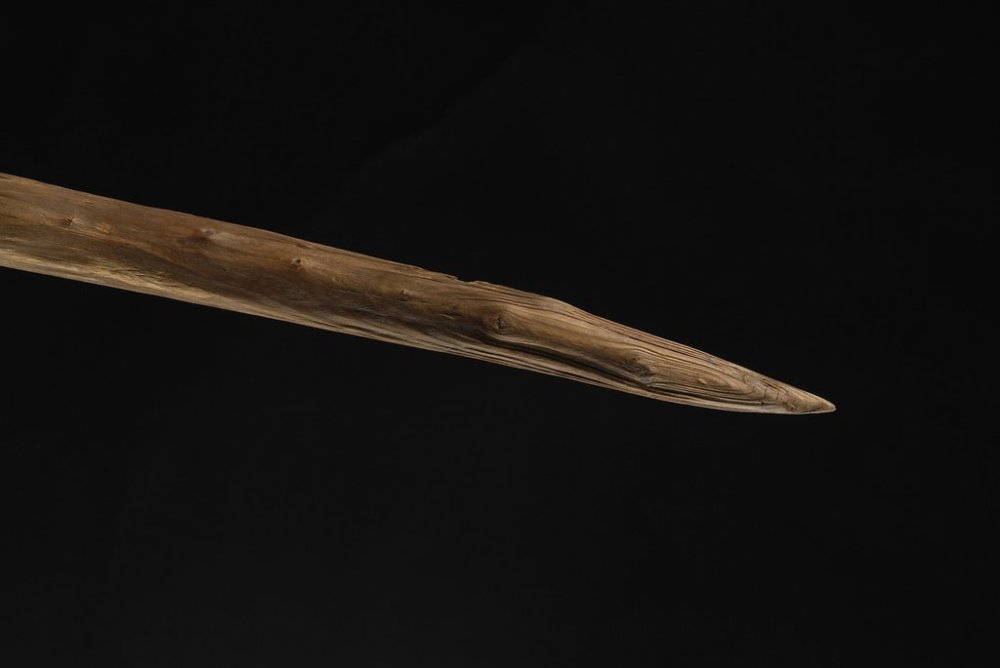
But the new analysis using a different dating technique suggests the spears are younger, placing them about 200,000 years old. The new age means the hunting weapons may have been used by Neanderthals instead, according to research published Friday in the journal Science Advances.
Recent work has suggested that some Neanderthals mixed and mated with early humans. The balanced, well-crafted spears could help scientists understand what Neanderthals were capable of and how they worked together to hunt.
The spears are “pretty sophisticated for something that old,” said study co-author Jarod Hutson with the Smithsonian National Museum of Natural History.
But it’s not yet clear why the new dating disagrees with previous estimates. Archaeologist Thomas Terberger with the University of Göttingen said more research is needed to be sure of the spears’ age and who used them to hunt.
“For the moment, I find the arguments interesting, but not absolutely convincing,” said Terberger, who had no role in the new study.

___
The Associated Press Health and Science Department receives support from the Howard Hughes Medical Institute’s Science and Educational Media Group and the Robert Wood Johnson Foundation. The AP is solely responsible for all content.